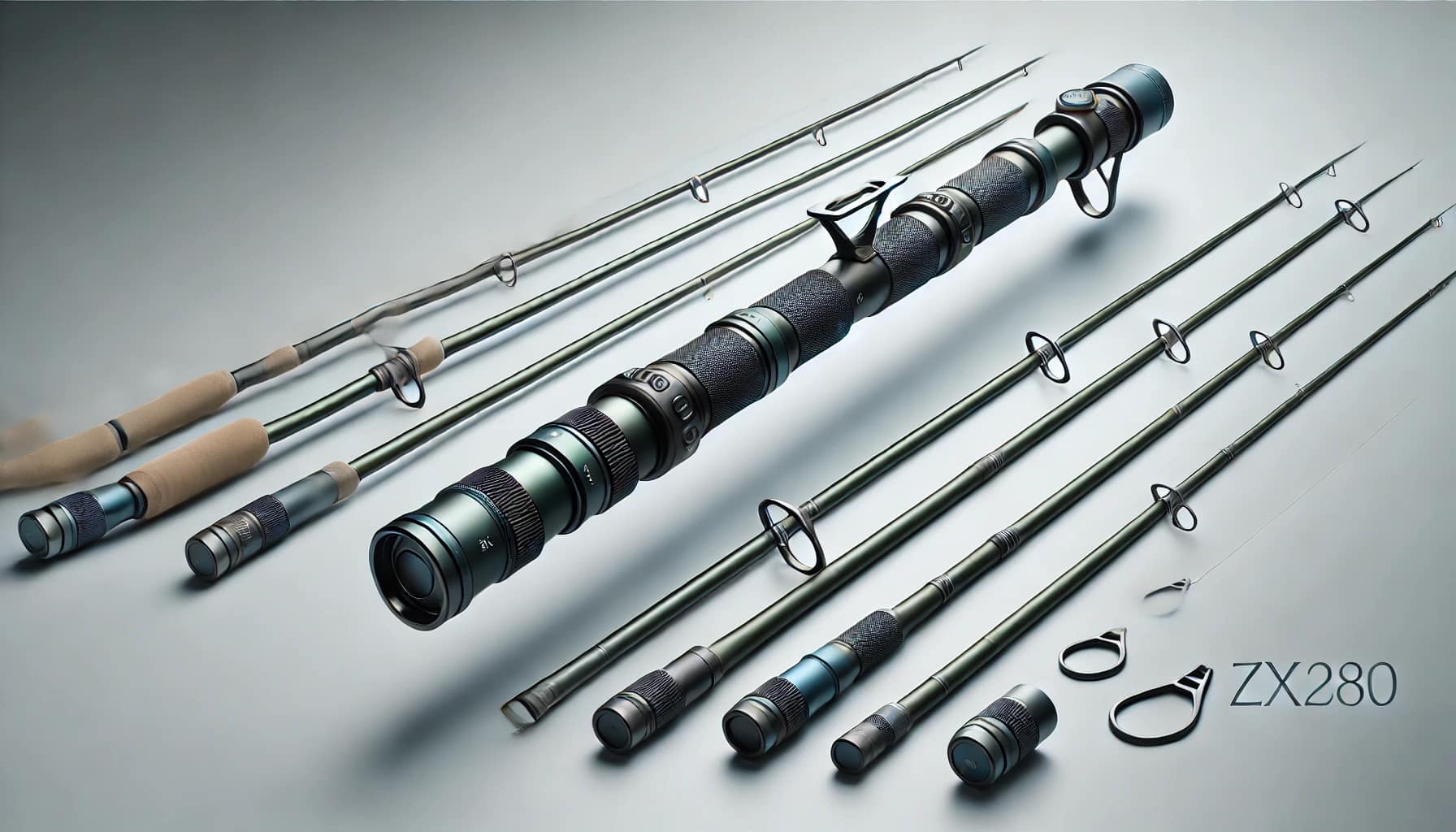
If you’ve ever tried to fish a brushy little creek where the trees lean in like they’re eavesdropping, you already know the problem: a “normal” rod length can feel like you brought a flagpole to a phone booth. The FoxFIRE zx280 Zoom Fiberglass-Hybrid Tenkara Rod exists for those places—tight canopy, narrow runs, awkward casting windows, and pocket water where precision matters more than distance
Save 15% today — use code BARKBRASS at checkout. 🔥
Quick Specs Snapshot
Here are the details you’ll want when you’re comparing rods side-by-side:
-
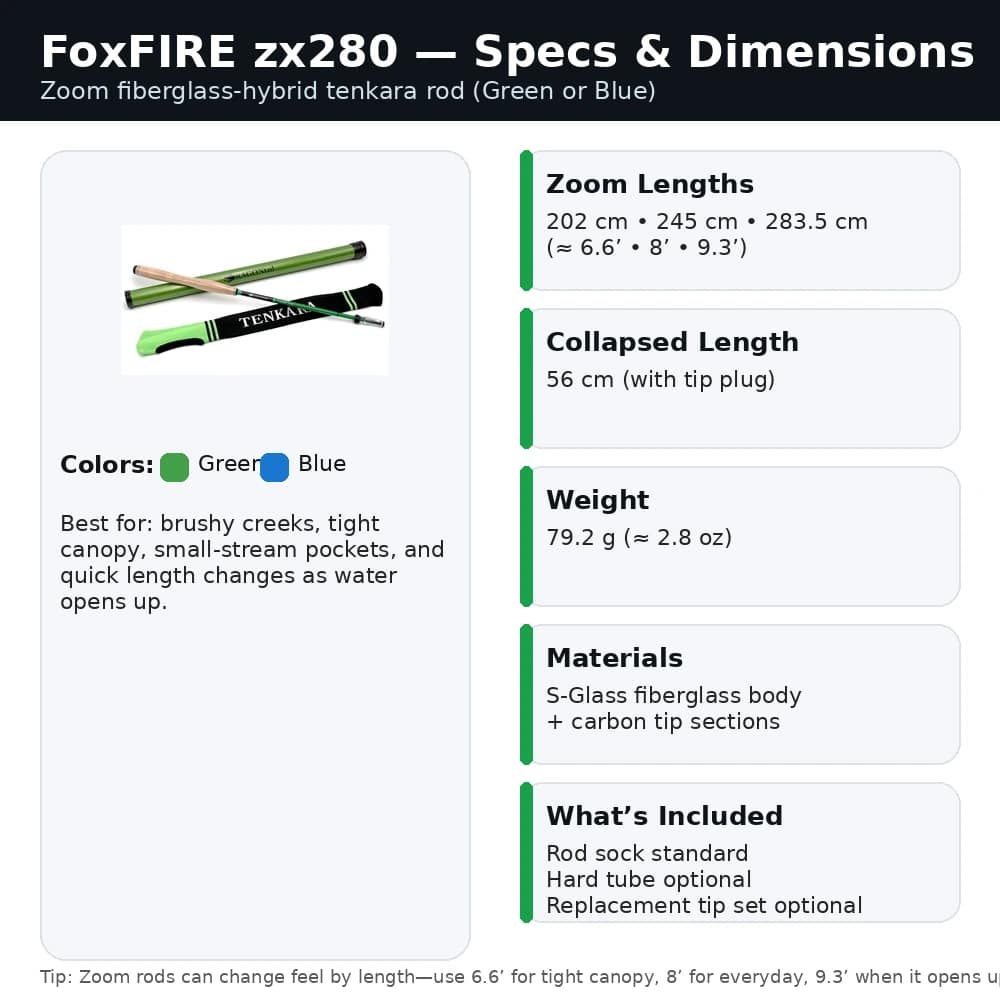
Zoom lengths: 202 cm / 245 cm / 283.5 cm (about 6.6’ / 8’ / 9.3’)
-
Nested length (collapsed): 56 cm (great for packs and glove boxes)
-
Weight: 79.2 g (2.8 oz)
-
Material concept: mostly S-Glass (fiberglass) with carbon fiber added in the tip sections to reduce oscillation
-
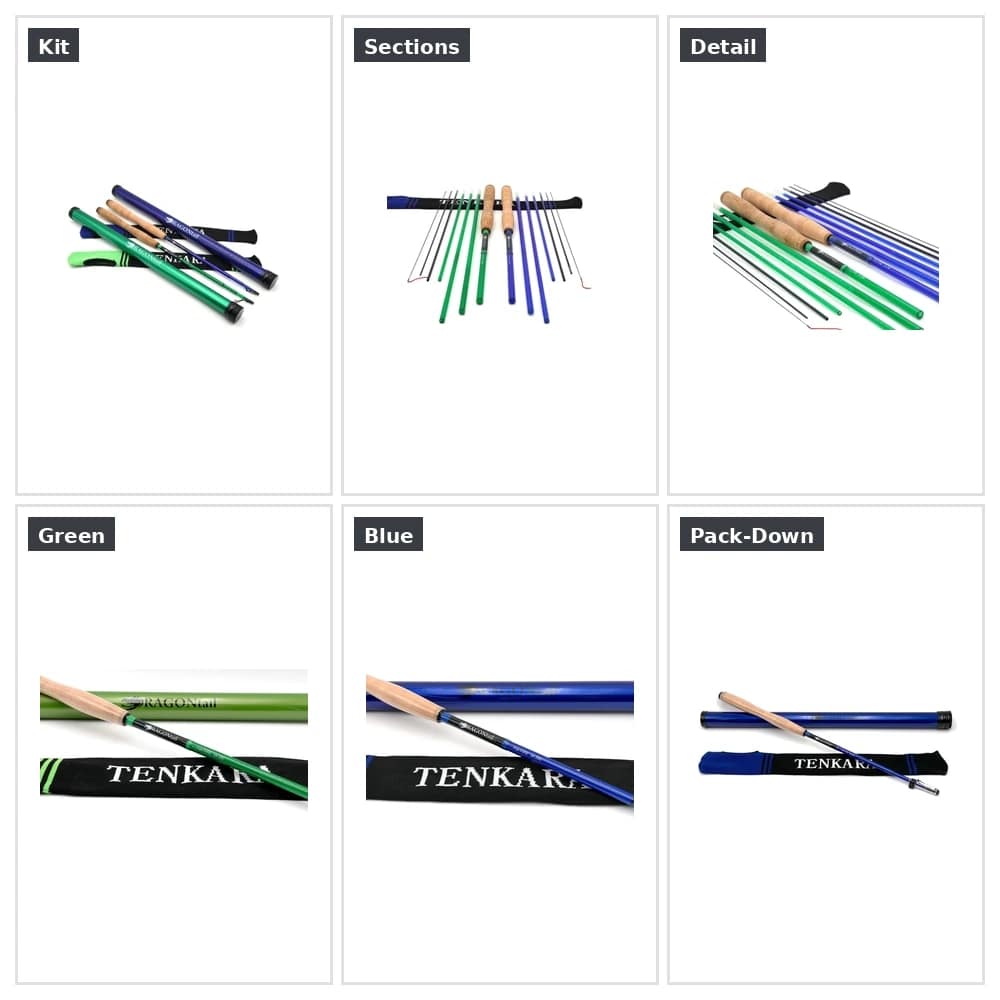
Colors: translucent green or translucent blue
-
Case options: Sock only, or Hard tube + sock (option shown on product page)
-
Spare tip option: optional replacement tip set shown as a selectable add-on
-
Third-party measurements listed: CCS pennies + Rod Flex Index for each zoom length
What Makes This Rod Different: Fiberglass-hybrid + short zoom lengths
Most tenkara conversations start with length. That’s fair—reach is a big deal in fixed-line fishing. But when you’re fishing tight water, the right length can change every part of your day: your casting style, your drift control, and even how often you snag leaves behind you.
This rod’s “difference” comes from two ideas working together:
-
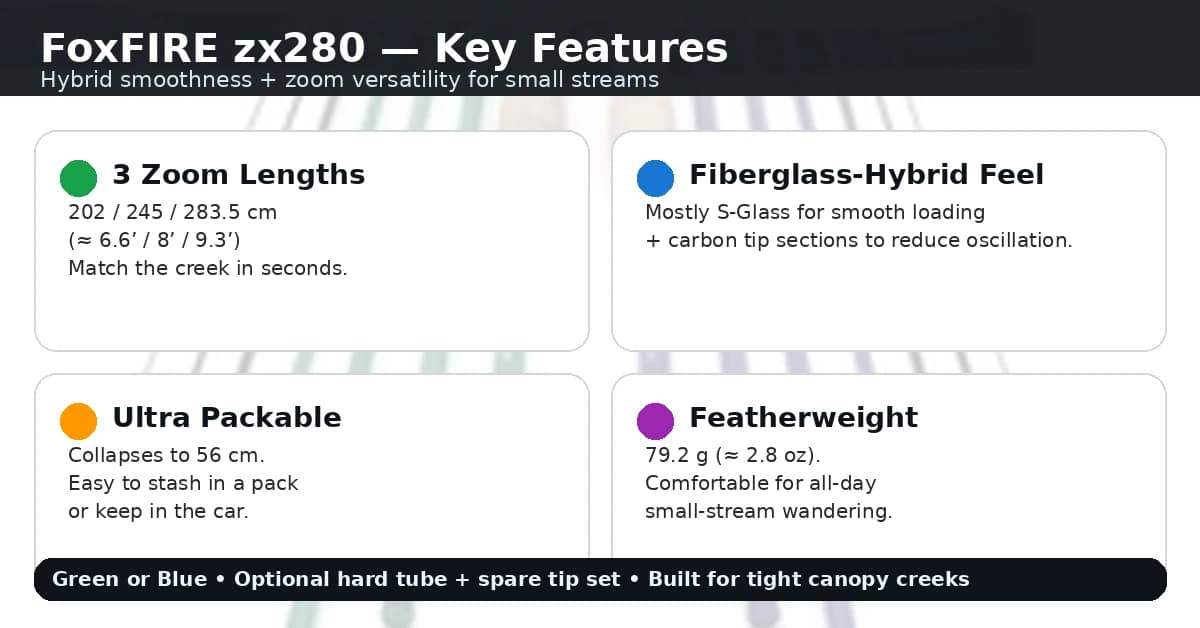
Three short zoom lengths (6.6’, 8’, 9.3’) so you can scale your reach up or down quickly as the creek changes.
-
A fiberglass-heavy build for a smooth, full-flex feel at short lengths—paired with carbon fiber in the tip sections to help keep casts from getting too “wiggly.”
S-Glass feel vs carbon feel
If you’re new, here’s the simplest way to think about it:
-
Carbon fiber rods often feel crisp and quick. Great for line speed, tight loops, and clean accuracy.
-
Fiberglass rods often feel smoother and more “forgiving.” They load easily and can make small fish feel exciting (because the rod bends deeper).
On short tenkara rods, many anglers want easy loading with light lines—because you’re not always swinging long line lengths. DRAGONtail specifically calls out that the FoxFIRE’s full-flex action helps it cast lighter lines more easily at these short lengths.
Why carbon in the tip sections helps
Fiberglass can be a joy, but it can also introduce extra tip “bounce” after the cast—especially if you’re still building timing. The product page notes carbon fiber was added in the tip sections specifically to reduce oscillation when casting. That’s a practical design choice: keep the smooth fiberglass feel while tightening the finish of the cast.
How the 3 Zoom Lengths Fish on Real Water
Zoom rods are popular because they’re basically a built-in “plan B.” If the creek opens up, you don’t have to stop and re-rig. If the canopy tightens, you don’t have to force a long rod through branches like you’re trying to park a truck in a bicycle lane.
Tenkara USA has described zoom rods as convenient because you can instantly extend to reach a farther presentation without taking time to change line length or add tippet.
And experienced tenkara anglers also point out something important: changing the zoom length can change the feel and action of the rod, sometimes subtly and sometimes noticeably.
That means you’re not just changing reach—you’re adjusting the whole “personality” of the rod.
6.6’ mode: brush tunnels + bow-and-arrow casts
This is the mode for the places that look unfishable at first glance. You know the kind: narrow stream, overhanging branches, and little gaps where trout hide like they’re playing a game with you.
At this short length, you can fish:
-
short drifts under low limbs
-
micro pocket water
-
tiny plunge pools
-
quick bow-and-arrow casts (where you pull the fly back like a slingshot)
DRAGONtail’s own rod-selection guidance specifically calls the FoxFIRE a soft, full-flex rod that shines in very tight canopy because it can load without needing heavy line weight.
What this feels like on the water (in plain English):
Your motions can be smaller. You don’t have to swing wide. The rod stays out of branches, and your fly spends more time in the lane you intended.
8’ mode: the “most-used” middle gear
The 8’ zoom length is often the sweet spot for small streams because it gives you a little more reach without becoming a branch magnet. It’s also long enough to:
-
reach over seams
-
keep more line off the water (less drag)
-
steer a drift around rocks
If you like to “read and pick apart” water—hit the near pocket, then the far pocket, then the seam—this middle length is the one that keeps your rhythm smooth.
9.3’ mode: when the creek opens up
This is the “okay, I’ve got room now” setting. It’s not a long tenkara rod by traditional standards, but in the right water it gives you:
-
more reach to fish a run from farther back
-
better ability to keep line off conflicting currents
-
a more controlled drift in slightly wider pockets
One honest thing to note: the product page includes customer feedback suggesting the longest setting can feel a bit “wigglier” for some anglers—but that they spend most of their time in the short and middle lengths and still highly recommend the rod for tight water. (Paraphrased from reviews shown on the product page.)
Action & Measurements: Understanding CCS and Rod Flex Index
If you’ve ever shopped rods and felt like every description was either “super technical” or “vibes only,” you’re not alone. What’s nice here is that the product page lists third-party measurement numbers (attributed to Teton Tenkara on the page), including:
-
CCS (Common Cents System) values listed as pennies for each zoom length
-
RFI (Rod Flex Index) for each zoom length
Here’s what that means in human terms:
CCS in pennies
CCS is a system that tries to standardize rod power by measuring how much weight it takes to deflect the rod a set amount. On the product page, the CCS is listed as 12.5, 12, and 10.5 pennies for the different lengths.
You don’t need to become a scientist here. Just know: these numbers help you compare rods more objectively than “soft” or “medium” labels.
Rod Flex Index (RFI)
RFI helps describe where along the rod it flexes. The page lists 6.3, 4.9, 3.7 (by length).
Again, you don’t need to memorize them. But it supports the overall idea: the rod’s feel changes as you change length, which matches what experienced zoom-rod anglers often say.
Beginner Setup Guide: line, tippet, flies, and easy rigging
This is where most beginners either (A) get frustrated, or (B) fall in love fast. The good news: tenkara doesn’t need a mountain of gear. The “secret” is matching simple setup choices to the kind of water you’re fishing.
Line length: simple rules that work
For tight creeks (the FoxFIRE’s home turf), you don’t need long line. In fact, long line can be your enemy when you’re dodging branches.
A beginner-friendly starting rule:
-
In tight water, try a line that keeps your casting compact—often shorter than the rod or around rod length, depending on your comfort and the canopy.
-
When water opens up, you can lengthen line or simply zoom the rod longer for reach.
The whole reason zoom rods are loved is that you can adjust reach quickly without needing to stop and re-rig; Tenkara USA specifically notes this “instant extend” convenience.
Level line vs furled line
You’ll hear debates. Don’t stress them.
-
Level line is thin and light, tends to land softly, and can be great for delicate drifts in small water.
-
Furled/tapered line can be easier for beginners to cast because it has more mass and can “carry” the cast.
DRAGONtail’s own rod selection guidance mentions the FoxFIRE’s full-flex action helps it cast very light lines more easily at short lengths.
So if you want a “clean and quiet” presentation, this rod’s personality supports that style.
Tippet choices for small trout and panfish
For typical small-stream trout and panfish, you’re usually choosing tippet based on:
-
fly size
-
water clarity
-
how spooky fish are
-
how snaggy the environment is
A simple starter range many beginners use is 4X–6X, adjusting heavier when the water is dirty or snaggy and lighter when fish are picky. (This is general guidance—always match to local conditions.)
The “don’t make it complicated” rig
If you want something you can repeat every trip:
-
Pick the length mode (start at 8’ if the creek allows; drop to 6.6’ if branches are rough)
-
Choose a manageable line length for that canopy
-
Add tippet length that lets your fly drift naturally
-
Fish one simple fly pattern you trust and learn presentation
That’s it. The rod’s goal is to make that basic plan feel fun, not fussy.
Build Quality & What’s Included: cases, spare tip set, and replacement parts
Owning a tenkara rod is different than owning a typical spinning rod. You’re dealing with telescoping sections and a tip that matters. The product page shows options that directly address long-term ownership:
-
Case options: sock-only or hard tube + sock (as selectable variants)
-
Optional replacement tip set add-on shown as a selectable choice
-
Replacement parts availability through a dedicated parts page
That parts availability matters because accidents happen—car doors, rocky banks, backpacks, excited dogs… real life is real life.
Pros vs Cons
| Pros ✅ | Cons ⚠️ |
|---|---|
|
|
Green vs Blue: picking the color that fits your style
This one’s simple, but fun:
-
Translucent Green: looks at home in Appalachian-style creek environments—earthy, classic, low-key.
-
Translucent Blue: feels a bit more modern and “gear-candy,” especially if you like clean, bright kit.
If you’re hard on gear, both colors are still practical choices—this isn’t glossy “scratch magnet” paint; it’s a translucent finish look shown in the listing images.
Video Walkthrough: see it extend, flex, and pack down
Seeing a zoom rod in motion helps you understand what photos can’t: how fast it extends, how it bends, and how compact it becomes when collapsed. The official product intro video is hosted on YouTube.
Save 15% today — use code BARKBRASS at checkout. 🔥
FAQs
1) What are the three lengths of this zoom rod?
The product page lists extended lengths of 202 cm, 245 cm, and 283.5 cm, which correspond to roughly 6.6’, 8’, and 9.3’.
2) How short does it pack down?
Collapsed (nested) length is listed as 56 cm with the tip plug.
3) Is it heavy?
Weight is listed as 79.2 g, which is about 2.8 oz—very light for a rod that can fish three lengths.
4) Why mix fiberglass and carbon fiber?
The product description explains the rod is mostly S-Glass (fiberglass) and adds carbon fiber in the tip sections to help reduce casting oscillation.
5) Do zoom rods change action when you change length?
Yes. Experienced tenkara anglers and rod education sources commonly note that changing zoom length can change feel and action.
6) Is this rod better for tiny creeks than open rivers?
DRAGONtail’s rod selection guide places the FoxFIRE as a strong fit for tight overgrown canopy creeks, and suggests longer rods are often better for open water reach.
7) Are replacement parts available?
There is a dedicated replacement parts listing for the FoxFIRE zx280.
8) What colors does it come in?
Two colors are listed: translucent green and translucent blue.
Conclusion
If most of your fishing happens where the creek is narrow, the canopy is low, and the casting lanes are tiny, a short zoom rod can feel like a cheat code. The FoxFIRE zx280’s whole job is to help you fish those places with less snagging, less awkwardness, and more accurate drifts—while still giving you a “longer option” when the water opens up
Links
DRAGONtail Tenkara Review 2025