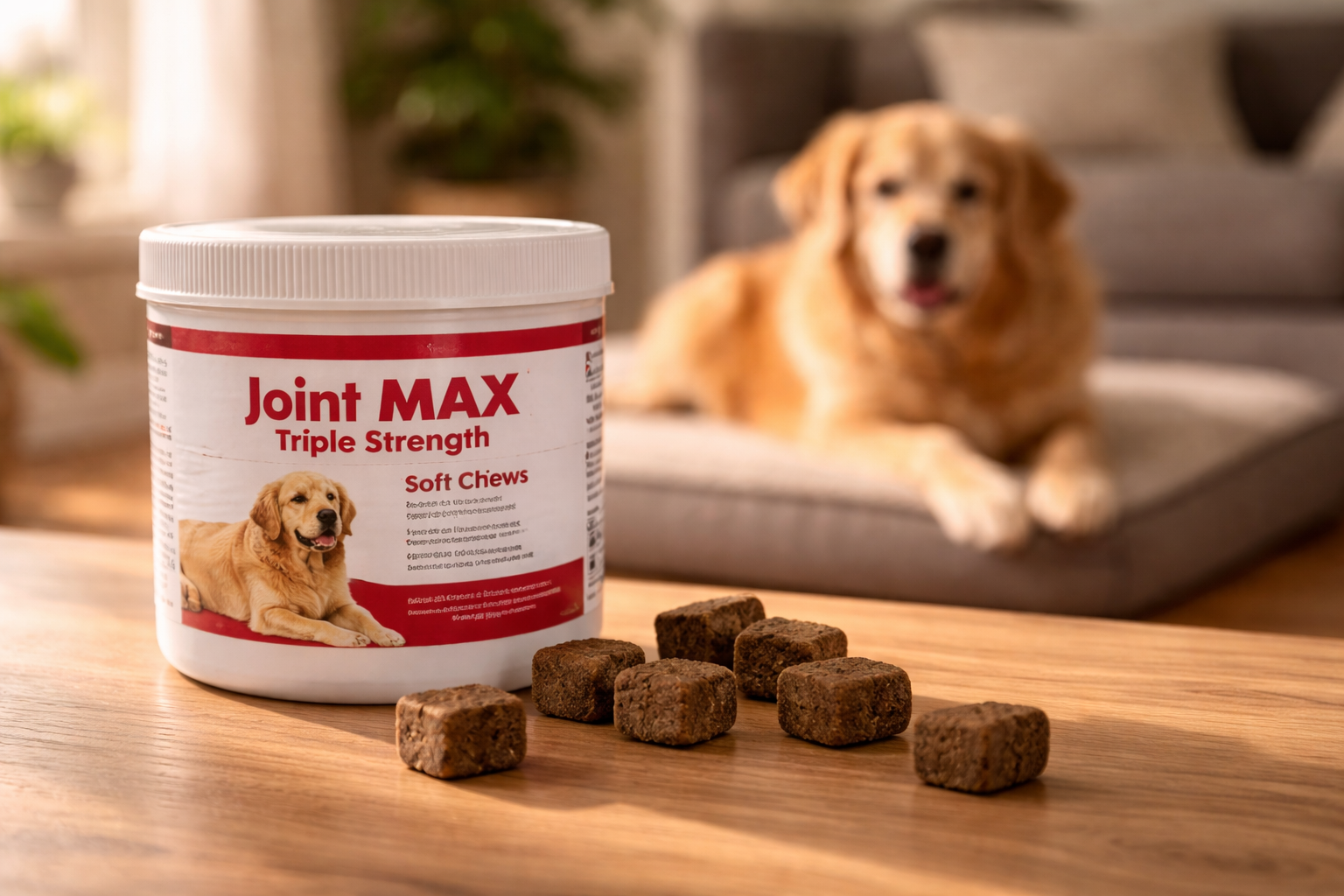
If your dog is getting stiff, slower to stand, or “creaky after naps,” Joint MAX soft chews are built for the support-the-plan lane—however, the dosing (and cost-per-day) can surprise you if you don’t do the math first.
Quick Answer: Joint MAX Soft Chews
Joint MAX soft chews (Triple Strength TS) are a “stacked” joint supplement for dogs who are starting to move like they’ve got a tiny retirement plan for their knees.
For older dogs, bigger dogs, and even smaller dogs with higher joint needs, Joint MAX soft chews are built for the “needs more than a basic chew” zone. More importantly, the ingredient amounts per serving are meaningful enough to be worth discussing like adults—because label math is where most joint chews quietly fail.
That said, results aren’t instant. In practice, improvements usually show up in boring-but-beautiful ways first: easier get-ups, smoother mornings, and fewer “I’m good, you go without me” days—especially when you also manage weight, add traction rugs, and keep exercise consistent.
However, if your dog is suddenly lame, yelping, dragging a leg, swelling, or getting worse quickly, skip the supplement experiment and call your vet. In other words: Joint MAX soft chews can support a plan, but they don’t replace a diagnosis.
Tip: If your dog needs joint support now, check price + stock first—then come back and match the dosing tier to your dog’s weight.
Why You Should Care About Joint MAX Soft Chews
A lot of “hip & joint” chews are basically expensive treats with a résumé. They sound loaded; however, the label amounts can be so light you’d need half the tub to hit a meaningful daily dose. As a result, owners swear “supplements don’t work,” when the real problem is under-dosing disguised as a product.
Joint MAX soft chews are aimed at dogs that need stronger daily support—older or middle-aged large dogs, plus smaller dogs with bigger joint needs. In other words, it’s positioned for “we’re seeing stiffness now,” not “maybe someday.”
Therefore, the goal of this post is simple: compare the ingredient stack, translate dosing by weight, and figure out whether the cost-per-day makes sense for your dog’s routine.
Quick View: Joint MAX Soft Chews
- Who it’s for: Older or middle-aged dogs showing stiffness, slower “get-up,” post-walk soreness, reduced willingness to jump/run
- Best use: Daily joint support as part of a mobility plan (consistent dosing + realistic expectations)
- Biggest win: Strong label amounts of core joint actives (glucosamine, MSM, chondroitin + omega support)
- Biggest drawback: Bigger dogs can burn through chews fast (cost-per-day climbs), especially during a loading phase
- Heads-up: Glucosamine is shellfish-sourced; chondroitin is porcine-sourced (matters for some sensitive diets)

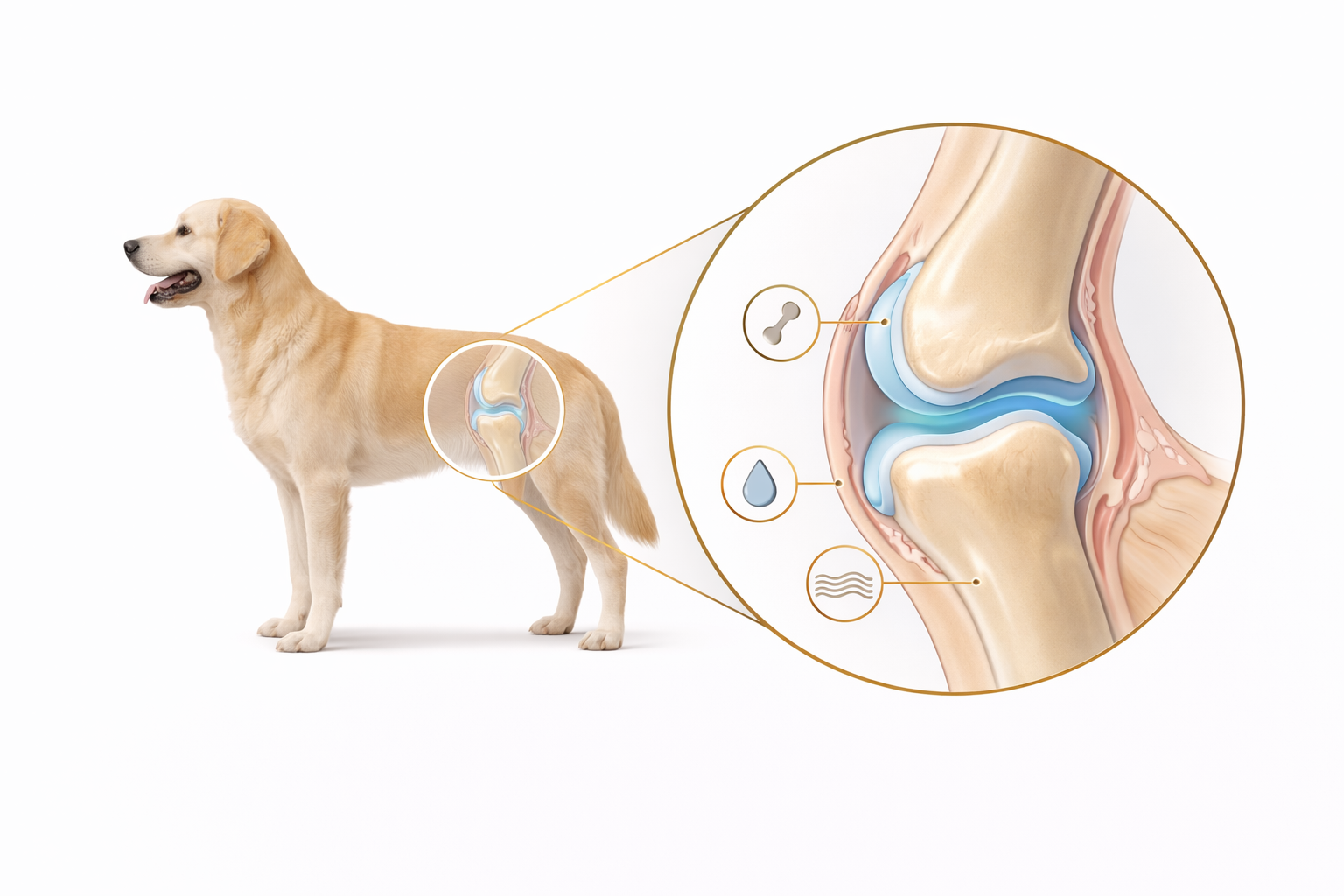
Joint MAX Soft Chews Specs & Ingredients
This is the part most supplement brands try to keep “vague and vibes-only.” We’re not doing that. Instead, we’re going to read the label like it owes us money.
Joint MAX soft chews are a soft-chew joint supplement designed for dogs that need stronger daily support—older dogs, bigger dogs, or smaller dogs that are already showing soreness/stiffness from normal life.
| Spec | What it is | Why it matters |
|---|---|---|
| Form | Soft chews (supplement) | Better compliance than pills/powders for many dogs—especially picky ones. |
| Target use | Joint support: lubrication, cushioning, cartilage/connective tissue support | Built for stiffness/mobility support, not “acute injury fixes.” |
| Serving size | 2 soft chews | Label amounts are per 2 chews; therefore, 1 chew is roughly half the listed amounts. |
| Loading phase | Double daily amount for first 3 weeks | Front-loads support—and, unfortunately, front-loads cost-per-day too. |
| How to give | During or after meals | Food can reduce stomach upset in sensitive dogs. |
| Warnings | Not proven safe for pregnant/breeding animals; discontinue if lameness worsens | If it’s getting worse, don’t “supplement harder.” Call the vet. |
| Storage | Room temp (avoid excess heat) | Soft chews can degrade faster if cooked in a hot garage/truck. |
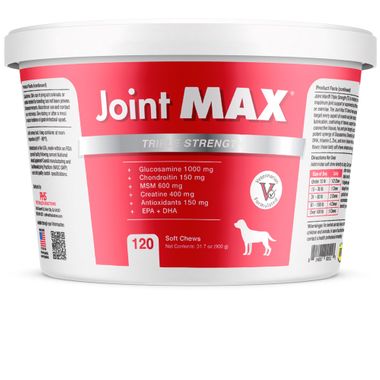
Active Ingredients in Joint MAX Soft Chews (Per 2 Chews)
| Ingredient | Amount (per 2 chews) | Plain-English purpose |
|---|---|---|
| Glucosamine HCl (shellfish source) | 1000 mg | Cartilage building-block support commonly used in mobility plans. |
| MSM | 600 mg | Connective tissue support; often included for stiffness comfort. |
| Creatine monohydrate | 400 mg | More “movement support” than classic joint—supports muscle endurance around sore joints. |
| Chondroitin sulfate (porcine source) | 150 mg | Supports cartilage hydration/cushioning; commonly paired with glucosamine. |
| Omega-3s (EPA + DHA) | EPA 132 mg + DHA 88 mg | Supports joint comfort via inflammation-support pathways when used consistently. |
| Vitamin C | 50 mg | Antioxidant; supports collagen-related pathways. |
| Vitamin E | 50 IU | Antioxidant support. |
| Hyaluronic acid | 2 mg | Associated with lubrication; small amount but included. |
| Citrus bioflavonoids | 10 mg | Supportive antioxidant component. |
| Proprietary antioxidant blend | 150 mg | Oxidative stress support (often includes herbs/extracts like turmeric/cinnamon). |
Ingredient Takeaway for Joint MAX Soft Chews (No Hype)
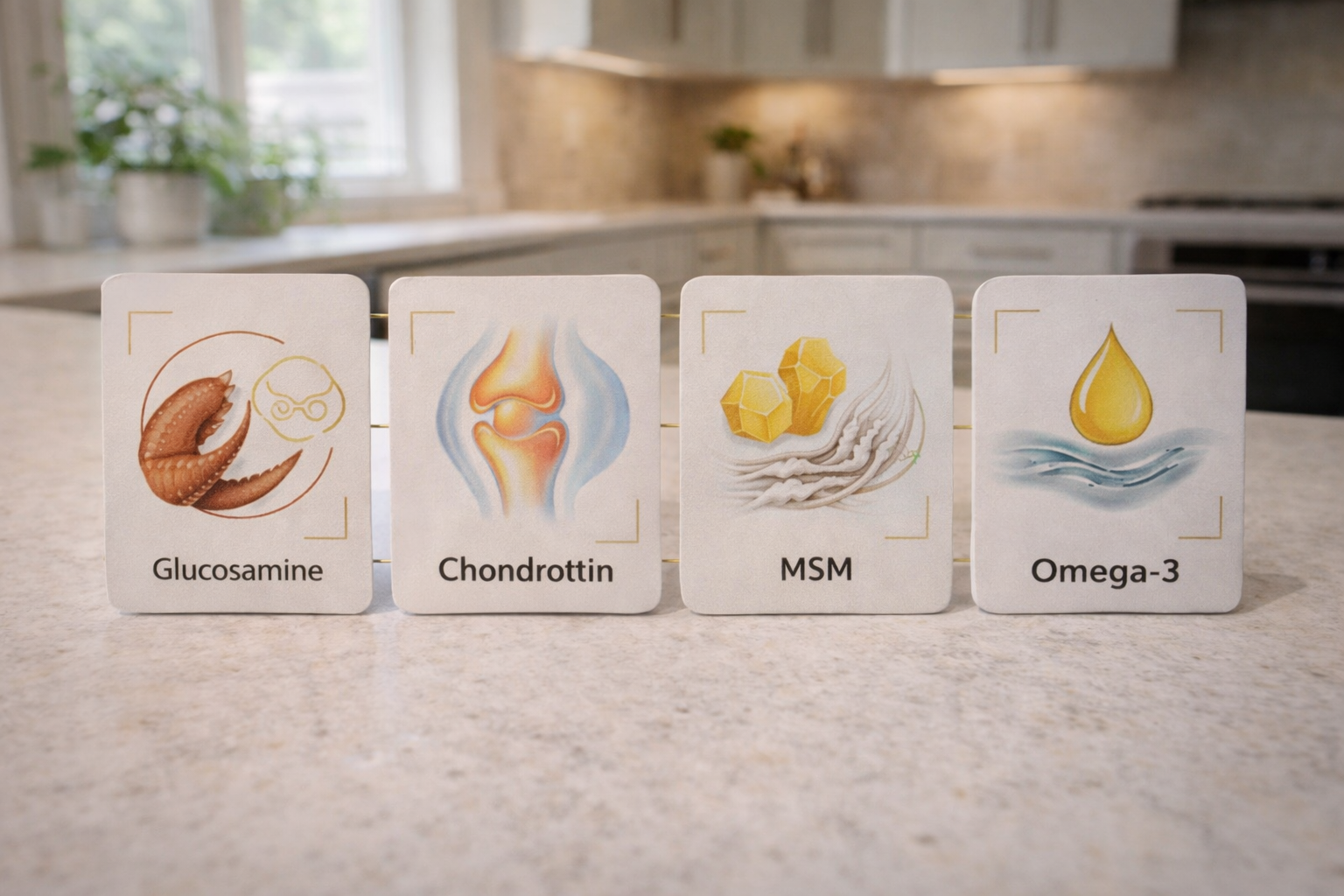
The headline ingredients in Joint MAX soft chews are glucosamine, MSM, chondroitin, and omega-3s. In short, those are the workhorses you’ll see across serious joint supplements.
Meanwhile, the antioxidant blend and smaller add-ons can provide supportive value. Still, they’re rarely what makes or breaks results if dosing and consistency aren’t handled correctly.
Mobility Rescue Plan With Joint MAX Soft Chews: Spot the Early Signs
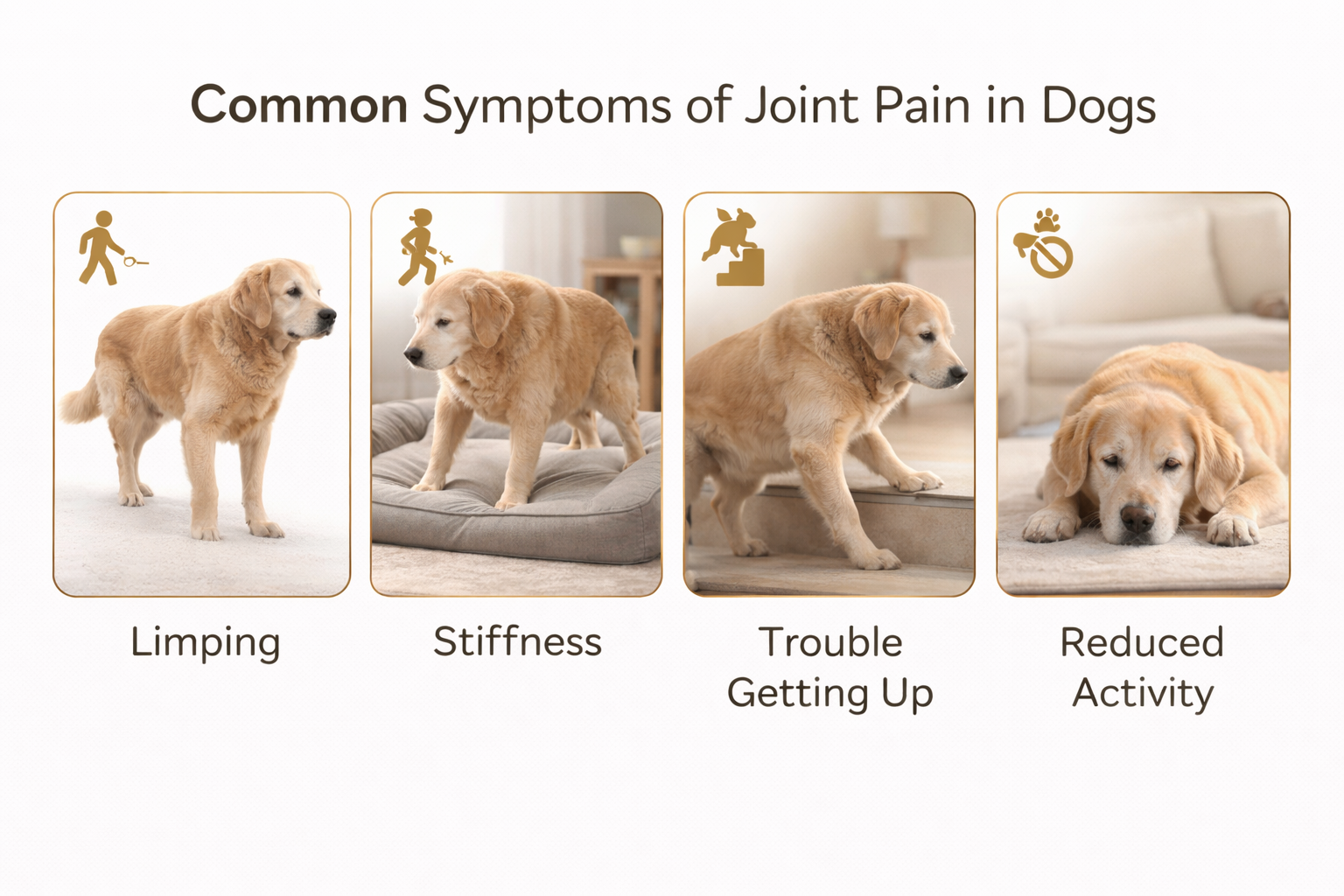
Most dogs don’t wake up and announce, “Good morning, I have joint issues.” They just quietly start editing their life. Instead of stairs, they take the ramp. Instead of jumping, they hesitate. Instead of sprinting, they negotiate.
However, here’s the good news: early changes are the easiest to support. Therefore, if you catch the pattern early, you can often buy your dog more comfortable years—not by magic, but by consistency.

The 7 Signs Your Dog Is Starting to Struggle (Joint MAX Soft Chews Use Cases)
If two or more of these show up repeatedly—especially after activity or in the morning—mobility needs to become a real priority.
- The “slow stand”: front end up… pause… rear end follows later
- Hesitation on stairs/jumping: not refusal, just a pause before committing
- Limping after play or longer walks
- Shorter play sessions: they tap out early and watch from the shade
- Stiffness after rest: they “warm up” after moving
- Trouble laying down or getting comfortable
- Behavior changes: less eager, cranky when touched (because pain changes moods)
Mobility Triage: What You Do This Week (Alongside Joint MAX Soft Chews)
Here’s a 7-day reset that’s realistic, not a 47-step wellness journey. First, track what you see. Next, reduce peak chaos. Finally, make the home environment less slippery than a banana peel factory.
- Track 3 things: getting up, stairs/jumps, post-walk stiffness
- Reduce peak effort: fewer explosive fetch sessions, steadier walks
- Add traction: rugs/runners/grippy mats (boring and effective)
- Warm up like an athlete: 2 minutes easy leash walk before “go time”
- Pick ONE supplement plan: consistency beats chaos (this is where Joint MAX soft chews fit)
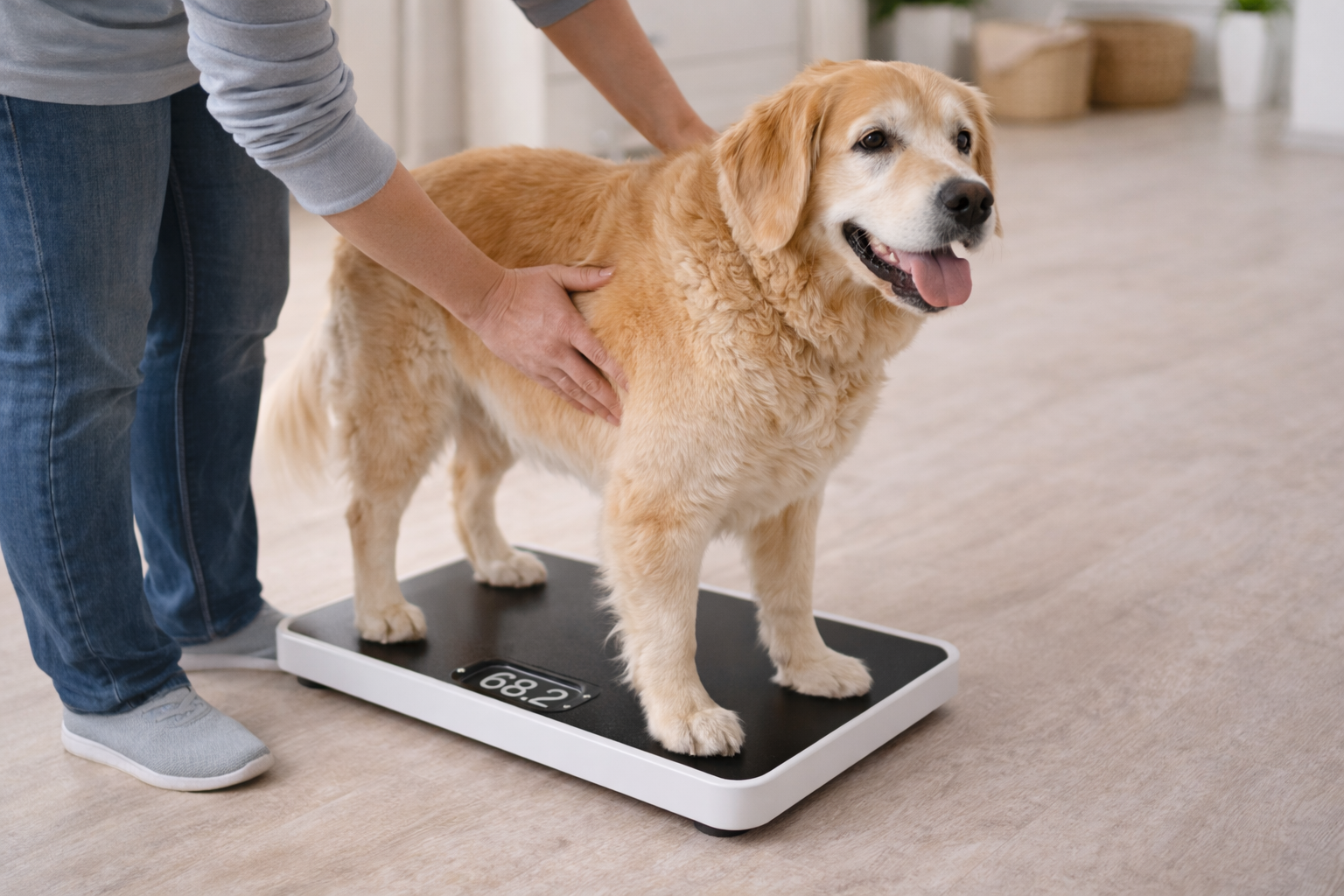
- Weigh your dog for real: extra pounds = extra joint load
- Book a vet chat: if signs are moderate, worsening, or changing quickly
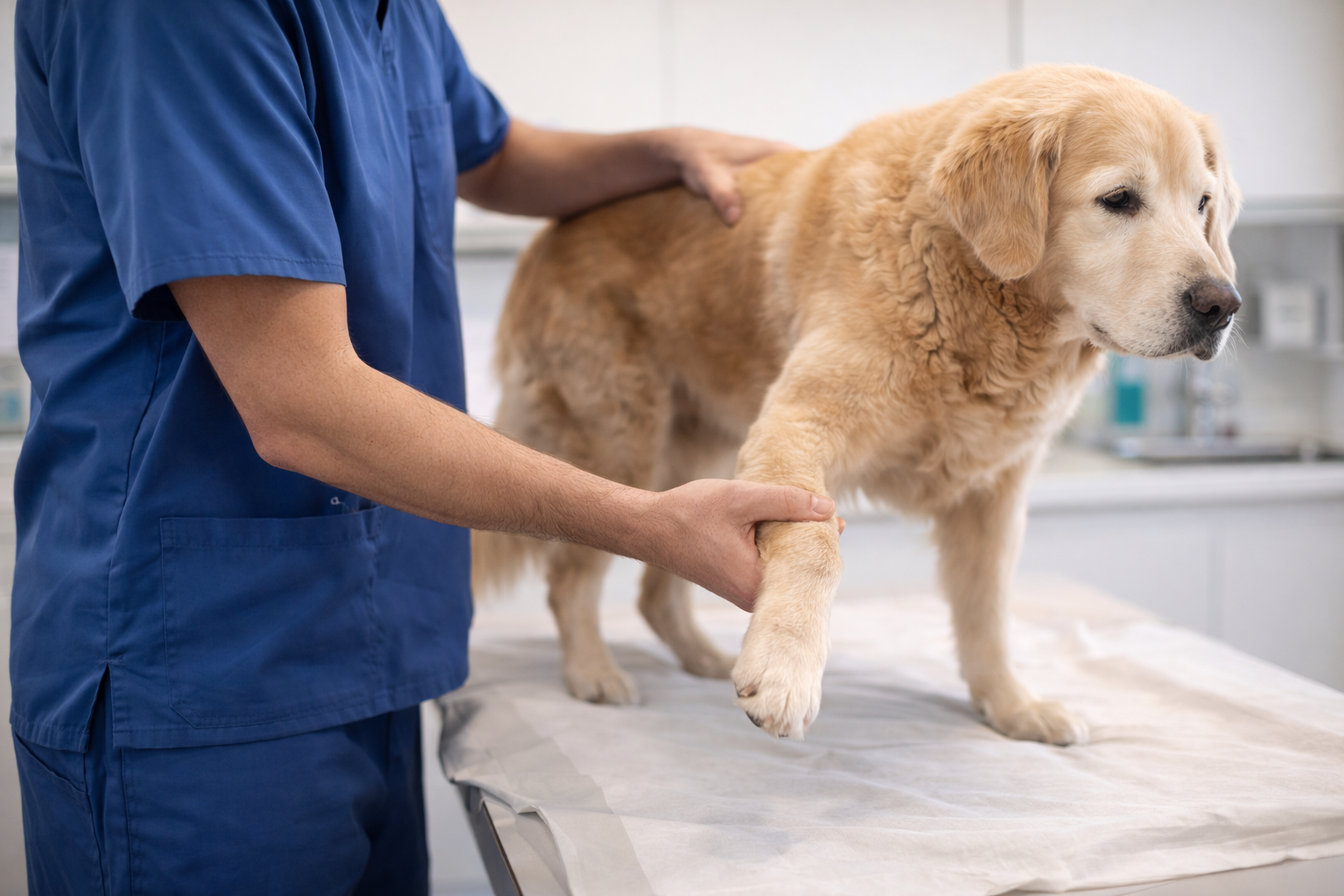
Red Flags: When You Stop Googling and Call the Vet
Supplements are support tools. However, if symptoms change fast, a chew won’t fix torn tissue, fractures, or neurologic problems. Therefore, treat this list as “vet now,” not “add more chews.”
- Sudden severe lameness (especially after a slip, jump, or rough play)
- Yelping/crying or obvious pain with movement
- Dragging a limb or refusing to bear weight
- Rapid worsening over days (not a slow trend)
- Swelling/heat around a joint
How to Use Joint MAX Soft Chews (Dosing + Loading Phase)
Most supplement “fails” happen for two reasons: inconsistent dosing and under-dosing. Even worse, some owners stop after a few days and call it a loss. Instead, treat Joint MAX soft chews like a routine—daily, with food, and long enough to judge fairly.
Because Joint MAX soft chews include a recommended loading phase, it’s smart to plan the first month up front. That way, you won’t get surprised by how fast the tub disappears—especially with big dogs.
Give Joint MAX Soft Chews With Meals (Especially at First)
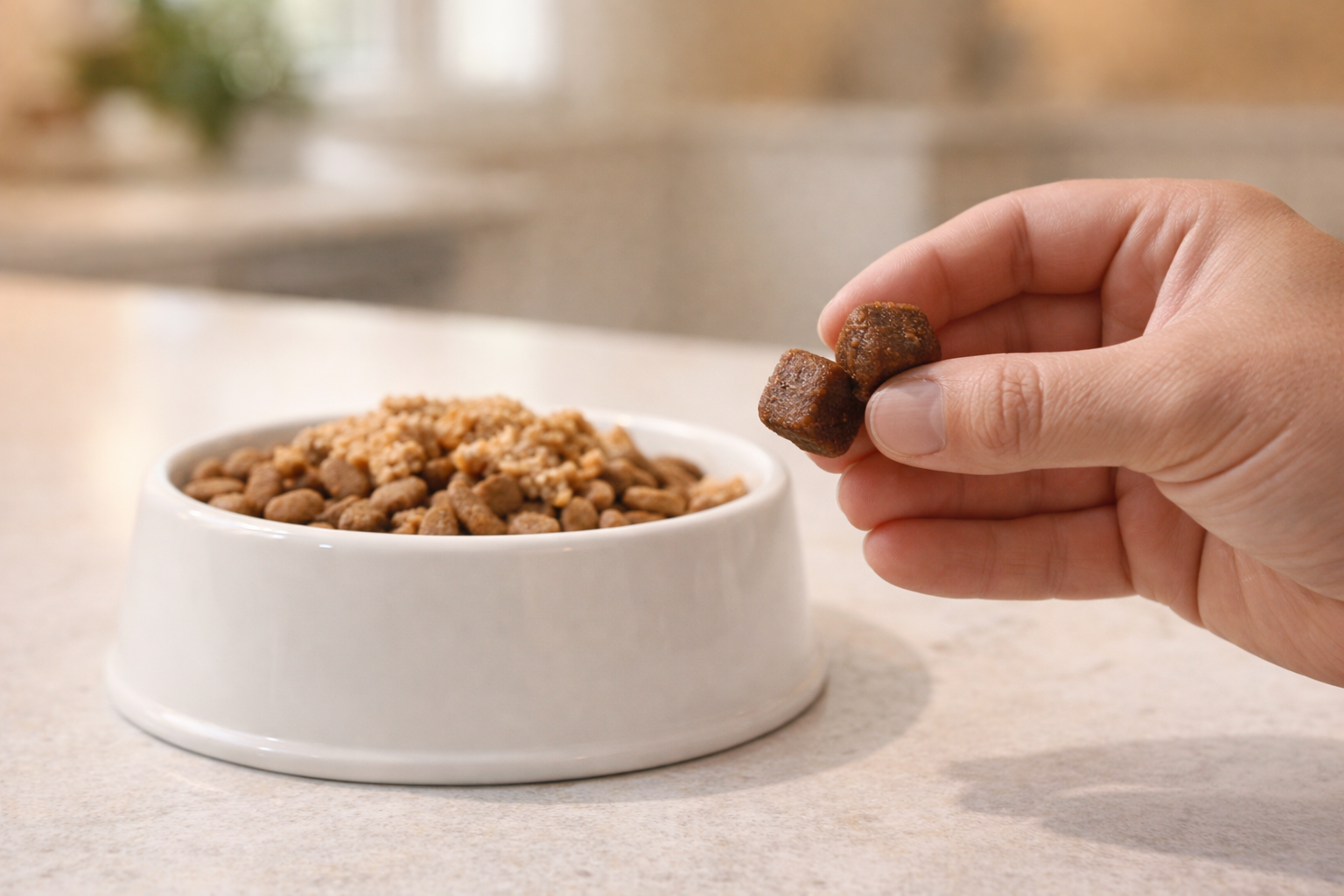
The manufacturer recommends giving Joint MAX soft chews during or after meals. Additionally, food can reduce stomach upset in sensitive dogs.
Joint MAX Soft Chews Daily Dosing by Weight (Maintenance Dose)
| Dog weight | Daily amount | Practical tip |
|---|---|---|
| Under 15 lb | ½ chew | Split cleanly and give with food to reduce tummy drama. |
| 15–30 lb | 1 chew | Easy tier—set a reminder and don’t overthink it. |
| 31–60 lb | 2 chews | Matches label “serving size,” so the ingredient chart applies directly. |
| 61–100 lb | 4 chews | Split AM/PM; therefore, you reduce stomach upset risk and build routine. |
| Over 100 lb | 5 chews | Budget reality: giant dogs = higher cost-per-day. Plan accordingly. |
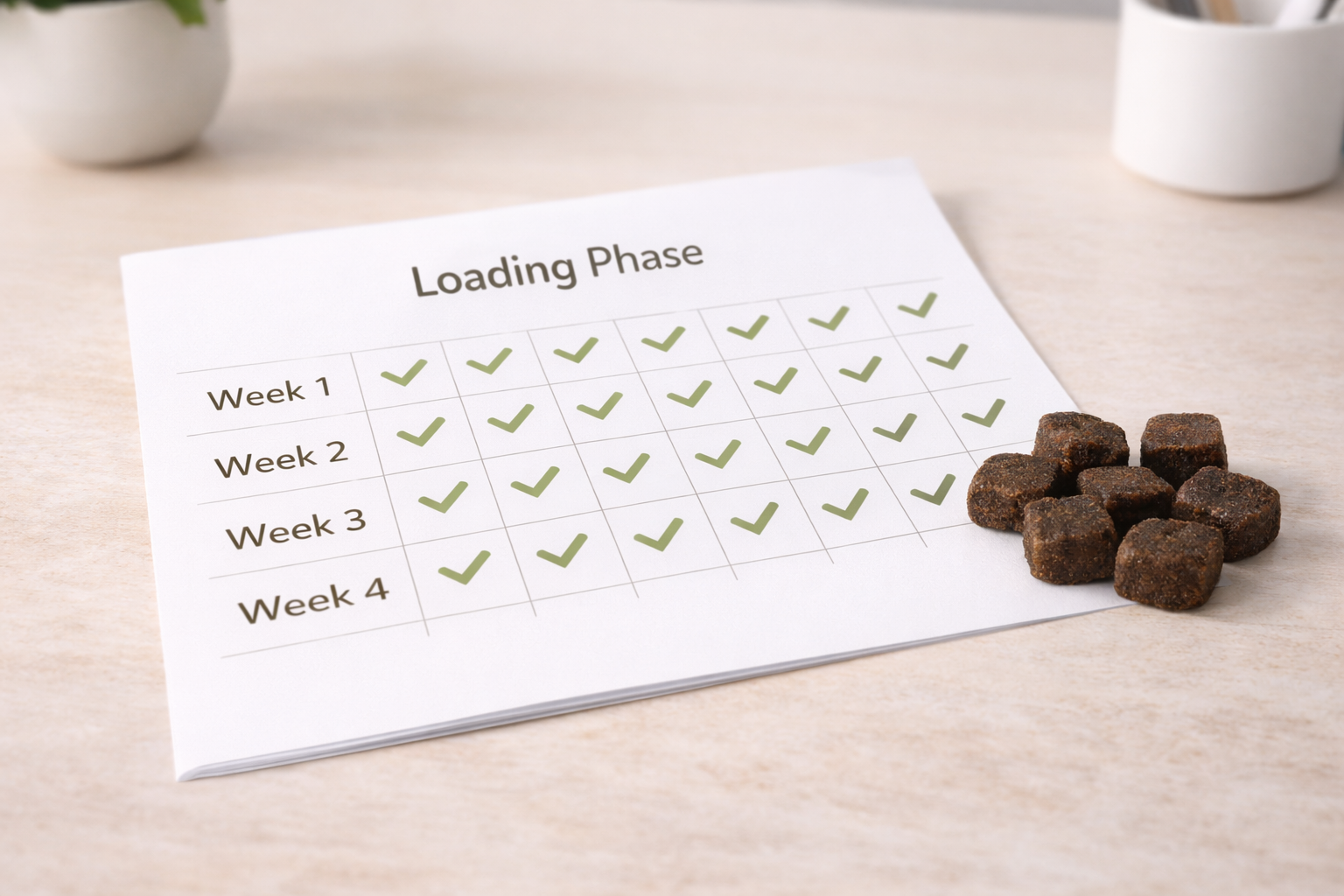
Joint MAX Soft Chews Loading Phase (First 3 Weeks)
The loading phase is simple: double the daily amount for the first 3 weeks, then drop to maintenance. For example, if your dog is 61–100 lb (4 chews/day maintenance), loading becomes 8 chews/day for 21 days. Yep—welcome to big-dog math.
- Loading can help you judge results faster
- Loading burns through chews faster (cost-per-day jumps)
- AM/PM split dosing helps routine and stomach tolerance
What Joint MAX Soft Chews Ingredients Do (and Don’t)
Shopping joint supplements can feel like buzzword bingo. However, the difference is usually dose, consistency, and whether you’re fixing the lifestyle stuff that keeps beating joints up.
Therefore, this is your cheat code: what each ingredient in Joint MAX soft chews is meant to support—and what it realistically can’t do.
Glucosamine + Chondroitin in Joint MAX Soft Chews: Cartilage & Cushioning
These two target long-term joint structure support. Used consistently, some dogs feel less stiff and move more willingly.
On the other hand, they don’t fix a torn ligament, fracture, or severe arthritis overnight. If someone promises “48-hour miracles,” keep your wallet in the holster.
MSM in Joint MAX Soft Chews: Stiffness Support
MSM shows up in many formulas because it’s associated with connective tissue comfort and stiffness support. Additionally, it often pairs well with glucosamine/chondroitin as part of a long-term plan.
Still, MSM doesn’t replace real pain control when your vet says it’s time. Different tool, different job.
Omega-3s (EPA/DHA) in Joint MAX Soft Chews: The “Quiet Work” Ingredient
Omega-3s (EPA/DHA) support a healthier inflammatory response over time. As a result, some dogs noticeably benefit when dosing is consistent.
However, omega-3s don’t act like an NSAID. They can support comfort, yet they aren’t the same as prescription pain management.
Creatine in Joint MAX Soft Chews: Weird, but Interesting
Creatine isn’t classic “joint.” Instead, it’s more “movement support.” When joints hurt, dogs compensate, and then muscles fatigue faster. Therefore, supporting muscle energy can help movement quality for some dogs—particularly larger or active dogs.
Science Reality Check for Joint MAX Soft Chews (Adult Talk)
Evidence for joint supplements is mixed in controlled studies, and real-world results can be mixed too. Some dogs respond noticeably; others barely change. Therefore, the only fair way to judge Joint MAX soft chews is a structured trial with consistent dosing and steady activity levels.
Additionally, don’t expect a chew to cancel out slippery floors, weekend-warrior exercise, or extra weight. Instead, use supplements as support on top of traction, controlled walks, and a body condition your vet is happy with.

Real-World Use: When Joint MAX Soft Chews Make Sense
Supplements live or die in real life, not the label. So here’s where Joint MAX soft chews are most likely to earn their keep—and where they’re not the right first move.

Scenario 1: The Big Dog “Slow Stand” (Joint MAX Soft Chews Sweet Spot)
This is the classic: your dog still has the spirit, but the chassis is starting to creak. They’re slow to stand, stiff when cold, and they take longer to “warm up” on walks.
Therefore, Joint MAX soft chews make sense here—especially if you also add traction rugs and reduce the couch-launch Olympics (gravity always collects).
Scenario 2: “Weekend Warrior” Soreness After Play
Some dogs aren’t old; they’re just living like they’re still sponsored athletes. As a result, they go hard, then act stiff tomorrow.
Instead of relying on “as needed” guessing, tighten the routine: shorter peak intensity, better warm-ups, then use Joint MAX soft chews as daily support.
Scenario 3: Small Dog, Big Joint Needs
Smaller dogs can still have serious joint issues. Meanwhile, dosing tiers can be easier on the budget if your dog is in the half-chew or one-chew range.
Scenario 4: Working With the Vet (Joint MAX Soft Chews as Support)
Owners often add joint chews alongside a vet mobility plan. However, if your dog is on medications, run Joint MAX soft chews by your veterinarian first. That’s not fear—it’s simply smart.
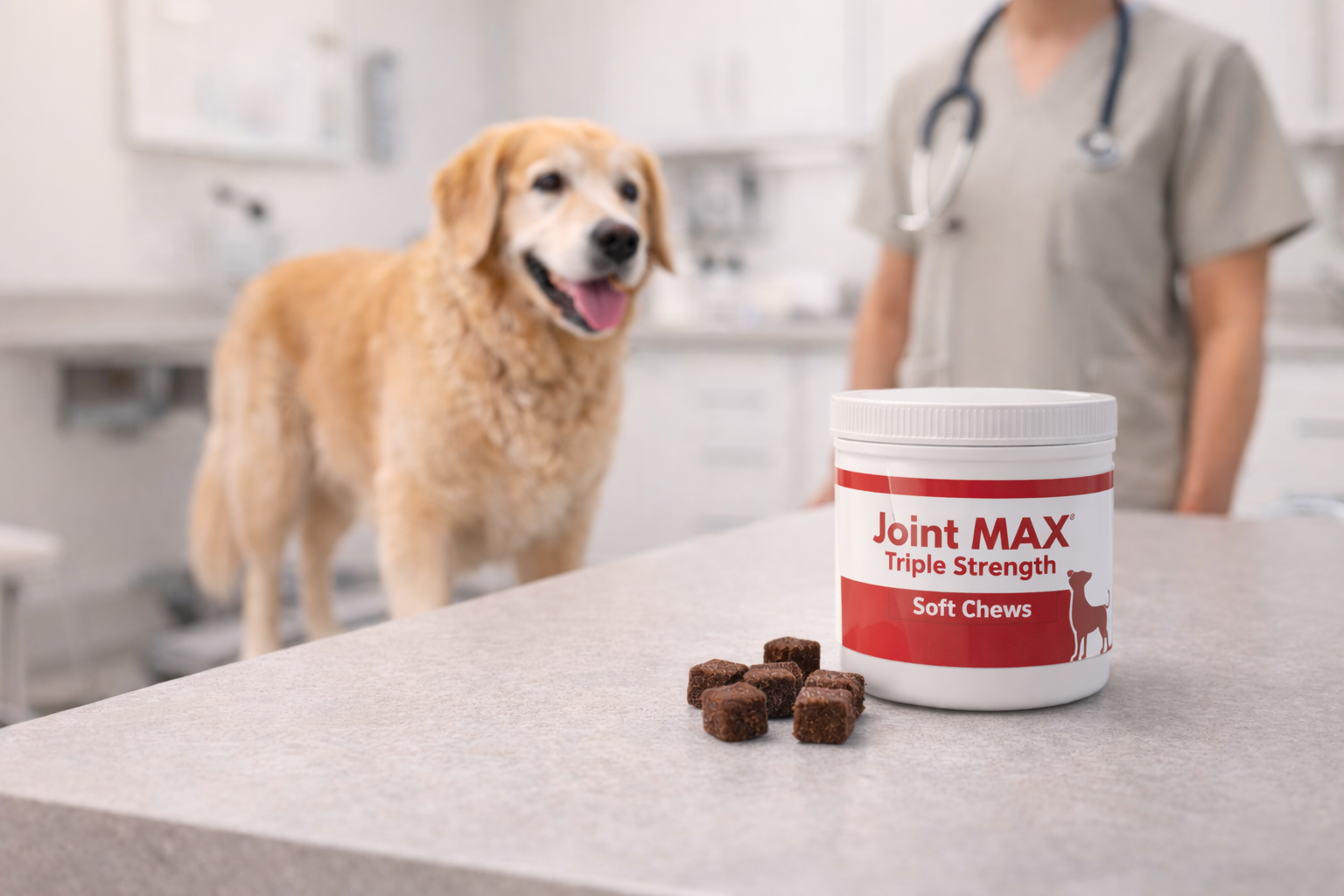
What Results to Expect From Joint MAX Soft Chews (Realistic)
If Joint MAX soft chews help, it usually shows up as:
- Easier get-ups
- Less stiffness after naps
- Better willingness to walk/play
- Smoother mornings
Ultimately, give it time. Joint support isn’t instant, so judge it over weeks—not days.

Joint MAX Soft Chews vs Alternatives (Pick the Lane, Then Compare the Label)
You’re basically choosing between lanes: max-support chews, vet-famous mainstream options, broader blends, and budget picks. However, marketing names don’t matter as much as daily dose per dog weight. Therefore, compare the lane first, then compare the label.
| Product | Best for | Core lane | Why you’d pick it | Watch-outs |
|---|---|---|---|---|
| Joint MAX soft chews (Triple Strength TS) | Older/middle-aged dogs, big dogs, higher support needs | Max-support chew | Strong core-actives stack + omega support; built for daily mobility support | Big dogs burn through chews; shellfish/porcine sourcing may matter |
| Dasuquin (Soft Chews) | Owners wanting a vet-famous premium lane | Mainstream premium | Commonly cross-shopped; strong reputation | Price tier; label-check for sensitivities |
| Cosequin (Chews/Tabs) | Mild-to-moderate support, “start here” option | Mainstream | Widely available; often cost-effective | May feel underpowered for higher-need big dogs |
| GlycoFlex Stage 3 | Owners wanting broader mobility blends | Blend lane | Often includes additional mobility components | More ingredients = more sensitivity checking |
Cost-Per-Day Reality for Joint MAX Soft Chews (Do the Math Once)
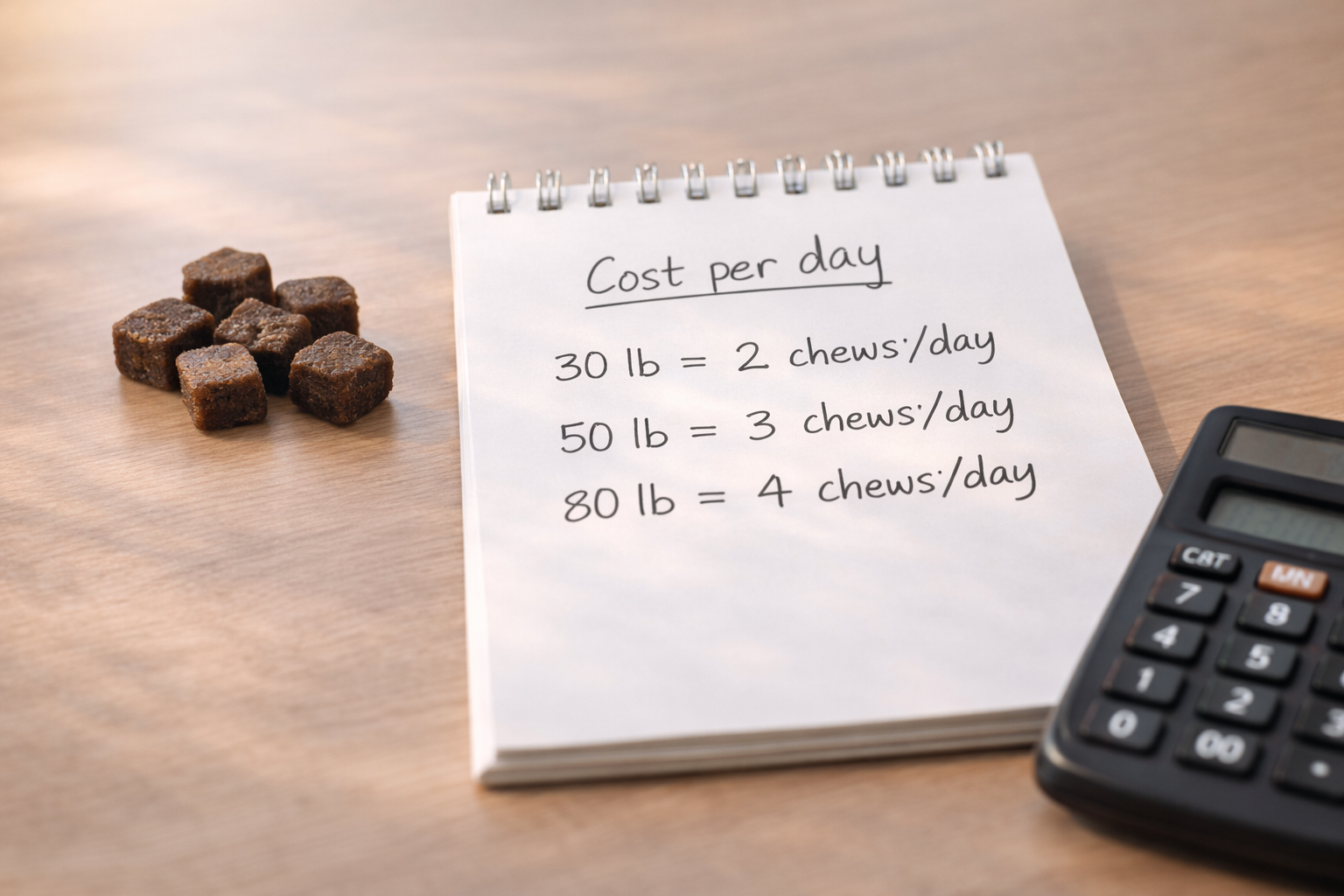
Big-dog dosing changes everything. The tub doesn’t “feel expensive” until you realize you’re running 4–5 chews a day—and possibly double that during loading. Therefore, do the math once and shop smarter forever.
Pros & Cons of Joint MAX Soft Chews
✅ Pros
|
⚠️ Cons
|

Who Should Buy Joint MAX Soft Chews / Who Should Skip
Buy Joint MAX Soft Chews If…
- Your dog is stiff after rest, slow to rise, or sore after normal activity.
- You’re seeing early mobility decline and want daily support you can actually stick to.
- You will dose consistently (daily, with meals, same routine).
- You’re building the full mobility plan: traction + sensible exercise + weight control.
- You want a max-support chew lane, not a “maybe it works” snack.
Skip Joint MAX Soft Chews (For Now) If…
- Your dog is suddenly lame, rapidly worse, yelping, or swollen (vet first).
- Your dog has sensitivities where shellfish/porcine sourcing is a problem.
- You’re expecting instant results in 48 hours (joint support doesn’t work like that).
- You won’t dose consistently (save your money and skip the guilt).

Final Verdict: Are Joint MAX Soft Chews Worth It?
Joint MAX soft chews (Triple Strength TS) are a strong “max support” option for dogs who are stiff but stable—slower to rise, creaky after naps, or sore after normal activity. The ingredient stack hits the core joint-support lane, and the dosing structure is clear.
That said, Joint MAX soft chews shine as part of a mobility plan, not as a magic wand. Therefore, pair them with traction on slick floors, steadier exercise, and weight control—and they can be worth the daily cost, especially for aging big dogs that still want to live like they’re four.
- Buy it if your dog is stiff but stable and you’ll run a consistent 4–6 week trial.
- Skip it (for now) if your dog is acutely worse or clearly painful—get a vet evaluation first.
- Plan for big-dog dosing because cost-per-day rises fast at 4–5 chews daily (and higher during loading).

FAQs: Joint MAX Soft Chews
How long do Joint MAX soft chews take to work?
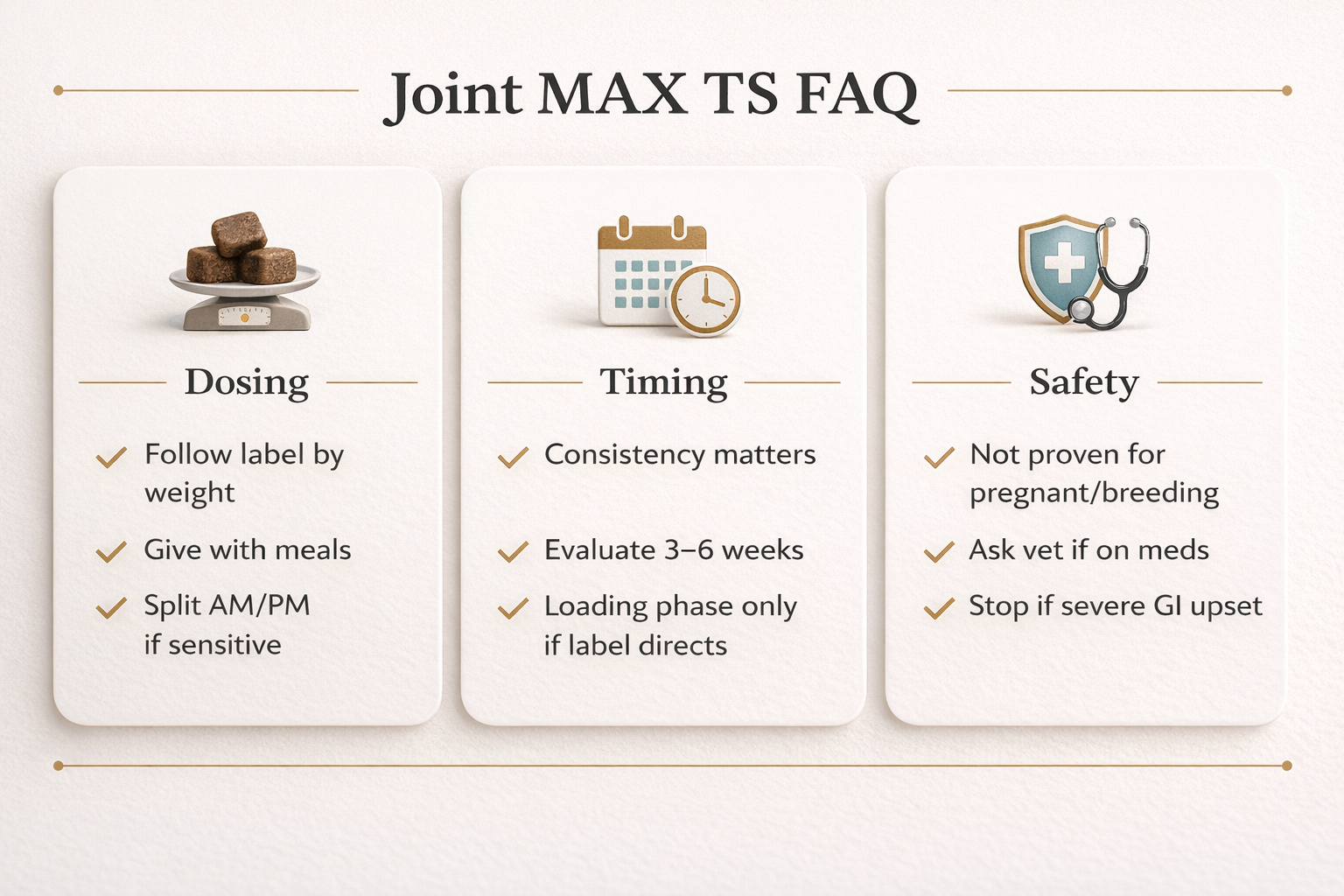
Most joint supplements need time and consistency. Generally, a fair evaluation window is 3–6 weeks—especially if you follow the 3-week loading phase first.
Do I need the loading phase for Joint MAX soft chews?
You don’t have to; however, loading can help you judge faster. If your dog has a sensitive stomach, start lower and ramp up gradually instead.
Should I give Joint MAX soft chews with food?
Yes. Give them during or after meals. Additionally, splitting AM/PM doses can improve tolerance for higher-chew tiers.
What if my dog gets stomach upset?
Taper down for a few days, then ramp back up. However, if symptoms are severe or persistent, stop and call your veterinarian.
Can Joint MAX soft chews be used with prescription meds?
They can be used as support in many real-world plans. Still, always confirm with your veterinarian if your dog is on medications or has other health conditions.
Are Joint MAX soft chews safe for pregnant or breeding dogs?
They are not proven safe for pregnant/breeding animals. Therefore, ask your veterinarian for the right option if that applies.
Any allergen/diet flags?
Glucosamine is shellfish-sourced and chondroitin is porcine-sourced. So, if your dog has sensitivities, read the full panel carefully.
Author Trust
Bark & Brass isn’t a supplement company, and we’re not here to sell you hope in a jar. We live with dogs, we watch how they move, and we care about what actually improves quality of life.
That means we can say two things at the same time: some dogs benefit from a well-dosed joint supplement when used consistently, and supplements aren’t magic—worsening pain needs veterinary evaluation.

Sources
- Joint MAX Triple Strength Soft Chews product page (label info, dosing, warnings)
- VCA Hospitals – Pet health library (arthritis/joint health education)
- Cornell Riney Canine Health Center – Canine health information
- AAHA – Pet owner education (pain signs and when to seek veterinary care)
Affiliate Disclosure: Some links in this post may be affiliate links. If you buy through them, Bark & Brass may earn a small commission at no extra cost to you.