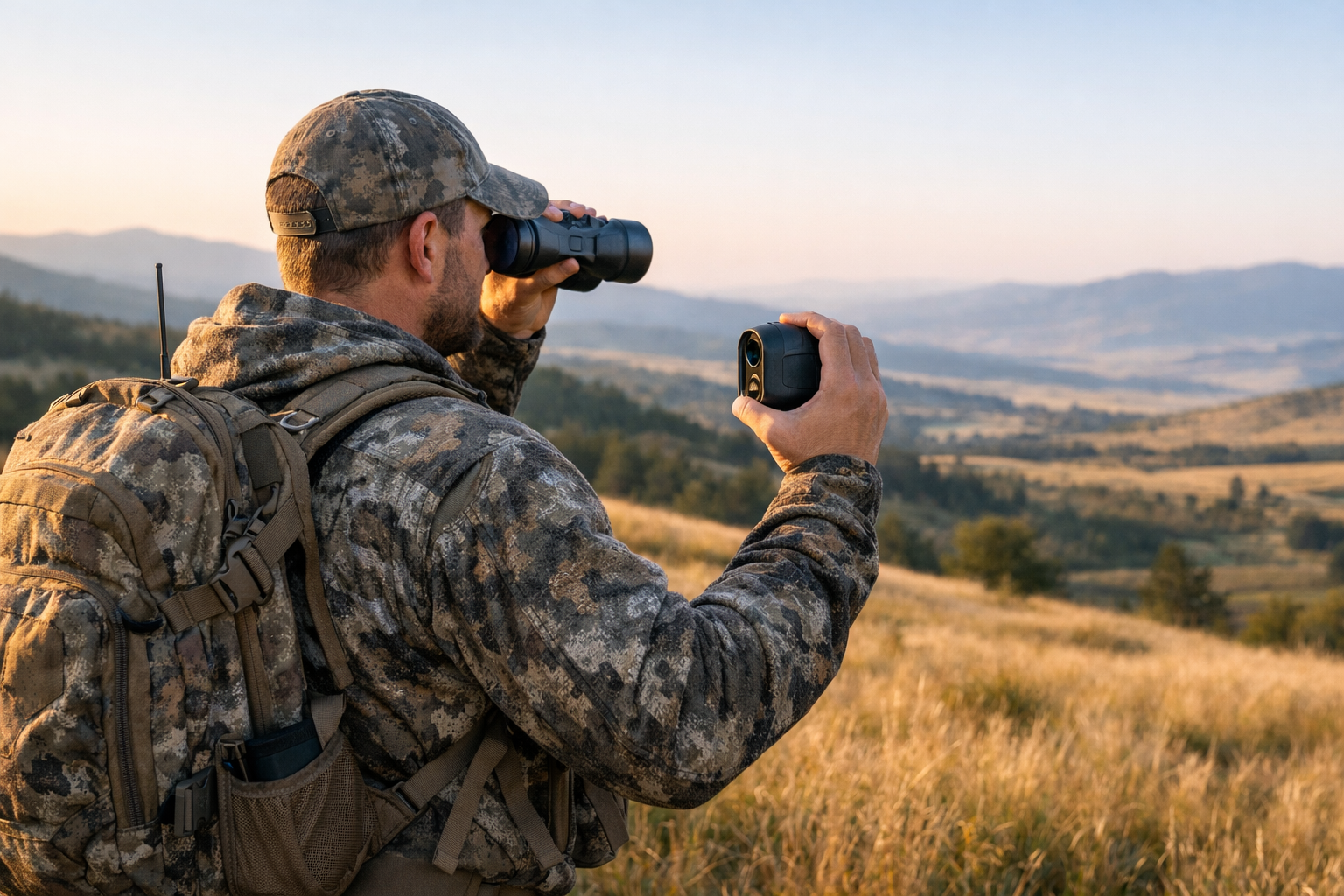
What tool solves the first problem? Just as important, which one gets used most often? For a beginner, hunter, or shooter, the real question is which purchase delivers the most immediate value without turning the shopping cart into a financial crime scene.
Rangefinder vs Binoculars: Which One Should You Buy First?
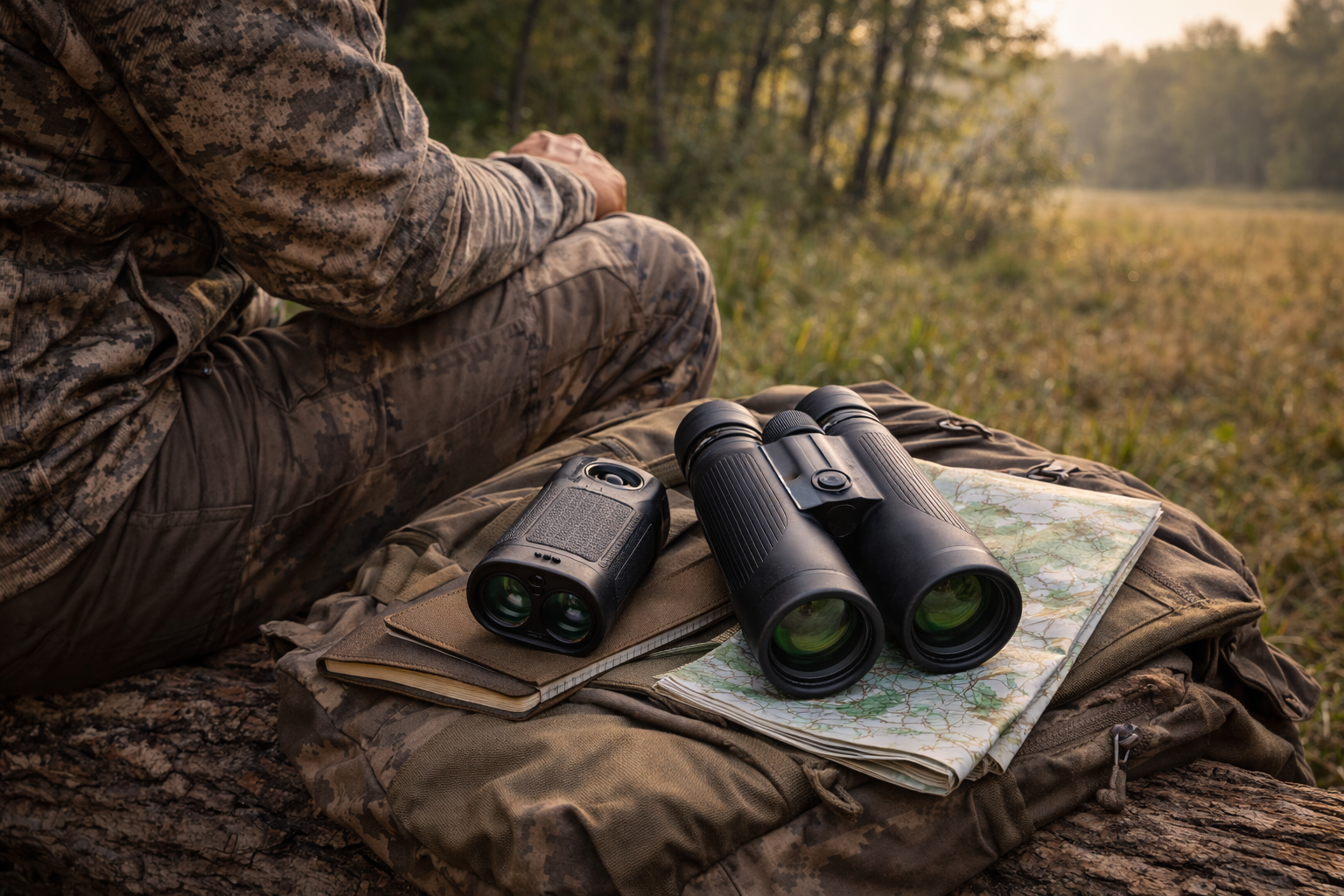
Rangefinder vs binoculars is one of those gear questions that actually matters. It is not some made-up internet slap fight where everybody argues for attention and nobody ends up wiser. The tool you buy first changes how you scout, how quickly you spot game, how confidently you judge distance, and how much money you waste fixing the wrong problem later.
Most people do not have unlimited budget. Most people also do not need every optic under the sun right out of the gate. That means this decision is really about order.
For most readers, binoculars deserve first money. They help you find, scan, study, and understand what is in front of you. A rangefinder becomes the smarter first buy when your biggest weakness is exact yardage instead of observation. That shift happens fast for bowhunters, some rifle shooters, and people who already own serviceable glass.
This guide breaks down the decision with real products from Guns.com and Ammunition Depot, honest use-case advice, common buying mistakes, and a clear recommendation based on how people actually hunt, shoot, scout, and spend money. If you have been reading our other optics content like our red vs green dot guide or the EOTECH HHS Green review, this post fills in another part of the optics puzzle.
Quick Answer: In the rangefinder vs binoculars debate, binoculars usually win first because they solve the broader problem. They help you locate game, pick apart terrain, study movement, and understand what is happening before exact distance becomes the main issue.
A rangefinder should jump the line when precise yardage is the problem most likely to cost you a shot. That is especially true for archery, some rifle applications, and fixed hunting setups where you already know where the opportunity will appear.
If your budget is healthy and you want one premium shortcut, a rangefinding binocular can combine both jobs. Just be ready for the “buy once, cry once” part of that conversation.
Quick Answer for Most Buyers
If you want the shortest honest answer possible, buy binoculars first unless exact yardage is already the thing holding you back. Observation usually comes before measurement. You have to find the animal, identify the target, and understand the terrain before a laser readout becomes the star of the show.
That does not make rangefinders less useful. Far from it. They are excellent when distance is the problem that needs solving right now. The trick is not confusing an important tool with the right first tool.
| Question | Binoculars First | Rangefinder First | Best Fit From This Article |
|---|---|---|---|
| What problem are you solving? | Finding, scanning, studying, and evaluating what you are looking at. | Getting precise distance for a shot or hold. | Bushnell H2O 8×42 or Leupold BX-1 for binoculars; Halo XL450 or Leupold RX-1400i for rangefinders. |
| Best for beginners? | Usually yes. | Only when yardage is the immediate pain point. | Most beginners should start with binoculars. |
| Best for archery? | Helpful, but not always first priority. | Often yes. | Halo XL450 or Muddy LR850X. |
| Best for general outdoor use? | Absolutely. | Usually no. | Leupold BX-1 or Bushnell H2O 8×42. |
| Best premium shortcut? | A rangefinding binocular can do both jobs if budget allows. | SIG KILO10K-ABS HD 10×42. | |
What Each Tool Actually Does
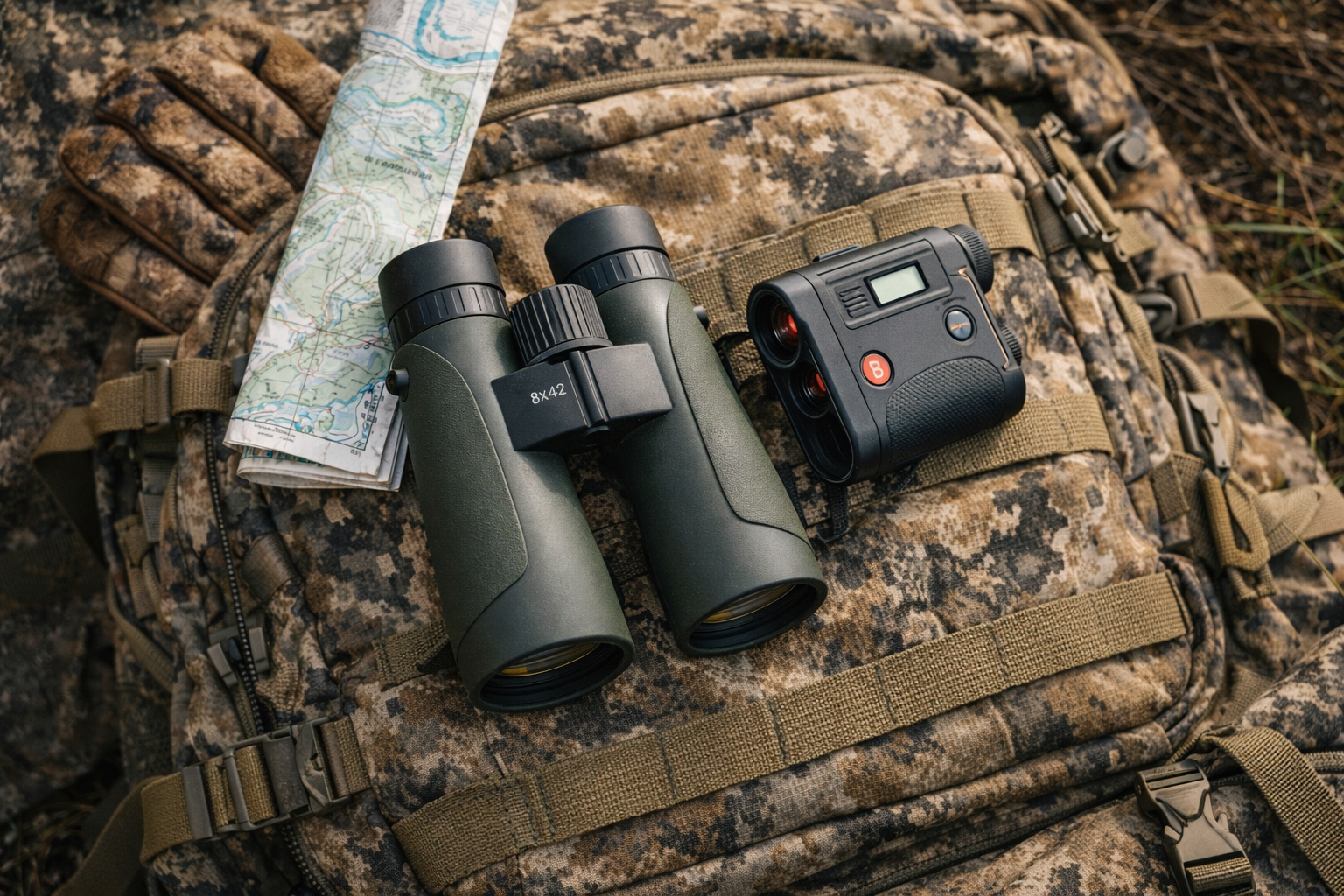
Strip away the marketing, the numbers on the box, and the dramatic product names that sound like rejected action-movie titles. Binoculars and rangefinders do different jobs. That sounds obvious, yet a lot of buyers still shop them like they are interchangeable.
Binoculars Solve the Observation Problem
Binoculars are built for seeing more. You use them to scan fields, break down timber edges, watch movement, study behavior, and understand the shape of the country in front of you. They are comfortable for longer viewing sessions, more natural on the eyes, and far better at helping you absorb an entire scene instead of just one detail.
That matters because most field situations begin with observation. Before you care if something is 173 yards away, you usually need to know whether it is a buck, a stump, another hunter, or the same patch of brush that fooled you three times already. Binoculars handle that job without making you feel like you are trying to inspect the world through a peephole.
Rangefinders Solve the Precision Problem
A rangefinder is built to answer one question fast: how far is that? It throws a laser, measures the return, and gives you a number you can use. When exact yardage matters, that number can save a shot, a stalk, or an entire day.
Where this tool shines is precision. Bowhunters need it for pin decisions. Rifle shooters use it for distance confirmation. Hunters in broken terrain use it because eyeballing distance can get stupid in a hurry. The role is narrower than a binocular’s role, but when it matters, it matters a lot.
Why Binoculars Usually Come First
For most buyers, binoculars deliver more value earlier and more often. They work in the woods, on field edges, around water, from the truck, while scouting, during a hike, and even on range days when you want to study the environment instead of just measure it. That kind of flexibility is hard to beat.
They Are Better for Beginners
A new optics user needs a tool that helps build observation habits. Binoculars do that. They teach you to slow down, scan correctly, notice detail, and read terrain with more confidence. Those are foundational skills. By comparison, a rangefinder is a much more task-specific tool.
Another truth worth saying out loud: binoculars tend to be more fun right away. The payoff is immediate. The world looks closer, cleaner, and easier to understand. That kind of instant feedback makes the gear more likely to get used, and used gear earns its keep faster than gear that sits in a pouch waiting for a special moment.
They Pull More Weight in General Outdoor Use
Hiking, wildlife viewing, scouting, property walks, travel, and general outdoor life all lean heavily toward binocular value. In those settings, a rangefinder can still be nice to have, but it is not the tool doing the bulk of the work. Binoculars make you more aware of what is happening around you. That has value long before a yardage reading enters the conversation.
Readers who have already been through our Athlon Ares ETR review know we love good optics, but not every optics purchase needs to start in the deep end. Sometimes the smart move is the boring move. Boring gear that works is beautiful.
When a Rangefinder Should Come First
There are absolutely times when a rangefinder deserves first money. Blanket advice is lazy advice, and this is one of those areas where context changes everything.
Archery Changes the Order Fast
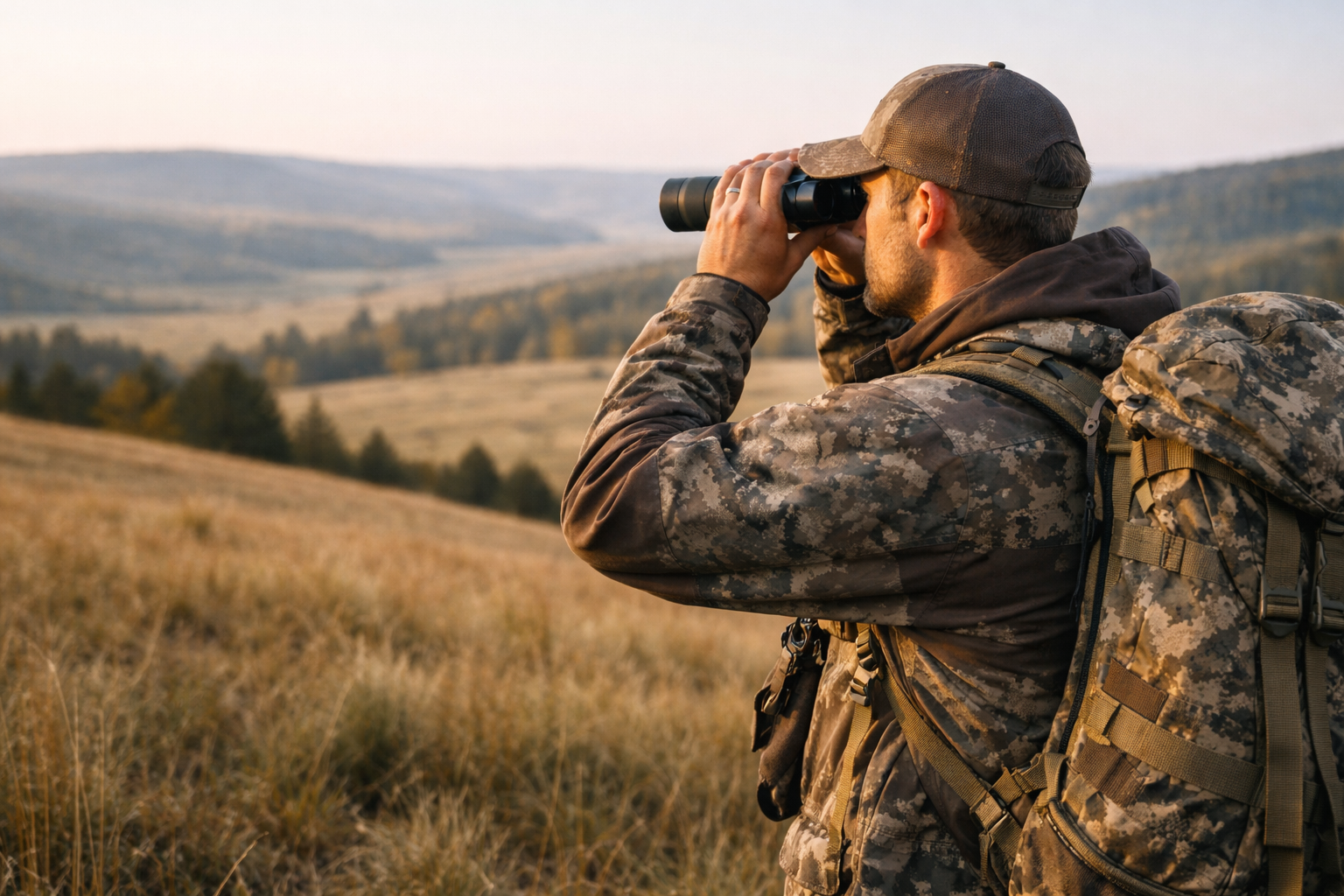
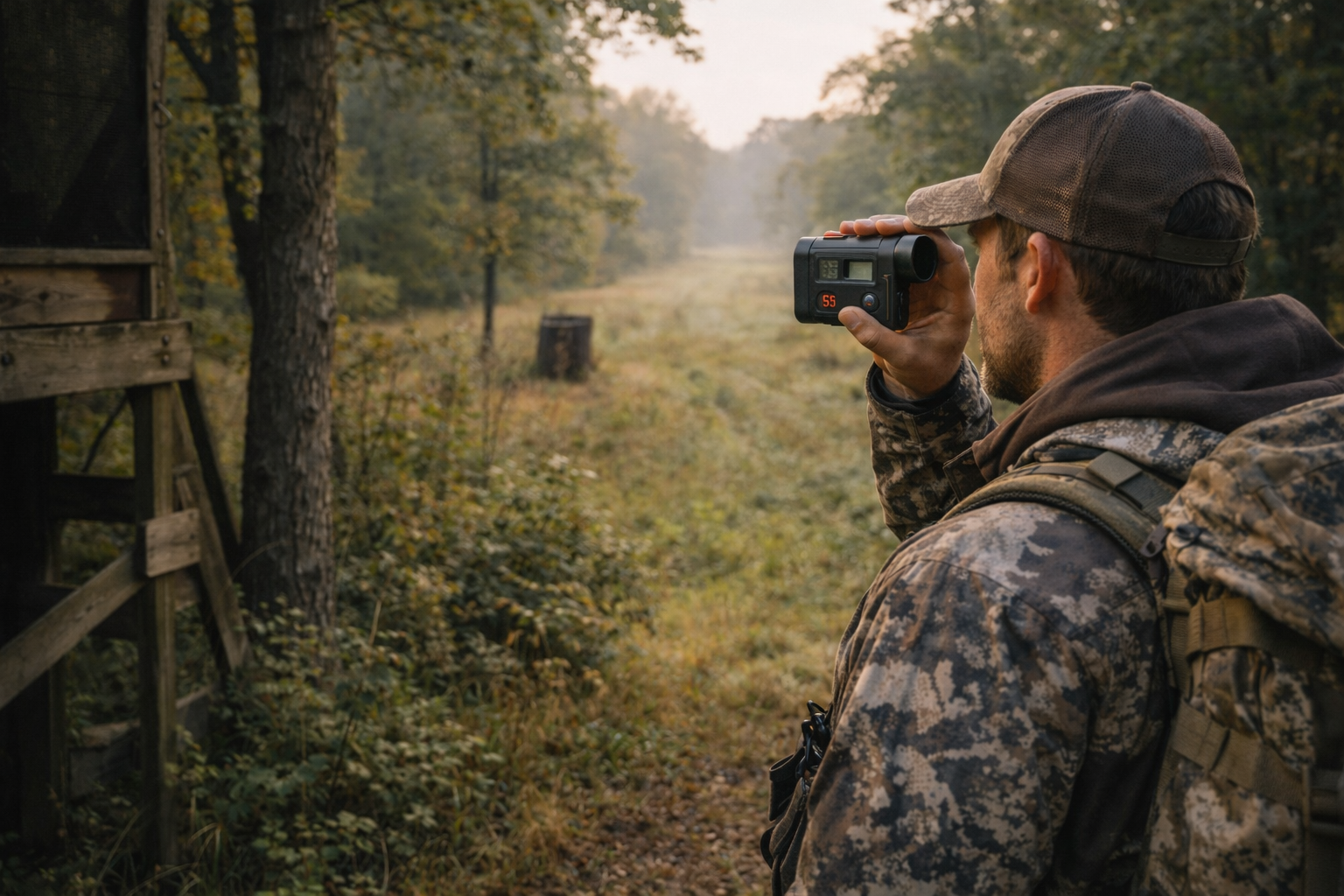
Bowhunters have one of the strongest cases for buying a rangefinder first. A few yards can mean a lot when you are dealing with pin gaps, animal movement, angle, and nerves. In many archery setups, the issue is not seeing the deer. The issue is knowing whether that deer is 24 yards away or 31. That is exactly where a rangefinder starts paying for itself quickly.
Pre-ranging landmarks around a stand or blind makes this even more useful. A tree, rock, trail edge, or brush opening becomes a known number before the pressure hits. That is a whole lot better than trying to play geometry while your heart is trying to high-five your throat.
Rifle and Steel Work Can Favor Yardage
Some rifle shooters should absolutely consider a rangefinder first, especially if their glass situation is already decent enough. Known-distance practice on uneven ground, steel targets spread across a property, and longer-range shooting all reward precise distance confirmation.
In those cases, the missing piece is not observation. It is measurement. Once that becomes true, the buying order changes.
Already Owning Serviceable Glass Changes Everything
If you already have binoculars that are good enough, then this whole decision gets easier. You are no longer choosing from zero. You are filling the gap that still exists. For a lot of people, that means the smarter next purchase is a rangefinder, not a second set of glass that solves a problem already handled.
Magnification and Real-World Use
Magnification is where people start acting like bigger numbers automatically equal smarter choices. That is cute. It is also how buyers end up with glass that is shakier, narrower, and more annoying than they expected.
Why 8×42 Is Such a Safe First Pick
An 8×42 binocular is the classic first recommendation for a reason. It is easier to hold steady, offers a forgiving field of view, works well in a wide range of environments, and does not punish you for breathing like a normal human. For a first serious bino, that balance is tough to beat.
That is why so many all-around recommendations land in this size. It is useful without being fussy, capable without being specialized, and easy to live with over time.
When 10×42 Starts Making Sense
A 10×42 can be the right move when you want a little more detail at distance and already know you are comfortable with the tradeoff. It is not wrong. It is simply a slightly more opinionated choice than 8×42.
For many beginners, 8×42 is still the safer answer. For users who spend more time on field edges, open country, or longer glassing lanes, 10×42 becomes more attractive.
Real Product Picks from Guns.com and Ammunition Depot
This is where the advice stops being theoretical and starts becoming useful. The products below are the cleanest fits for this topic from the two retailers you wanted in the article.
Best Binocular Picks
Leupold BX-1 McKenzie 8×42 at Guns.com
If you want the cleanest example of why binoculars usually deserve first money, this is it. The Leupold BX-1 McKenzie 8×42 sits right in the all-around sweet spot. It is the grown-up first-bino answer for someone who wants usable magnification, solid reputation, and enough versatility to handle scouting, hunting, hiking, and general field use without drama.
For readers who already liked how we broke down practical optics choices in the ROMEO5 Gen II review, this is a similar kind of recommendation: not flashy for the sake of flash, just smart for the job.
Bushnell H2O 8×42 at Ammunition Depot
This is the value play that makes a lot of sense for beginners. The Bushnell H2O 8×42 gives you a useful size, outdoor-friendly construction, and a price that does not feel like a personal attack. If you want to get into decent binoculars without taking a giant swing, this is a strong place to start.
It is also the kind of product that fits a wide audience. Hunters, hikers, casual outdoorsmen, and property owners can all get mileage out of it without needing a degree in lens jargon.
Bushnell H2O 10×42 at Ammunition Depot
If you know you want a bit more reach, the Bushnell H2O 10×42 is the next logical step. This is for the buyer who spends more time watching open lanes, larger fields, or longer sight lines and wants a little more detail without leaping into heavyweight specialty glass.
I would still steer many first-timers to 8×42, but for the right user this model makes a lot of sense.
Best Rangefinder Picks
Halo XL450 6x at Ammunition Depot
This is the budget rangefinder that makes the “rangefinder first” case feel practical instead of dramatic. The Halo XL450 is especially attractive for bowhunters and closer-range users who need a straightforward distance tool and do not need to pretend they are ranging reflective billboards in another zip code.
Simple matters. Useful matters. Cheap junk does not. This one lands in a sensible spot for people who need yardage now.
Muddy LR850X 6×26 at Ammunition Depot
If you want more headroom than a basic entry-level unit, the Muddy LR850X gives you a nice middle lane. It is well suited to the buyer who already knows a rangefinder belongs in the kit and wants more breathing room without going full premium.
That middle ground is where a lot of smart money should live. Not every user needs the fanciest unit on the market. Plenty of users just need a more capable one than the cheapest option.
Leupold RX-1400i TB at Guns.com
This is where the rangefinder conversation gets more serious. The Leupold RX-1400i TB fits rifle shooters and field users who want more than a basic number on a screen. If your glass situation is already handled and distance is the missing piece, this is one of the strongest options in the article.
It is a classic example of spending more where the extra capability actually matters instead of where it just looks cool on a product page.
Premium All-in-One Option
SIG Sauer KILO10K-ABS HD 10×42 at Guns.com
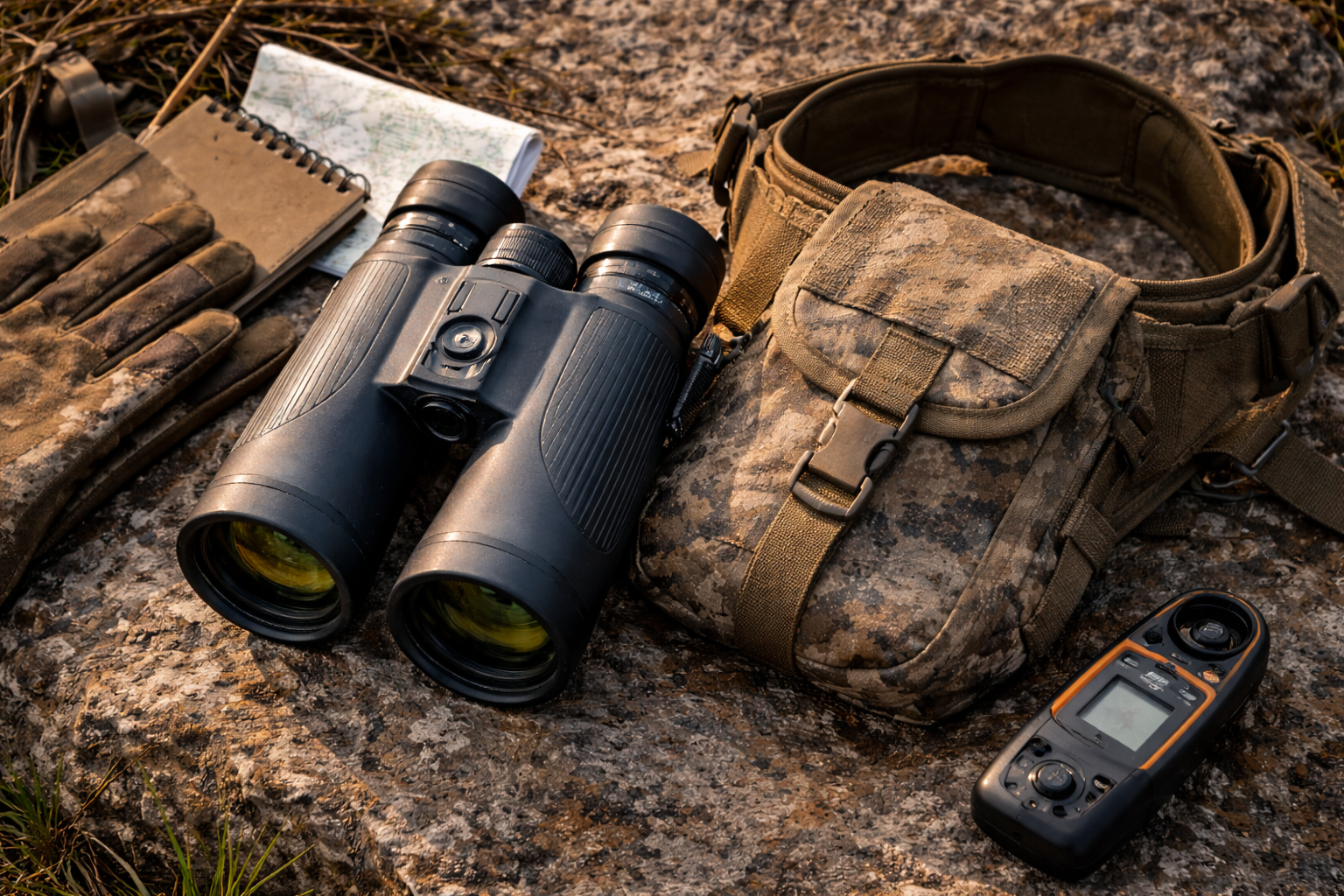
This is the premium shortcut. A rangefinding binocular like the SIG KILO10K-ABS HD collapses observation and measurement into one high-end tool. That changes the buying conversation because it can solve both problems in one shot.
Of course, it also changes the price conversation. This is not the average beginner recommendation. It is for the buyer who knows exactly why they want a rangefinding bino and is willing to pay for the privilege.
Side-by-Side Comparison Table
| Product | Retailer | Type | Best Use | Best For |
|---|---|---|---|---|
| Leupold BX-1 McKenzie 8×42 | Guns.com | Binocular | All-around observation | Hunters, hikers, scouts, general outdoor users |
| Bushnell H2O 8×42 | Ammunition Depot | Binocular | Budget-friendly first bino | Beginners and value-minded buyers |
| Bushnell H2O 10×42 | Ammunition Depot | Binocular | More detail at distance | Users who want a bit more reach |
| Halo XL450 6x | Ammunition Depot | Rangefinder | Basic yardage and angle help | Bowhunters and close-range users |
| Muddy LR850X 6×26 | Ammunition Depot | Rangefinder | Mid-level ranging flexibility | Hunters wanting room to grow |
| Leupold RX-1400i TB | Guns.com | Rangefinder | Advanced ranging support | Rifle shooters and serious field users |
| SIG KILO10K-ABS HD 10×42 | Guns.com | Rangefinding binocular | Premium one-tool solution | Advanced users with premium budgets |
Binoculars vs Rangefinders Pros and Cons
Binoculars
Pros
- Better for spotting and scanning large areas
- More useful for scouting, hiking, and general outdoor use
- Easier to study terrain, movement, and animal behavior
- Usually the smarter first buy for beginners
- More versatile across different types of field use
Cons
- Do not give exact yardage
- Can leave archers guessing distance
- Higher magnification can be harder to hold steady
- You may still need a rangefinder later
- Cheap glass can be disappointing fast
Rangefinders
Pros
- Give precise distance readings quickly
- Very useful for archery and longer rifle shots
- Help reduce bad yardage guesses in uneven terrain
- Some models add angle compensation and ballistic help
- Great second-step optic once glassing is covered
Cons
- Not as comfortable for long scanning sessions
- Less useful for general observation and scouting
- Big range claims do not always match real-world targets
- Can be overkill for casual outdoor use
- You still need binoculars for broader field awareness
Best Fit by Scenario
Context decides everything here. The smartest first buy changes with terrain, hunting style, and what you already own.
Timber and Midwestern Cover
In timber, creek bottoms, and mixed field-edge country, binoculars usually deserve first money. Movement can be subtle, openings can be small, and terrain can hide more than it shows. Better observation pays off early in that environment.
Open Country and Big Views
Wide spaces still favor binoculars first for most buyers because you have to find what matters before you can measure it. Once glass is handled, a rangefinder becomes a strong second step.
Range Days and Steel
The shooting range can tilt the answer toward a rangefinder, especially when visibility is not the problem and exact distance is. If observation is already covered, the laser starts making a very strong case.
Hiking, Property Walks, and General Use
Binoculars win this one and it is not close. They are simply more useful in broader outdoor life where awareness matters more often than exact yardage.
Starter Combos by Budget and Use
Budget Bino-First Combo
Start with: Bushnell H2O 8×42
Add later: Halo XL450
Best for: Beginners, hikers, casual hunters, general outdoor use
Better All-Around Combo
Start with: Leupold BX-1 McKenzie 8×42
Add later: Leupold RX-1400i TB
Best for: Serious hunters and shooters building a balanced setup
Archery-First Combo
Start with: Halo XL450 or Muddy LR850X
Add later: Bushnell H2O 8×42
Best for: Bowhunters who need yardage before long observation sessions
Premium Shortcut
Start with: SIG KILO10K-ABS HD 10×42
Add later: Only if you want a backup or specialty tool
Best for: Advanced users with premium budgets
Common Buying Mistakes
Chasing Big Numbers
More magnification is not automatically better. Bigger max-yardage claims are not automatically better either. Big numbers sell product pages. Real-world usability is what matters once the boots hit dirt.
Solving the Wrong Problem
If your real issue is spotting and studying targets, a rangefinder will not fix that. If your real issue is precise yardage, binoculars alone will not fix that. Match the purchase to the actual weakness in your setup instead of the coolest box on the shelf.
Buying Fancy Too Soon
Premium gear is fantastic when it matches a real need. Premium gear bought too early is just expensive confusion. Fancy mistakes are still mistakes.
How I Would Spend the Money
If I were starting from zero, I would buy binoculars first. I would want the tool that helps in the widest range of situations and gets used the most. That points straight at an 8×42 bino. The Bushnell H2O 8×42 is the value play. The Leupold BX-1 McKenzie 8×42 is the nicer all-around play.
If I were primarily bowhunting, my answer would change. Then I would lean toward the Halo XL450 first, or the Leupold RX-1400i TB if I wanted a more capable long-term tool. Distance matters immediately in that lane, and pretending otherwise is how shots get ugly.
With a bigger budget and a very clear purpose, the SIG KILO10K-ABS HD becomes the premium shortcut. That move only makes sense when the buyer truly understands why they want a rangefinding bino instead of simply liking the idea of owning one. Those are not always the same thing.
Setup Tips That Make Either Tool More Useful
Carry Binoculars So You Actually Use Them
A bino harness does more for real-world usefulness than most people want to admit. Gear you carry comfortably gets used. Gear you leave in the truck does not.
Pre-Range Landmarks Before the Shot
When a rangefinder is part of an archery setup, use it before the pressure hits. Range trees, trail edges, rocks, and openings while you are still calm. That saves a lot of nonsense later.
Practice Before the Field Demands It
Spend time with the optic before the moment matters. Learn how your binoculars scan. Learn how your rangefinder reads in different light and on different backgrounds. Familiarity is cheap. Mistakes are not.
Frequently Asked Questions
Are binoculars or a rangefinder more important for hunting?
For most hunters, binoculars are more important first because they help you find and judge what is out there. A rangefinder becomes more important sooner for bowhunters and some rifle shooters.
Is 8×42 or 10×42 better for a first binocular?
For most buyers, 8×42 is the safer first pick because it is easier to hold steady and more forgiving across different situations.
Can a rangefinder replace binoculars?
No. A rangefinder can help with distance, but it does not replace the comfort and broader usefulness of binoculars for scanning and studying a scene.
What is the smartest budget path?
If binoculars make more sense for your needs, the Bushnell H2O 8×42 is a strong value pick. If yardage is the main issue, the Halo XL450 is a practical starting point.
Final Verdict
Rangefinder vs binoculars usually ends with binoculars getting first money because binoculars help you do more, see more, and learn more in the broadest number of situations. They solve the earlier problem.
A rangefinder becomes the smarter first buy when distance is the main weakness in your setup right now. That is most common with bowhunters, certain rifle shooters, and users who already have decent glass.
If you want the cleanest one-line answer, here it is: buy binoculars first if you still need help finding the answer, and buy a rangefinder first if you already found the answer and now need to measure it.
Related Bark & Brass Reads
Want to keep going? These posts pair nicely with this one:
EOTECH HHS Green Review
Picking the Right Dot: Red or Green?
SIG ROMEO5 Gen II Review
Athlon Ares ETR UHD Review