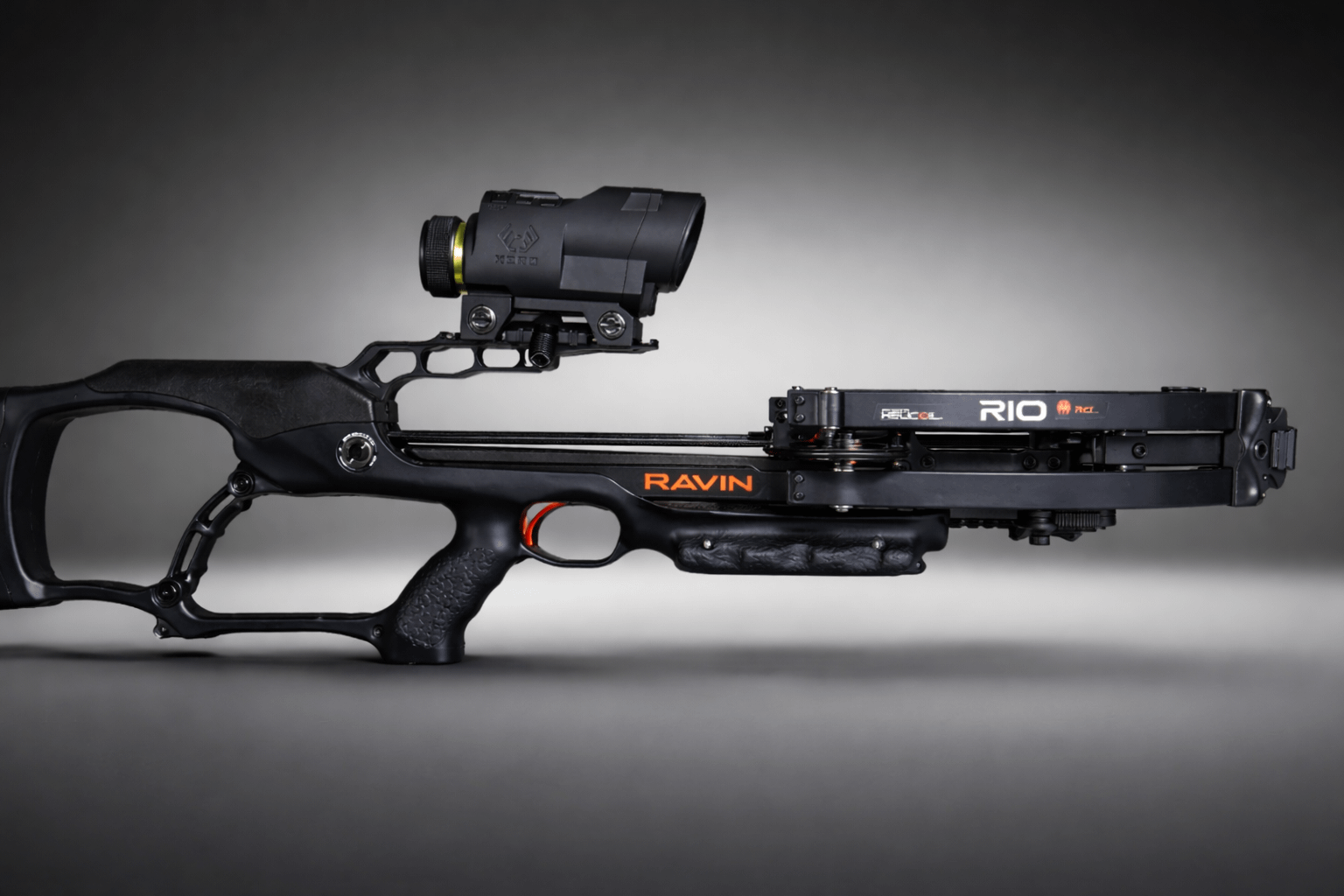
Ravin® Integrated Xero® X1i Crossbow Scope (Garmin) Review: The “Range-It-And-Forget-It” Upgrade — And It’s $400 Off
The Ravin Xero X1i scope is what happens when Ravin and Garmin decide they’re done with yardage-guessing in a tree stand.
Instead of juggling a separate rangefinder (and doing panic math under pressure), you get a 3.5x crossbow scope with a built-in laser rangefinder, angle compensation, an electronic level sensor, and preloaded Ravin ballistics—so the aimpoint is the aimpoint.
Better yet, Ravin currently lists it at $999.99 instead of $1,399.99, which is a straight-up $400 discount.
Quick Answer
If you shoot a Ravin and you want faster, cleaner, more repeatable accuracy without carrying a separate rangefinder,
the Ravin Integrated Xero X1i is one of the most meaningful upgrades you can bolt on.
Mount it, select your Ravin model, and sight in at 20 yards; after that, the scope’s processor uses preloaded Ravin ballistic data to generate the right digital aimpoint.
In other words, you get a system designed to turn “I think it’s 40” into “it’s 41—and my reticle agrees.”
Now for the blunt part: it’s expensive. However, at $999.99 (Ravin’s current listed special price), it’s far easier to justify than the usual $1,399.99.
Therefore, if you’ve been “scope-curious” but not “scope-committed,” this sale window is the least painful time to jump.
Quick View
- What it is: A 3.5x crossbow scope with a built-in laser rangefinder and digital aimpoints.
- Why it’s different: It’s optimized for your Ravin model with preloaded Ravin ballistics, plus an electronic level sensor and angle compensation.
- What you gain: Speed and confidence—especially when a deer shows up and your brain suddenly forgets how numbers work.
- What you pay: Money and weight (1.9 lbs). This optic is not a feather.
- Deal watch: Ravin lists it at $999.99 vs $1,399.99 (a $400 difference).
What the Ravin Xero X1i Actually Is
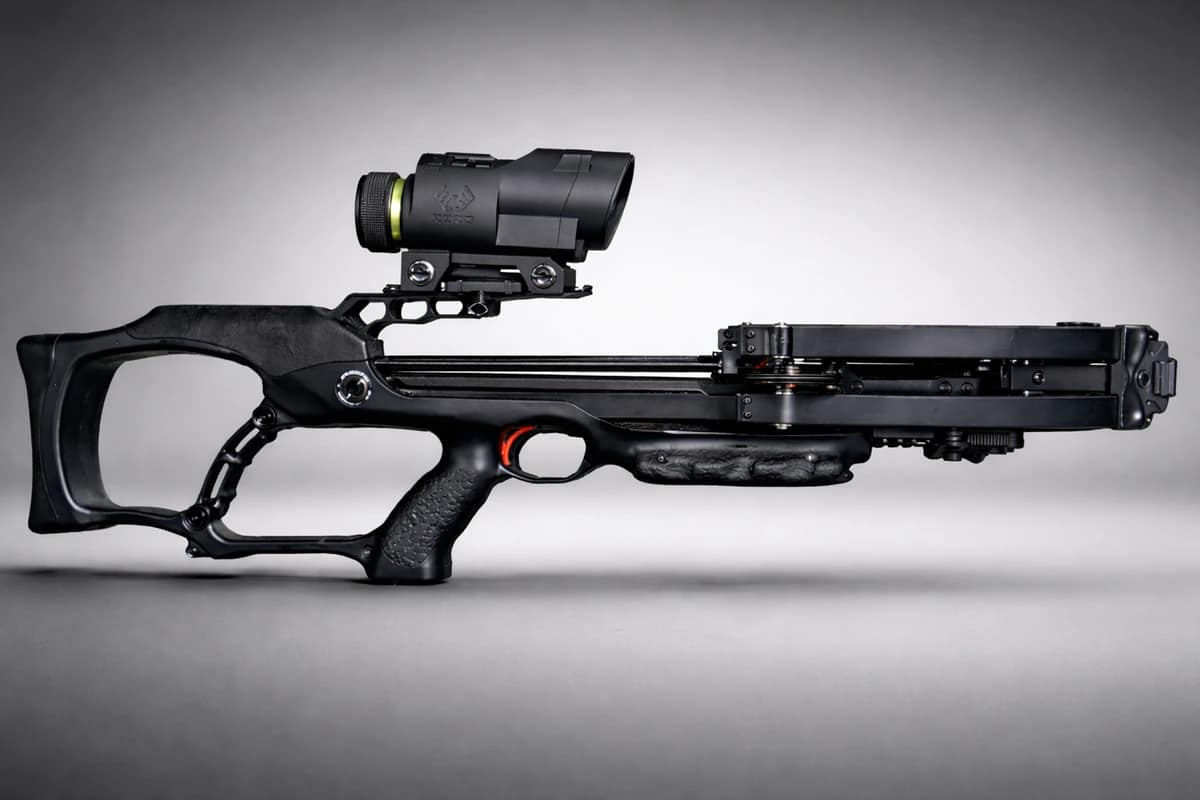
The Ravin Integrated Xero X1i is the Garmin Xero X1i crossbow scope—customized for Ravin and optimized for your specific Ravin model.
Practically speaking, it’s a scope that does three jobs at once, which is why it feels like a “system” more than an accessory.
- Magnifies the target at 3.5x so you can aim with precision instead of vibes.
- Ranges the target with a built-in laser so you’re not guessing distance or swapping to a separate rangefinder.
- Calculates the aimpoint using preloaded Ravin ballistic data so your reticle becomes “the correct answer,” not “a suggestion.”
The idea stays simple: ranging + ballistics + display = one aimpoint you can trust.
Because of that, people call it “cheating.” It isn’t cheating; it’s what happens when you bring a calculator to a math problem instead of counting on your fingers in the dark.
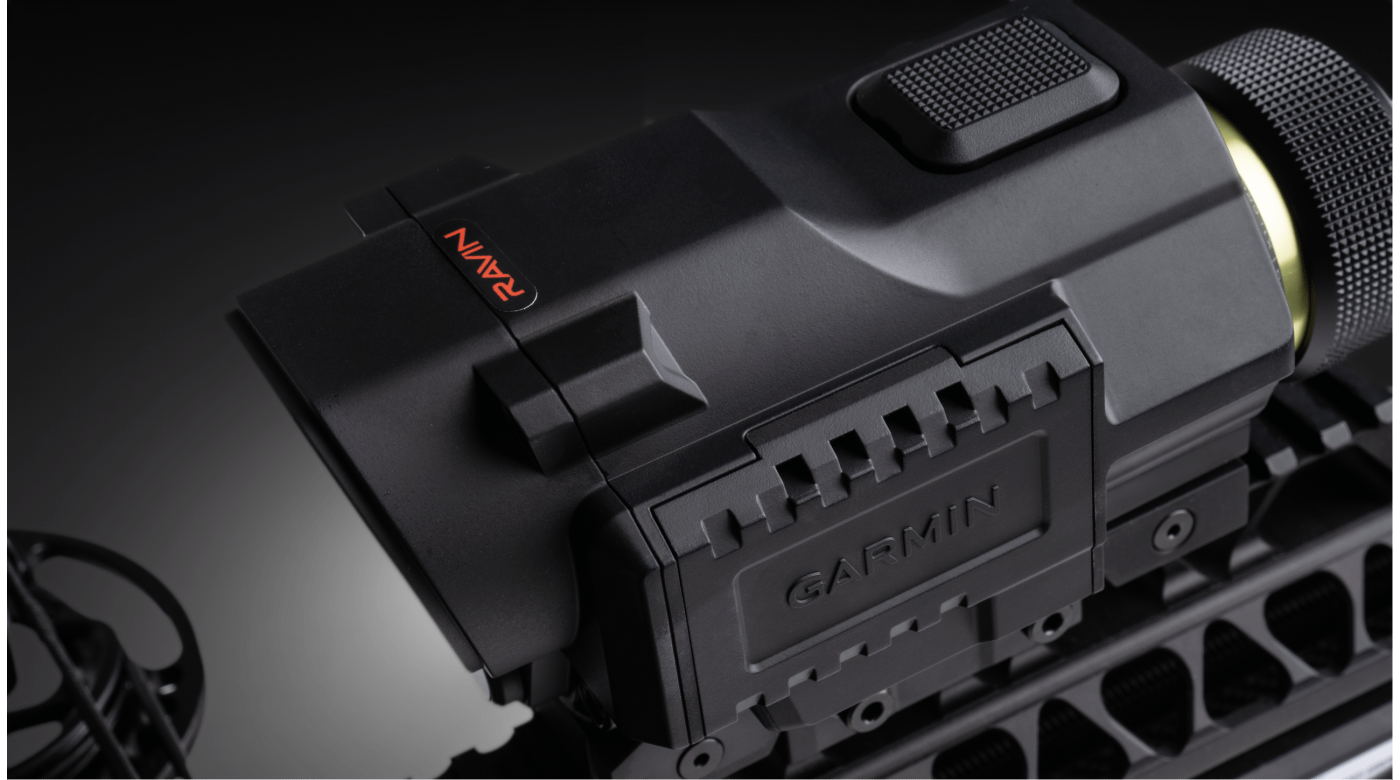
On the physical side, it feels like modern Garmin hardware: dense, squared-off, and purpose-built.
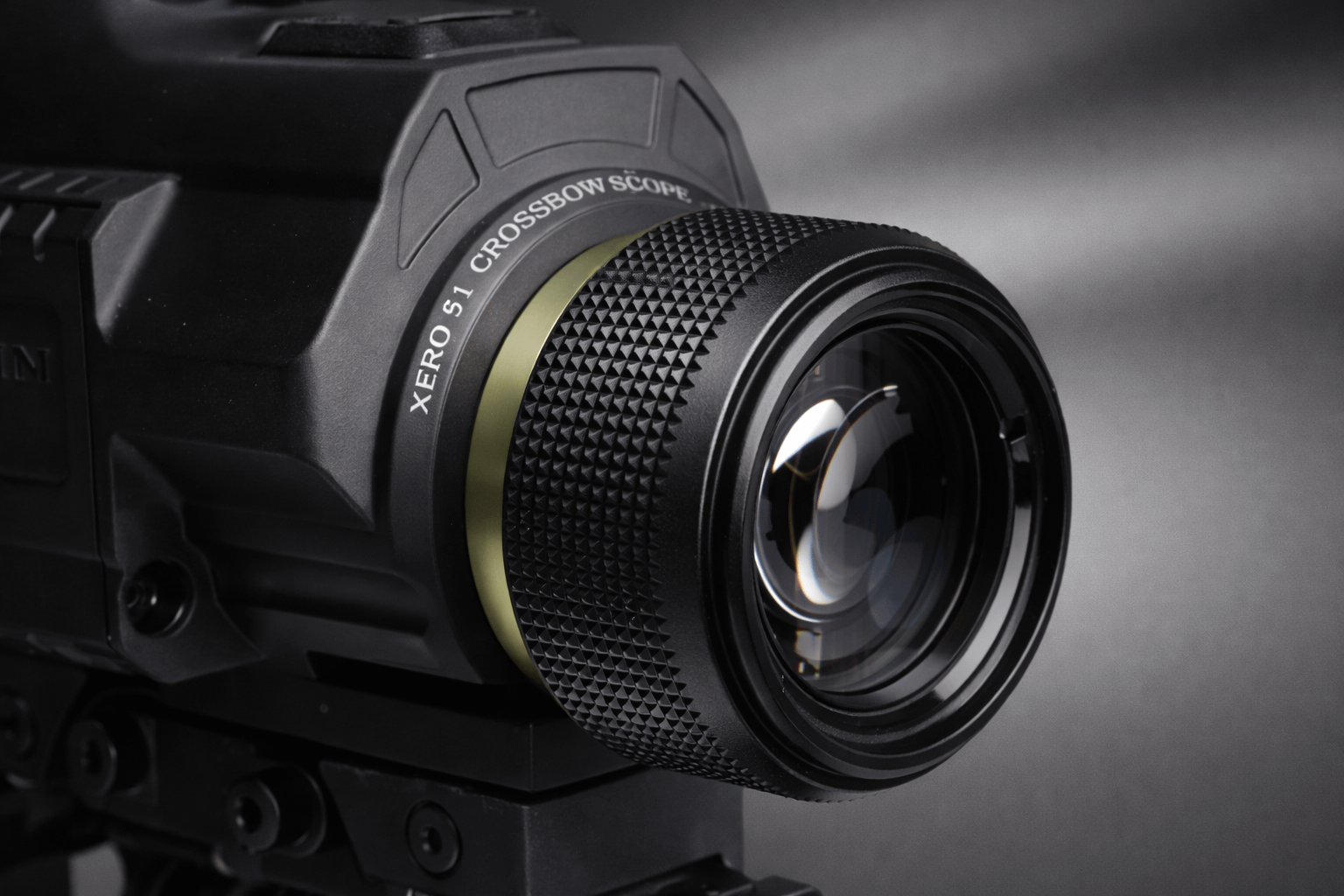
Up front, that knurled ring has a grippy, diamond texture that’s clearly meant for cold fingers and early-morning mistakes.
Even the button layout leans “field-first,” which matters when you’re wearing gloves and your hands feel like frozen bratwursts.
Why the $400-Off Deal Matters
Let’s be honest: a lot of hunting gear “sales” are fake math.
This one is straightforward. Ravin’s product page shows a regular price of $1,399.99 and a special price of $999.99.
As a result, you’re looking at a real $400 discount—not a “save $17.42 if Mercury is in retrograde” kind of discount.
More importantly, $400 off changes the buying conversation.
At full price, the X1i lives in the “maybe someday” bucket.
At $999.99, it becomes a “fine… I can justify this without eating ramen for two weeks” purchase—especially if you hunt hard and shoot often.
Distance errors aren’t just “oops” errors. They’re miss errors or—worse—bad hit errors.
Therefore, a rangefinding scope doesn’t make you ethical by itself, but it does remove a huge chunk of avoidable uncertainty.
Specs Table
Here are the core specs you actually care about, gathered in one place so you don’t have to bounce between tabs like a caffeinated squirrel.
Yes, it’s 1.9 lbs. We’ll address that like adults in the weight section.
| Spec | Ravin Integrated Xero X1i | What It Means in the Field |
|---|---|---|
| Magnification | 3.5x | Enough to aim precisely; meanwhile, it avoids the “too much zoom” wobble. |
| Dimensions | 6.2″ x 2.6″ x 3.7″ | Compact length; however, it’s still a dense optic with real presence on the rail. |
| Weight | 1.9 lbs | You will feel it. On the flip side, capability has a price. |
| Range to game targets | Up to 250 yds (angle-compensated) | More range than most ethical crossbow shots require; therefore, it’s about confidence inside your range. |
| Range to reflective targets | 500+ yds | Handy for practice and verifying ranging performance. |
| Battery | 2 AAA lithium (included) | Simple to replace; additionally, spares are easy to carry. |
| Battery life | Up to 1 year (claimed) | Real-world varies; nevertheless, it’s designed to avoid weekly battery drama. |
| Reticle | Ravin custom colored reticle | Readable and adjustable; as a result, it’s better suited to changing light. |
| Level + angle | Electronic level sensor + angle compensation | Helps reduce “I was leaning weird in the stand” misses. |
| Display size | 1.2″ | Small, focused info display—built for aimpoints, not Netflix. |
Tip: drag the slider to scroll the table sideways (prevents page side-to-side wiggle).
How It Works
Traditional crossbow optics assume you’ll do at least one of these things:
range separately, guess distance, or use multiple aim lines and pick the “closest one.”
The X1i flips that approach by taking the yardage decision out of your head and putting it into the optic.
Instead of handing you a stack of holdovers and telling you to play “which line is right,” it tries to give you one simple chain:
range the target → show the correct aimpoint → you execute the shot.
Consequently, there are fewer steps where the target moves, you rush, or your brain turns into mashed potatoes.
The Three Parts You Need to Understand
- Laser rangefinder: It measures distance to the target. Garmin lists game ranging out to 250 yards and reflective targets out to 500+ yards.
- Ballistic profile: Ravin states the scope is preloaded with ballistics for Ravin models (except the R18), so selecting your model matters.
- Digital aimpoint display: The scope shows the aimpoint it wants you to use. In short, you aren’t memorizing drops; you’re verifying and trusting a displayed solution.
Why This Is a Big Deal
Distance mistakes aren’t harmless. They can be misses, or they can be bad hits.
Therefore, anything that reduces range error helps you keep shots cleaner and recoveries shorter.
That said, practice still matters; technology just removes the dumbest variable from the decision chain.
Sight-In & Setup Reality Check
Ravin’s description is straightforward: mount the scope, select your Ravin model, and sight in at 20 yards.
After that, the digital aimpoints are pre-calibrated and the scope’s processor handles the rest.
That’s the promise, and it’s exactly why people get interested in this optic in the first place.
Here’s the Bark & Brass version: the optic can’t fix sloppy inputs.
If your bolts are inconsistent, your rest is unstable, or your shooting form changes every shot, then no scope on earth will “algorithm” you out of that.
On the other hand, if your setup is consistent, the X1i tends to reward you quickly.
What to Expect When You Do It Right
- Less time “tuning your eyeballs” to yardage tapes or juggling multiple reticle marks.
- More time confirming the system matches reality at the distances you actually hunt.
- Faster shot flow, because you aren’t ranging separately and then reacquiring the animal.
What This Does Not Do
- It doesn’t replace safe shooting lanes and ethical distance choices.
- It won’t steady a shaky rest or fix bad trigger work.
- It cannot cure buck fever—although it will remove one excuse you used to lean on.
Compatibility
Compatibility is where people get burned, so let’s make it painfully clear.
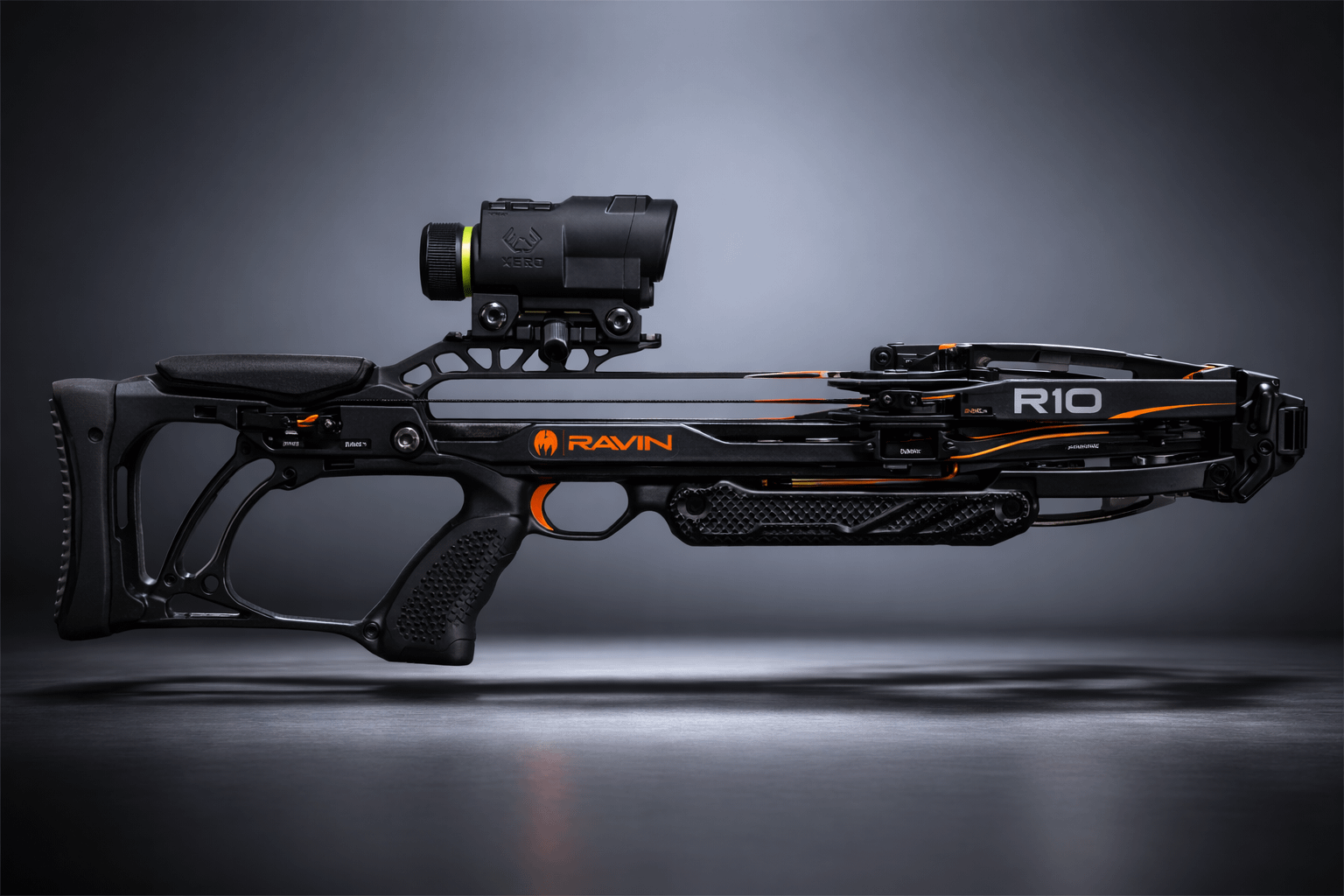
Ravin states the X1i is preloaded with ballistics for every Ravin model ever made except the R18, and their FAQ repeats that the integrated X1i is compatible with all Ravin models except the R18.
If you own an R18, don’t keep reading like it’s going to magically fit. It won’t.
Therefore, if you’re running those models, plan for the update step before opening day.
Preloaded Ravin Models
| Ravin Series | Models Listed as Preloaded | Notes |
|---|---|---|
| Classic / Legacy | R9, R10, R15, R20 | These are specifically named as preloaded in Ravin’s description. |
| R26 / R29 | R26, R29 | Great match for hunters who want compact power plus modern accuracy. |
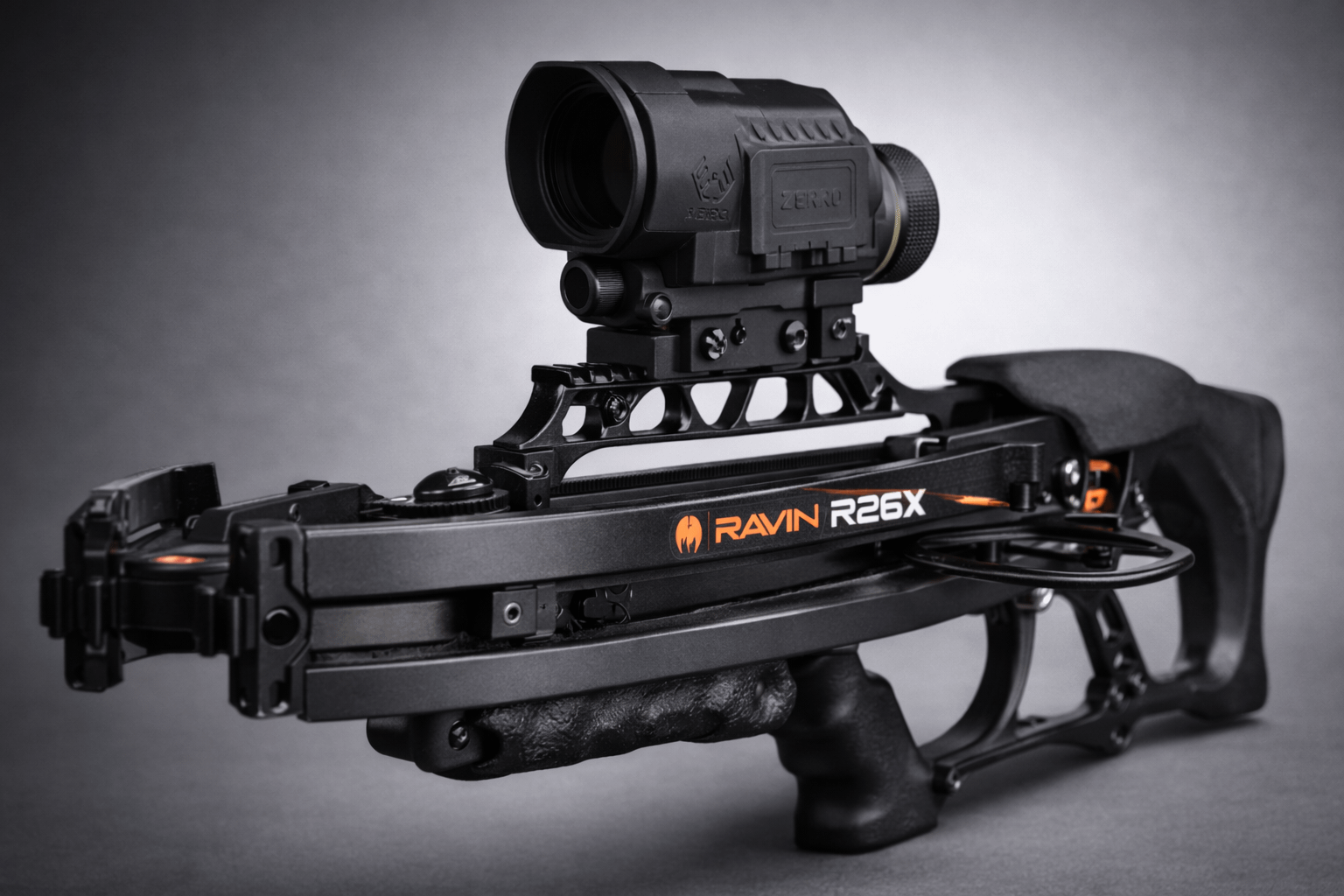
| X Series | R5X, R10X, R26X, R29X | Select your exact model in the scope; then confirm with real-world shooting. |
| R500 Series | R500 | Fast crossbows benefit from clean ranging + aimpoint logic. |
| Excluded | R18 | Explicitly excluded by Ravin. |
Tip: slider scroll keeps the page from doing the sideways shuffle.
Real-World Use: Where This Scope Wins
Here’s the moment this optic is built for:
you’re in a stand or blind, light is fading, and a deer stops at an annoying non-round distance.
Your buddy would guess. Your cousin would argue. Meanwhile, your internal monologue would start negotiating with itself.
The X1i simply gives you the distance and the aimpoint.
1) Treestand Speed Without the Separate Rangefinder Dance
The biggest advantage isn’t “more range.” Instead, it’s less motion.
With a separate rangefinder, the usual sequence looks like this:
range → put rangefinder away → pick crossbow back up → reacquire target → choose the correct hold → shoot.
During that entire sequence, the deer can shift, step behind brush, or decide your lane is suddenly suspicious.
With the X1i, you simplify the flow because ranging and aiming happen through the same optic.
As a result, you move less, you fumble less, and you waste fewer seconds when seconds actually matter.
2) Awkward Yardages
Plenty of people practice 20/30/40 because it’s tidy.
Deer do not care about tidy.
Consequently, you’ll see 27, 33, 41, and whatever distance makes you second-guess your reticle lines.
The X1i exists specifically to turn those awkward yardages into a clear decision.
3) Confidence for Newer Crossbow Hunters
New crossbow hunters often juggle two challenges at once: judging distance and trusting holdover marks.
This scope reduces the first problem and simplifies the second.
Therefore, the shot process becomes cleaner:
“range → aimpoint → execute,” rather than “guess → hope → regret.”
4) Better Practice Feedback
Practice with a rangefinding optic reveals the truth quickly.
When you miss, you can’t blame “wrong yardage” as easily.
That sounds harsh; however, it’s actually helpful because it pushes you toward real improvements—bolt consistency, rest stability, trigger control, and form.
Weight, Balance, and the “Yes It’s 1.9 lbs” Talk
The X1i weighs 1.9 lbs.
That number matters because crossbows are already front-heavy, and adding weight above the rail changes the feel.
If you’re expecting a dainty scope that disappears on the bow, you’re shopping in the wrong aisle.
Why the Weight Exists
This weight isn’t random.
You’re carrying a display, a laser rangefinder, electronics for level/angle sensing, processing power for ballistic solutions, and a rugged housing.
Therefore, the optic ends up feeling more like a “piece of equipment” than a traditional tube scope.
Who Will Care About the Weight
- Run-and-gun spot-and-stalk hunters: you’ll notice it more than a treestand hunter.
- Hunters with shoulder/arm limitations: any extra top weight can matter.
- Long-carry hunters: ounces become pounds after a mile, especially on uneven ground.
Who Won’t Care (Much)
- Treestand/blind hunters: the crossbow is usually resting, not carried at low-ready for hours.
- Accuracy-first hunters: you’ll accept weight as the cost of capability.
That way, your balance “feel” is updated before opening day—not during it.
Low Light, Reticle, and Brightness Control
Most crossbow hunting happens when light is either arriving or leaving.
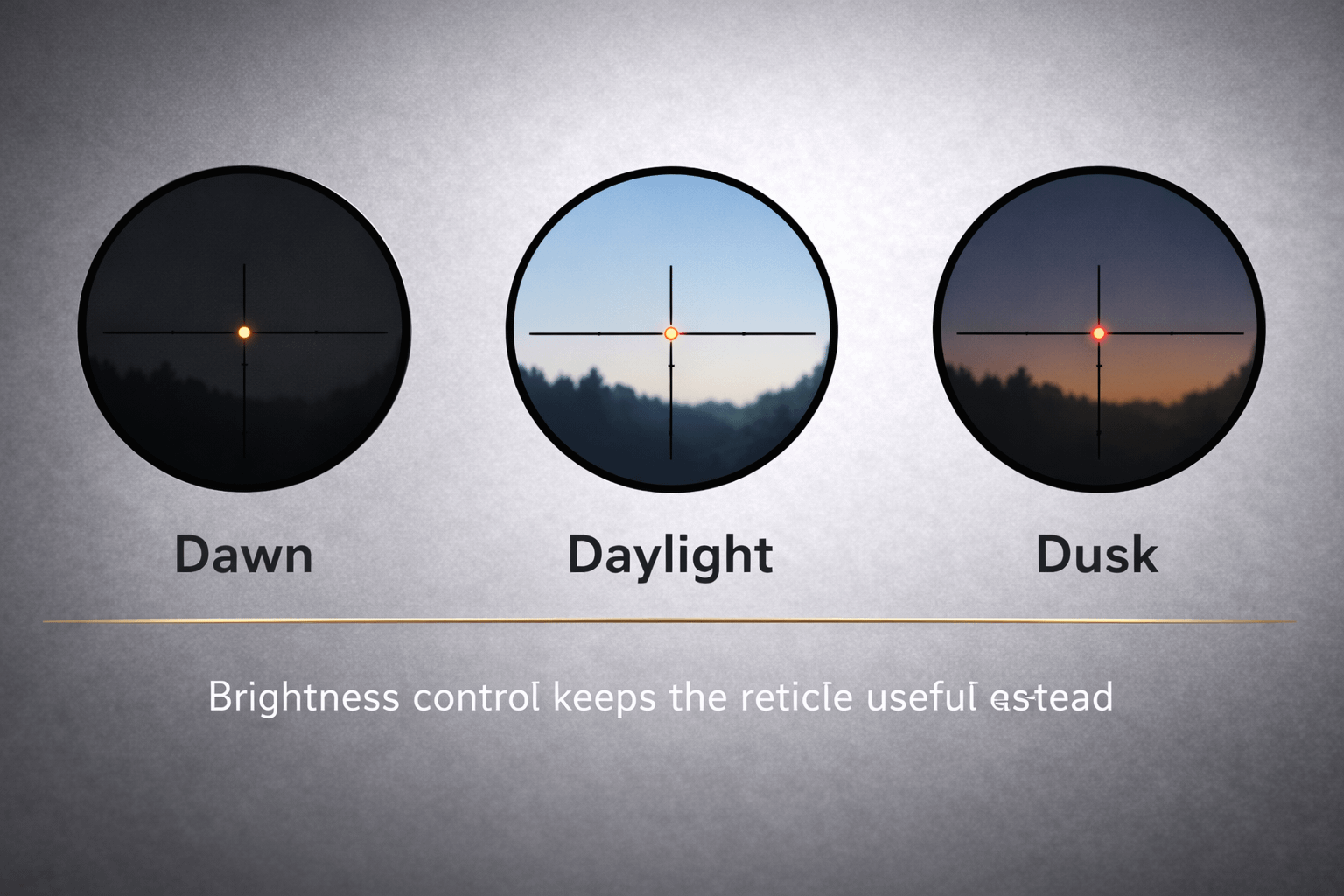
Ravin specifically calls out that the scope excels in low light conditions, using a custom colored reticle with brightness controlled by an ambient or manual light sensor.
Because of that, you’re less likely to deal with a reticle that’s too dim to see or so bright it blooms and ruins your sight picture.
In practice, good brightness control keeps the reticle readable without turning the target into a glowing mess.
Additionally, the 3.5x magnification stays practical for real hunting ranges without making the image feel cramped.
Rangefinding + Angle Compensation + Level Sensor
A rangefinder alone is helpful.
Even so, a rangefinder that also accounts for angle—and reminds you if you’re canted—solves problems that show up in real hunting positions.
Shots from elevated stands, awkward lean-outs, or uneven footing are exactly where “tiny errors” become big misses.
Ranging Performance
Garmin’s published specs for the Xero X1i list range to game targets up to 250 yards and range to reflective targets 500+ yards.
Some retailers also note shorter ranging on darker/black targets, which is normal for laser ranging.
Here’s the important part: most ethical crossbow shots happen well inside those maximums.
Therefore, the value isn’t “I can shoot 200+ now.”
Instead, the value is that, inside normal hunting ranges, the optic gives fast, repeatable feedback and a clear aimpoint.
Angle Compensation
Ravin lists angle compensation built-in.
Angles change effective horizontal distance, so this feature helps keep the solution honest.
Consequently, steep stand shots become less of a “guess-and-hope” situation.
Electronic Level Sensor
Ravin also lists an electronic level sensor.
Cant is sneaky; it’s the kind of error you don’t notice until you miss and start making up stories about wind.
As a result, any built-in reminder to keep the bow level is a quiet upgrade that pays off over time.
Comparison Table
The easiest way to understand the X1i is to compare it to two common alternatives:
a traditional multi-line scope, and a traditional scope plus a separate rangefinder.
None of these are “bad.” However, each has different tradeoffs in speed, simplicity, and weight.
| Option | What You Get | Where It Shines | Where It Bites You |
|---|---|---|---|
| Ravin Xero X1i (rangefinding scope) | Range + ballistic aimpoint + angle + level in one optic | Fast shots, fewer steps, high confidence at real hunting ranges | Cost + weight (1.9 lbs) + batteries |
| Traditional multi-line scope | Fixed reticle marks for holdovers | Lightweight, simple, no electronics | Distance guesswork + hold selection under stress |
| Traditional scope + separate rangefinder | Accurate distance + manual hold selection | Strong accuracy potential with practice | More movement + more steps + more chances to lose the target |
Tip: slider scroll prevents sideways page movement on mobile.
Pros & Cons
✅ Pros
|
❌ Cons
|
Who Should Buy It
Buy the Ravin Xero X1i if you want your crossbow setup to feel like a modern, integrated system—because that’s what it is.
In general, this optic fits hunters who prioritize repeatability and clean decisions more than shaving ounces.
Ideal Buyers
- Treestand/blind whitetail hunters who want faster ranging and fewer steps when it counts
- Hunters who already own fast Ravins and want the optic to match the capability
- Newer crossbow hunters who want less holdover guessing and more “do the right thing” guidance
- Gear simplifiers who would rather carry one integrated optic than a scope + rangefinder combo
this is exactly the kind of optic that fixes that problem.
Who Should Skip It
This scope isn’t mandatory for success.
Plenty of hunters shoot clean, ethical kills with standard scopes every season.
That said, skipping the X1i is smart if the tradeoffs don’t match your style.
Skip It If…
- You own a Ravin R18 (it’s excluded—don’t force it)
- You hate weight and your hunting involves long carries
- You don’t practice and you’re hoping tech will replace reps (it won’t)
- You rarely shoot past known distances and your current setup already works perfectly
- You refuse to manage batteries (this is a you problem, not an optic problem)
Tips, Gotchas, and “Don’t Be That Guy” Mistakes
Don’t Chase Max Range
The scope can range far. Nevertheless, that doesn’t mean you should shoot far.
Use the extra ranging capability as a confidence buffer inside your ethical range, not as permission to become a YouTube comment section.
Verify at Real Distances You Hunt
If you always hunt inside 20–50 yards, validate inside 20–50 yards.
Likewise, if you sometimes stretch farther (within skill and legal/ethical limits), validate there too.
Practice should match reality, because reality is undefeated.
Battery Discipline
The X1i uses 2 AAA lithium batteries.
That’s convenient because AAA lithium is easy to find and easy to carry.
Still, convenience isn’t the same as preparation.
Therefore, stash spares somewhere you’ll actually remember—like the same pouch you keep broadheads or your release.
Keep the Lens Clean
The glass is part of the system, so keep it clean.
Fingerprints, rain spots, and pocket lint don’t improve accuracy; they just add glare at the worst times.
A lens pen and microfiber cloth solve most of it.
Also, stop rubbing your optic with your shirt like it’s a bar rag—you’re better than that.
FAQs
Is the Ravin Xero X1i compatible with all Ravin crossbows?
Ravin states it’s compatible with all Ravin crossbows except the R18.
Additionally, Ravin notes a software update is required for compatibility with the Ravin LR and R470 series.
Does it require manual calibration?
Ravin says no manual calibration is required beyond mounting, selecting your Ravin model, and sighting in at 20 yards.
After that, the processor handles the rest.
Does it work in low light?
Ravin states it excels in low light conditions and uses a custom colored reticle with brightness controlled via ambient or manual sensor.
As a result, it’s designed for the dawn/dusk reality most of us actually hunt in.
How far can it range?
Garmin’s published specs for the Xero X1i list game ranging up to 250 yards and reflective targets 500+ yards.
Some product listings also note shorter ranging for darker/black targets, which is typical for laser ranging.
Is it worth it?
If you hunt with a Ravin and you value speed and confidence more than saving weight, it’s one of the few upgrades that truly changes your in-the-moment shot process.
The sale price helps; however, the best value still comes from regular practice and consistent gear setup.
Final Verdict
The Ravin Integrated Xero X1i isn’t a “nice-to-have” gadget.
It’s a serious hunting optic that combines ranging, aimpoint calculation, and low-light-friendly visibility into one system.
Consequently, your shot process gets simpler under stress—less movement, fewer steps, and fewer ways to get yardage wrong.
The tradeoffs remain real: it’s heavy, it’s expensive, and you have to manage batteries.
On the other hand, Ravin’s current $999.99 pricing (down from $1,399.99) makes it one of those rare deals that can push an upgrade from “later” to “now.”
Bottom line: if you’re already in the Ravin ecosystem and you want an all-in-one accuracy upgrade that actually changes your workflow,
the X1i is the one that makes sense—especially while the price is chopped.
Ethics note: Technology can increase confidence, but it doesn’t replace judgment. Shoot within your proven range, follow your state regs, and keep it clean.
Sources
These are the primary references used to build the facts in this article:
- Ravin product page (pricing, compatibility notes, specs list): https://ravincrossbows.com/ravin-integrated-xero-x1i-crossbow-scope
- Garmin Xero X1i specs sheet (dimensions, ranging distances, battery, magnification): https://www.gpscentral.ca/related/Garmin_Xero_X1i_Specifications-1.pdf
- Retail listing cross-check (general specs + packaging varies by retailer): https://www.basspro.com/p/garmin-xero-x1i-rangefinder-crossbow-scope