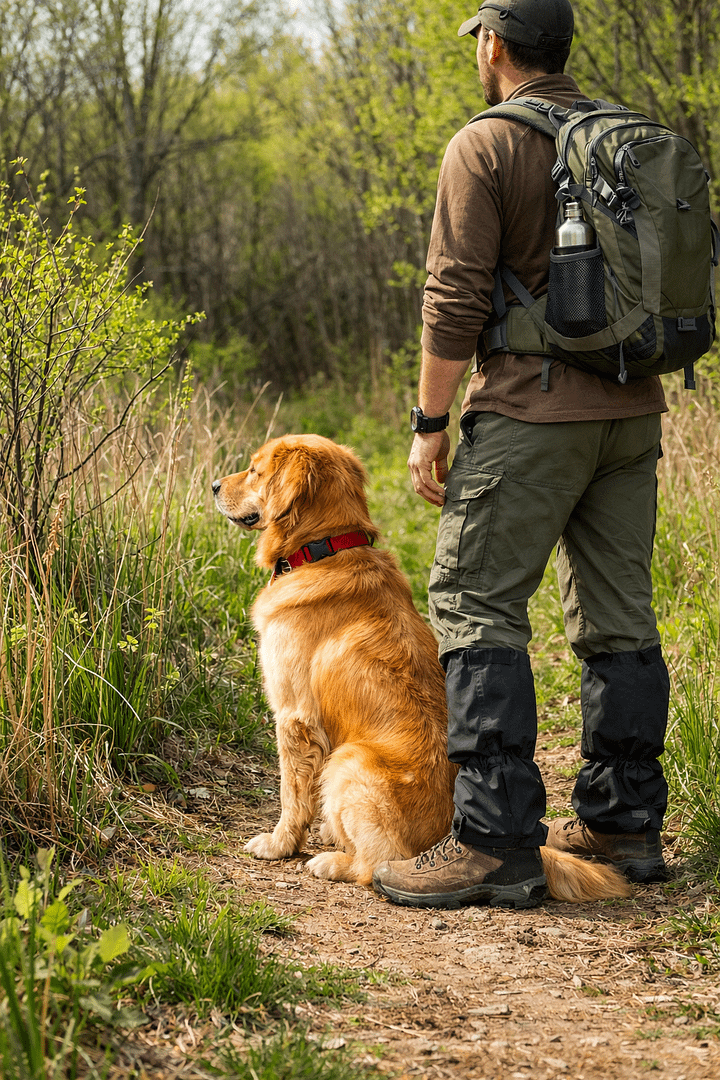
Tick Defense for Dogs, Hunters, and Hikers This Spring
Tick defense for dogs is not some cute little spring reminder you tack onto the weekend checklist. Tick defense for dogs is a real problem for anyone who runs a dog through brush, hunts field edges, hikes overgrown trails, or fishes grassy banks. Meanwhile, humans need their own plan too, because a dog can bring trouble back to the truck just as fast as a pair of untreated pants can bring it into the house.
Updated: March 22, 2026
Quick Answer
Tick defense for dogs works best when you stop hoping for one miracle product and build a layered routine. First, protect the dog with a real preventive used on schedule. Next, protect humans with permethrin-treated clothing and an EPA-registered skin repellent. Finally, check the dog, check yourself, and handle clothes, gear, and the truck before every freeloading tick gets a guided tour of your life.
| Category | Best Move for Most People | Why It Matters |
|---|---|---|
| Dog protection | Use a legitimate flea and tick preventive consistently | That gives tick defense for dogs a real foundation instead of wishful thinking. |
| Human protection | Treat clothes with permethrin and skin with picaridin or DEET | Skin and clothing need different tools, so one weak spray is not enough. |
| Best add-on for brush country | Lower-leg coverage like treated gaiters or treated pants/socks | Ticks usually grab low first and climb from there. |
| After the hunt or hike | Check the dog, shower, inspect yourself, and hot-dry clothes | That post-trip routine catches problems before they settle in. |
| Biggest mistake | Relying on one “natural” spray for everything | Good routines beat lazy shortcuts every single time. |
Why Tick Defense for Dogs Matters in Spring
Spring gets everyone excited, and for good reason. The dog wants out, the woods wake up, the trails stop looking dead, and every fisherman suddenly remembers he owns six tackle trays full of “confidence baits.” However, ticks also wake up and go to work in the exact places outdoor people love most: field edges, leaf litter, weedy access lanes, pond banks, shaded trails, low brush, and fence rows.
That is why tick defense for dogs matters so much in spring. Dogs charge into cover with far more enthusiasm than judgment, and then they come right back to you, the truck, and the couch. As a result, what starts as a dog problem can become a people problem in a hurry. Add hikers, turkey hunters, anglers, and dog owners into the mix, and now the whole crew needs a plan instead of a prayer.
Even worse, ticks are sneaky. Mosquitoes announce themselves like tiny drunks at a bar. Ticks, on the other hand, climb aboard quietly and let you find them later when everyone is tired and hungry. So, if you want spring to stay fun, tick defense for dogs has to move from “good idea” to “standard operating procedure.”

The Bark & Brass Tick Defense for Dogs Plan
Good tick defense for dogs is not complicated, but it does need layers. In other words, you do not win by buying one bottle and acting like the war is over. Instead, you build a routine that protects the dog, protects the human, and cleans up the handoff points back at home.
Layer 1: Protect the dog first
Start with the dog because brush dogs, hiking dogs, and field dogs are basically furry tick magnets with great attitudes. A legitimate preventive product used correctly gives your routine real backbone. Then, because no product is perfect, daily checks still matter.
Layer 2: Protect humans the smart way
Next, treat clothes and gear with permethrin. After that, use an EPA-registered skin repellent for exposed areas. Because ticks often grab low and climb, lower-leg protection matters a lot more than most people think.
Layer 3: Protect the truck, yard, and house
Finally, pay attention to the places where problems get carried back. The truck floor, dog bed, kennel run, entryway, and backyard edge all matter. Therefore, your prevention plan should not end when the walk, hunt, or hike does.
✅ Why This System Works
|
❌ Why People Still Screw It Up
|
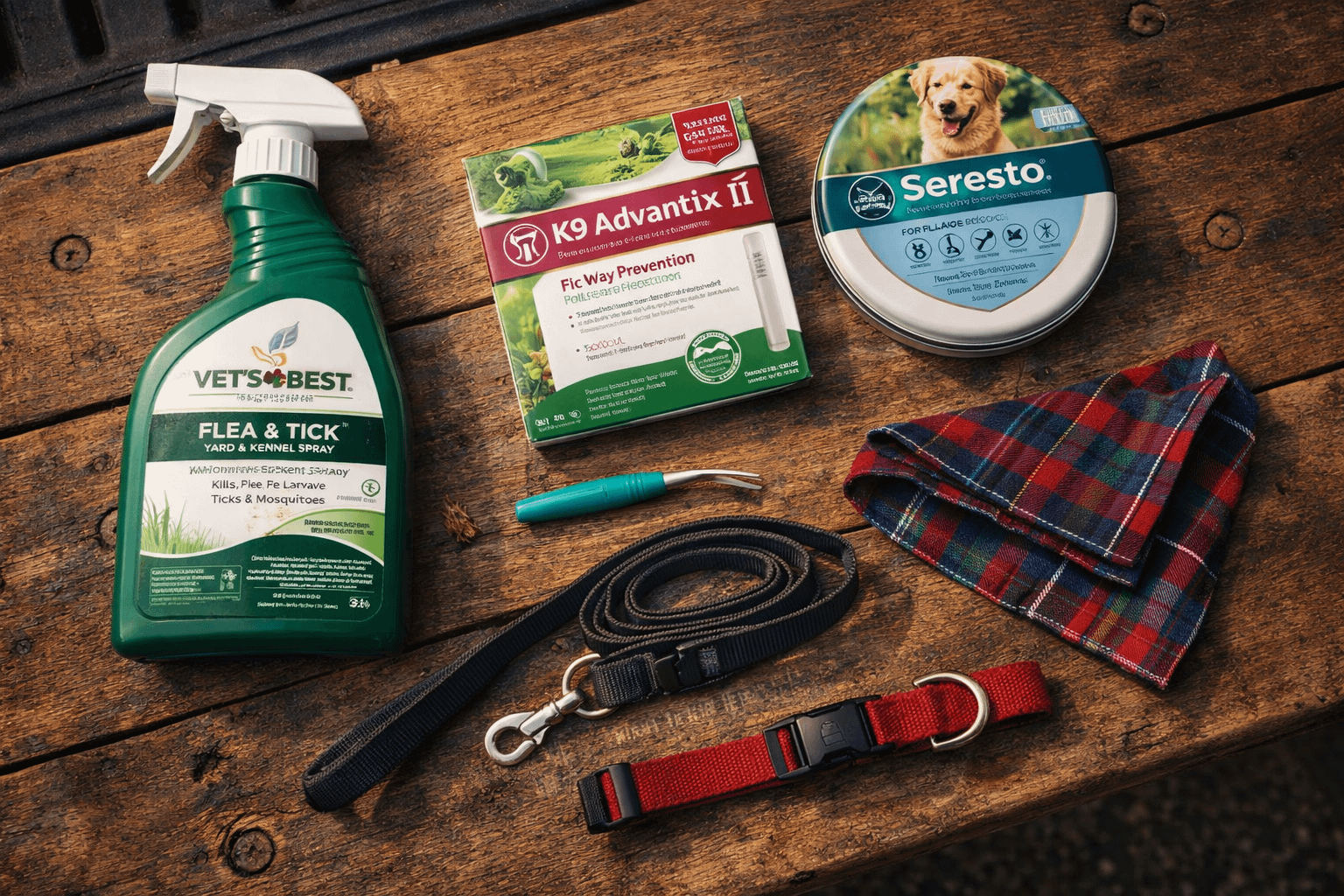
Best Tick Defense for Dogs Products
The best tick defense for dogs depends on how your dog lives. A backyard lap dog has different needs than a retriever that treats every fence line like a scouting mission. Still, a few product lanes make the most sense for most outdoor households.
| Dog Product | Best For | Why It Earns a Spot | Main Tradeoff |
|---|---|---|---|
| Seresto Flea & Tick Collar | Owners who want long-duration coverage | Simple, long-running protection without monthly fuss | Collar fit and dog tolerance still matter |
| K9 Advantix II | Active field dogs and brush-heavy spring use | Repels and kills on contact, plus mosquito coverage | Dog-only product; cat households need caution |
| Frontline Plus | Owners who want a familiar monthly topical | Easy, well-known baseline option | Needs consistent monthly use to stay useful |
| Wondercide Yard Spray | Yard edges, dog runs, and frequent-use outdoor zones | Adds an environmental layer to tick defense for dogs | Helpful support tool, not a replacement for dog prevention |
Tick Defense for Dogs with Seresto
For owners who want a lower-maintenance lane, Seresto makes sense. The big draw is duration. As a result, it appeals to people who would rather not turn every month into a calendar-reminder crisis. Proper fit still matters, and you still need checks after brush exposure. Even so, this is a strong “set it up and stay on it” option.
✅ Shop Dog Tick Defense Options
Tick Defense for Dogs with K9 Advantix II
If your dog plows through cover like he is billing by the acre, K9 Advantix II deserves a hard look. It fits tick defense for dogs especially well when spring means overgrown trails, pond edges, turkey woods, and rough field margins. Additionally, the contact-repel angle matters because fewer pests getting comfortable on the dog is a very good thing.
Mixed-pet households need to pay attention here. Read labels carefully, follow directions, and do not freestyle dog-only products around cats just because the boxes live in the same cabinet.
✅ Check Dog Spot-On Protection
Tick Defense for Dogs with Frontline Plus
Frontline Plus stays relevant because it is familiar, simple, and easy for a lot of owners to understand. Sometimes that matters more than internet chest-thumping. If a product is easy to use, people are more likely to use it on time. Therefore, a dependable monthly topical can still be the right call for households that want proven routine over drama.
✅ Shop Monthly Dog Tick Protection
Tick Defense for Dogs in the Yard
Yard spray belongs in the support role. It helps with tick defense for dogs when your yard backs up to timber, brush, a ditch, or an overgrown fence line. However, yard treatment is not your main dog preventive. Think of it like backup coverage, not the starting quarterback.
✅ Check Yard + Kennel Tick Defense
Best Human Tick Defense Products
Humans need their own layer because tick defense for dogs does not automatically protect you. A dog can bring ticks back, sure, but untreated clothes can do the same thing all by themselves. So, for people, the formula is straightforward: treat clothing and gear with permethrin, then use an EPA-registered skin repellent where fabric does not cover.
| Human Product | Best For | Why It Works | Main Tradeoff |
|---|---|---|---|
| Sawyer Permethrin Clothing Spray | Boots, socks, pants, packs, chairs, and field gear | Treats the gear that hits danger first | Needs drying time before use |
| Sawyer 20% Picaridin | Most hikers, dog walkers, anglers, and turkey hunters | Strong everyday skin repellent with wide appeal | Still needs reapplication per label |
| Ben’s 30% DEET | Heavy brush, rough weather, long field days | Serious field-use skin protection | Some people dislike the feel or scent more than picaridin |
| Fine-tip tweezers or tick tool | Every truck, pack, and first-aid kit | Because prevention is great, but backup matters too | Only helps after a tick gets through |
Sawyer Permethrin Clothing Spray
This is one of the smartest human add-ons in the whole system. Boots, socks, pants cuffs, chairs, and pack straps all deserve attention because that is where ticks often climb aboard first. Meanwhile, most people waste time obsessing over exposed skin while ignoring the fabric brushing against grass and leaf litter. Treat the clothes, and suddenly your setup starts making sense.
✅ Check Price on Amazon — Sawyer Permethrin
Sawyer 20% Picaridin
Picaridin is the practical everyday lane for a lot of outdoor people. It works well for hikes, dog walks, scouting, creek banks, and general spring use. Also, many people prefer it because it feels easier to live with than DEET. The best repellent is the one you will actually use, and this one clears that bar for a lot of normal humans.
✅ Check Price on Amazon — Sawyer Picaridin
Ben’s 30% DEET
When the brush is thick and the bug pressure is rude, DEET still earns its place. For example, this makes a lot of sense on ugly trail days, in brushy turkey woods, or around wet ground where you know conditions are going to be annoying. It is not always the first pick for everybody, but it is a very reasonable stronger-field lane.
✅ Check Price on Amazon — Ben’s 30% DEET
Tick Removal Kit
No system is perfect, so keep tweezers or a proper tick tool handy. Put one in the truck, one in the dog kit, and one at home. That way, when you find a tick, you are ready instead of digging through junk drawers like a raccoon with bad priorities.
✅ Check Price on Amazon — Tick Removal Tools
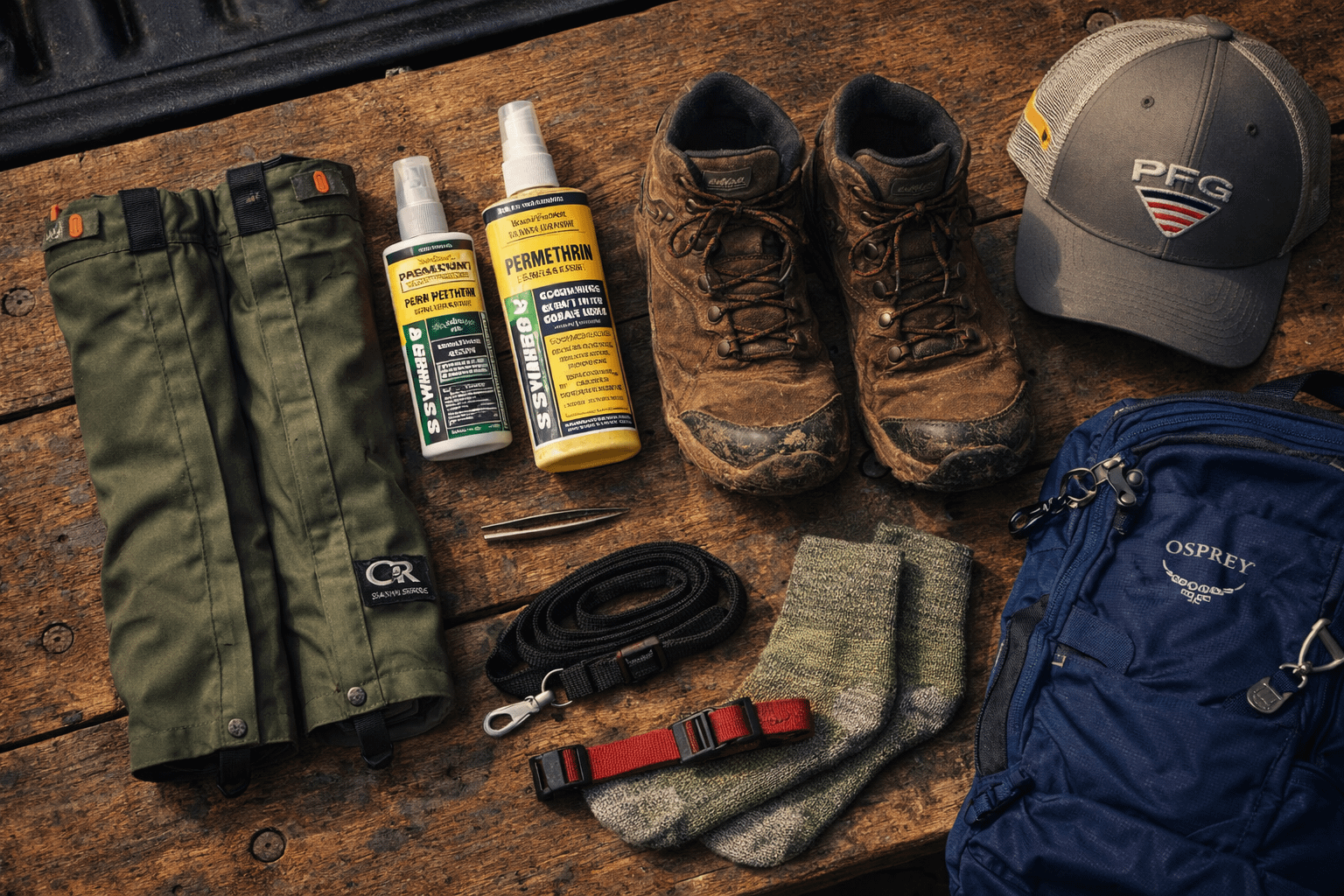
Bonus Gear for Brush and Lower Legs
Lower-leg protection does not get enough love, and that is dumb. Ticks usually grab low and climb, so the ankle-to-knee zone deserves serious attention. Because of that, treated gaiters or bug-focused lower-leg gear can be a smart add-on for brush-heavy trails, turkey woods, pond banks, and dog walks through rough spring grass.
Lymeez 3D Mesh Tick Gaiters
This is a purpose-built option for intercepting ticks low before they make progress. If your spring routine includes brushy dog walks, trail work, or hiking in rough field-edge country, this makes a lot of sense.
Outdoor Research Insect-Treated Gaiters
For hikers and hunters who already wear gaiters, this lane is easy to justify. You get trail-ready lower-leg coverage and another useful barrier in the process. In short, it is one more way to stop being generous with your ankles.
Tick Defense for Dogs at Home and in the Truck
Tick defense for dogs does not end when the leash comes off. In fact, the trip home is where lazy habits create dumb problems. Once the dog jumps into the truck or crashes onto the dog bed, any tick that came along for the ride now gets a new playground.
Yard habits that help
- Keep high-use dog areas trimmed.
- Pay attention to shady edges, fence lines, and brushy margins.
- Use yard treatment as support, not as your only plan.
- Check the rough edges of the property, not just the neat part in the middle.
Truck habits that help
- Keep a small tick kit in the console or glove box.
- Check the dog before he settles into the seat or crate.
- Shake out blankets and inspect cracks after brush-heavy outings.
- Do not let your cab become a mobile tick hotel.
House habits that help
- Check the dog before couch privileges begin.
- Check yourself before dinner and distractions take over.
- Shower soon after coming inside.
- Hot-dry exposed clothes before washing when appropriate.
- Inspect collars, harnesses, and dog bedding if exposure was heavy.
How to Check Dogs for Ticks
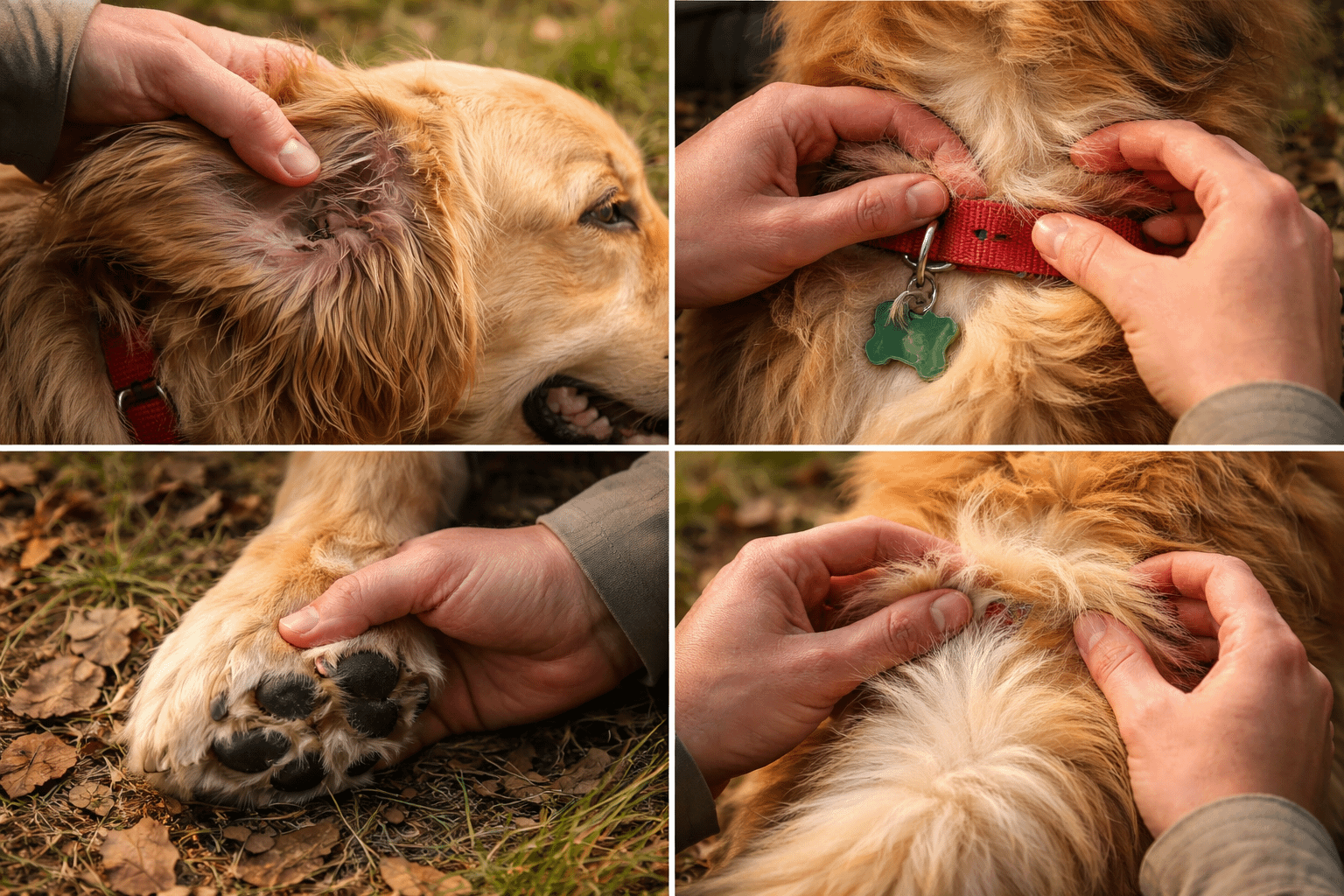
A real check is part of tick defense for dogs, and it should be systematic. First, run your hands over the dog slowly and feel for bumps. Then, part the fur and actually look. Long coats make this harder, so sloppy checks do not cut it.
Where to check the dog
- In and around the ears
- Around the eyelids and face
- Under the collar
- Under the front legs
- Between the toes
- Between the back legs
- Around the tail and rear
Where to check yourself
- Ankles and sock line
- Behind the knees
- Waistband
- Groin area
- Armpits
- Behind the ears
- Hairline and scalp
Also, do not put this off until bedtime. The sooner you check, the better your odds of catching problems before they settle in.
How to Remove a Tick Correctly
Forget the old nonsense. Do not burn it. Do not drown it in petroleum jelly. Do not turn tick removal into a backyard myth contest. Instead, keep it simple and do it the boring correct way.
- Use clean fine-tipped tweezers or a tick-removal tool.
- Grab the tick as close to the skin as possible.
- Pull upward with steady, even pressure.
- Do not twist and do not jerk.
- Clean the area and wash your hands afterward.
If part of the tick remains and it will not come out easily, do not gouge at the skin like you are excavating treasure. Clean the area, monitor it, and contact a vet or doctor if symptoms show up or the site looks wrong.
Mistakes That Wreck Tick Defense for Dogs
Using dog prevention inconsistently
Late, skipped, or sloppy use ruins tick defense for dogs faster than anything else. A good product only helps when it is used correctly and on schedule.
Protecting skin but ignoring clothing
Humans do this constantly. However, if untreated pants and socks brush through grass all day, your skin spray is only solving half the problem.
Trusting a neat-looking yard too much
Short grass in the center does not erase the rough edge, the ditch bank, or the weedy line by the fence. Ticks love transition zones, so the problem is often around the margin, not out in the obvious open.
Skipping the post-trip check
Everybody is tired when the trip ends. Even so, that is the exact moment to check the dog, check yourself, and handle the clothes. Waiting makes everything dumber.
Freestyling pet products in mixed-pet homes
Some dog-only products are not cat products. Therefore, labels matter. Read them, follow them, and do not improvise because two boxes look similar.
✅ Smart Spring Habits
|
❌ Habits to Quit Immediately
|
Field Checklist for Tick Defense for Dogs
| Before You Go | In the Field | When You Get Home |
|---|---|---|
|
|
|
FAQ: Tick Defense for Dogs
What is the best tick defense for dogs in spring?
The best tick defense for dogs is a layered routine: a reliable preventive product, regular checks, yard awareness, and smart human protection. One product alone is rarely enough for active outdoor dogs.
Is a flea and tick collar enough by itself?
Sometimes it can be a strong primary layer, but it should not replace checks or common sense. Active dogs still need inspection after brush, woods, and field-edge exposure.
What is the best tick repellent for hunters and hikers?
For most people, permethrin-treated clothing plus a skin repellent like picaridin or DEET is the best practical combo. That setup covers fabric and exposed skin instead of forcing one product to do both jobs badly.
Do I really need to check the dog every time?
Yes, especially in spring. Tick defense for dogs works better when checks happen right away, not hours later after the dog has already toured the truck and house.
Can I use the same tick product on a dog and a cat?
No. Read the label and follow it. Products labeled for dogs are not automatically safe for cats.
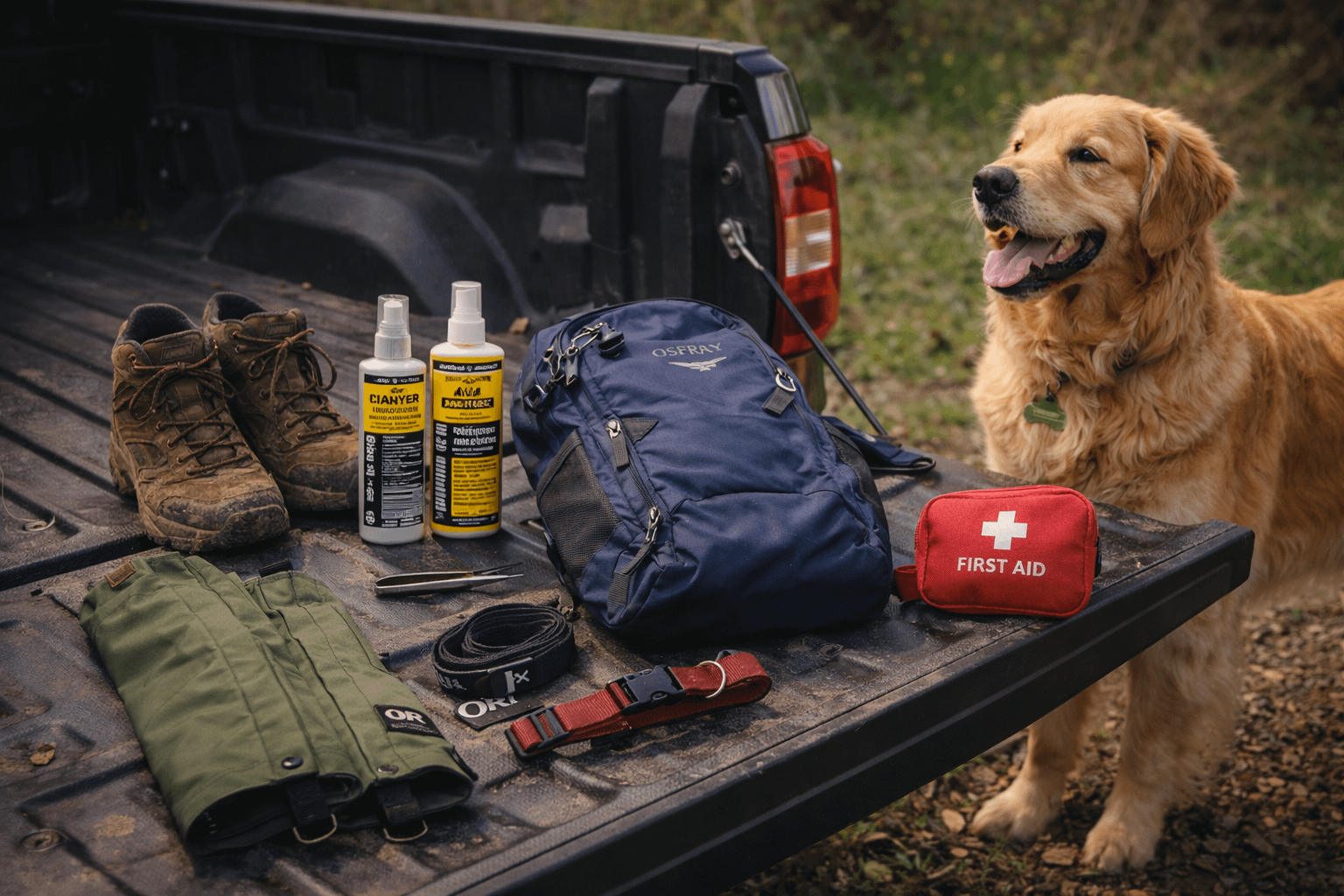
Final Words on Tick Defense for Dogs
Tick defense for dogs does not need to be fancy, but it does need to be real. Real means using a legitimate preventive on the dog. Real also means treating clothes and gear like they matter, because they do. Then, once the trip ends, real means checking the dog, checking yourself, and cleaning up the handoff points before a tiny dirt raisin becomes tomorrow’s headache.
Build the routine once, and spring gets a whole lot easier. The dog still gets the walk. You still get the hunt, hike, or fishing trip. Meanwhile, everybody has a better shot at coming home without unwanted passengers. That is the goal, plain and simple.
At Bark & Brass, we are not here for fake miracle talk or soft nonsense. We are here for what actually works, and tick defense for dogs absolutely falls into that category.