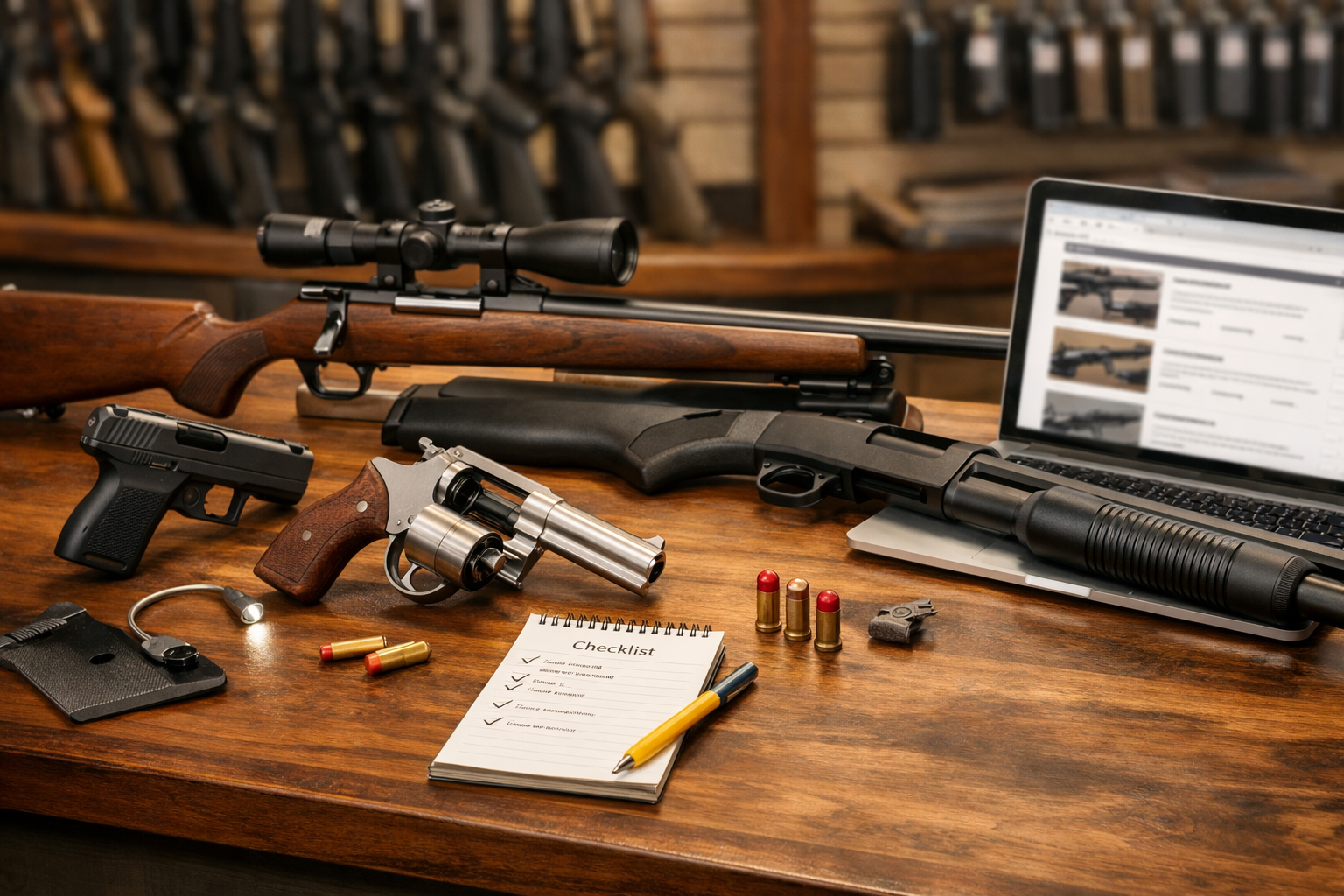
Guns.com Certified Used Guns Review: Are They Worth Buying?
Guns.com Certified Used guns sit in that interesting middle ground between buying brand-new and rolling the dice on a mystery used firearm from a stranger with three blurry photos and the photography skills of a raccoon holding a flip phone. The idea is simple: buy a pre-owned gun online, but with more structure, more inspection, and more buyer confidence than the average used-gun listing.
That matters because used guns can be fantastic buys. Sometimes you get a pistol that was carried more than it was shot. Sometimes you find a hunting rifle that spent twenty years in a safe waiting for deer season like a loyal old hound by the door. Sometimes you find a shotgun with honest field wear and decades of life left in it. And sometimes, if you are not careful, you buy somebody else’s headache in a shipping box.
That is where the Guns.com Certified Used program gets interesting. According to Guns.com, Certified Used firearms are inspected by in-house experts using a detailed 10-point inspection process, and the collection is limited to guns rated very good to excellent condition. Guns.com also backs Certified Used firearms with a 3-calendar-day no-questions-asked return window after physical transfer and a 7-calendar-day mechanical-defect return window, with the exact terms and fees covered in their return policy.
This guide breaks down what that actually means for buyers, where the program looks strong, where you still need to keep your eyes open, and how to shop Guns.com Certified Used guns without getting hypnotized by a shiny listing and clicking “buy” like a caffeinated raccoon.
Shop Guns.com Certified Used Guns
Looking for inspected pre-owned firearms with a clearer buying process than the usual used-gun guessing game?
Check Guns.com Certified Used Inventory
Quick Answer: Are Guns.com Certified Used Guns Worth It?
For many buyers, Guns.com Certified Used guns are worth a serious look because they combine used-gun pricing with a structured inspection process and a clearer return policy than most casual used firearm purchases. They are especially attractive for buyers who want to shop online, compare inventory quickly, and avoid some of the uncertainty that comes with buying a pre-owned firearm sight unseen.
That does not mean every Certified Used gun is automatically a screaming deal. You still need to compare prices, understand the condition rating, inspect the firearm at your local FFL before accepting the transfer, and know your state and local laws. The “Certified Used” stamp is a confidence booster, not a magic wand. It does not turn every used gun into a museum queen, and it does not replace common sense.
But compared to the normal used-gun buying process, the program has real advantages. The big ones are inspection, condition screening, a defined return window, and the convenience of online shopping through a large used-gun marketplace.
Bark & Brass Bottom Line: Guns.com Certified Used guns make the most sense for buyers who want a pre-owned firearm but do not want the full “trust me, bro” experience. You still need to inspect before transfer, but the program gives you more structure than most used-gun purchases.
What Are Guns.com Certified Used Guns?
Guns.com Certified Used guns are pre-owned firearms that have been selected, inspected, and approved under Guns.com’s Certified Used program. On the Certified Used page, Guns.com says these firearms are inspected by in-house gunsmiths or experts using a detailed 10-point checklist and are intended to take the guesswork out of buying a pre-owned firearm online.
That “guesswork” part is the whole point. Buying a used firearm can be tricky because condition matters, and condition is not always easy to judge from photos. A gun can look clean in a listing and still have issues with timing, extraction, feeding, bore condition, worn parts, cracked stocks, loose sights, or other problems that do not always show up in a glamour shot.
The Certified Used program attempts to narrow that uncertainty. Guns.com says Certified Used firearms are carefully curated and inspected, and that they include only guns rated very good to excellent condition. That does not mean every gun will look brand-new. “Very good” can still mean normal wear. But it does mean the gun should meet a higher standard than random used inventory.
Why Certified Used Matters When Buying a Firearm Online
Buying a used firearm in person gives you the chance to hold it, inspect it, work the action, check the bore, look at the crown, feel the trigger, examine screws and pins, and generally give it the old “what are you hiding from me?” stare. Online shopping changes that. You are judging from photos, descriptions, and the seller’s reputation.
That is why a certified-used program can matter. It adds another layer between the buyer and the unknown. Instead of simply trusting that the listing is accurate, you are buying from a program that says the firearm was inspected and rated before being offered as Certified Used.
For the right buyer, that can be the difference between “I found a good deal” and “I just adopted a mechanical problem with serial numbers.”
How Guns.com Says It Rates Certified Used Guns
Guns.com states that it uses the Blue Book of Gun Values photo percentage grading system as the basis for rating Certified Used firearms. On its inspection page, Guns.com describes three relevant condition categories:
- Excellent: Slight overall wear, fired only a few times, mechanically perfect.
- Very Good: Normal wear, fired a few times, some stock and finish wear.
- Good: Above-normal wear with several dings and scratches.
The key part for Certified Used buyers is that Guns.com says the Certified Used collection includes firearms rated only very good to excellent condition. That matters because “used” is a massive category. A used gun might be nearly untouched, or it might look like it was dragged behind a side-by-side through gravel, mud, and one regrettable divorce. Condition categories help narrow the field.
Still, buyers should remember that condition ratings are not the same as personal expectations. One person’s “normal finish wear” is another person’s “why does this look like it fought a lawnmower?” Always look at the actual photos, zoom in, and read the listing carefully.
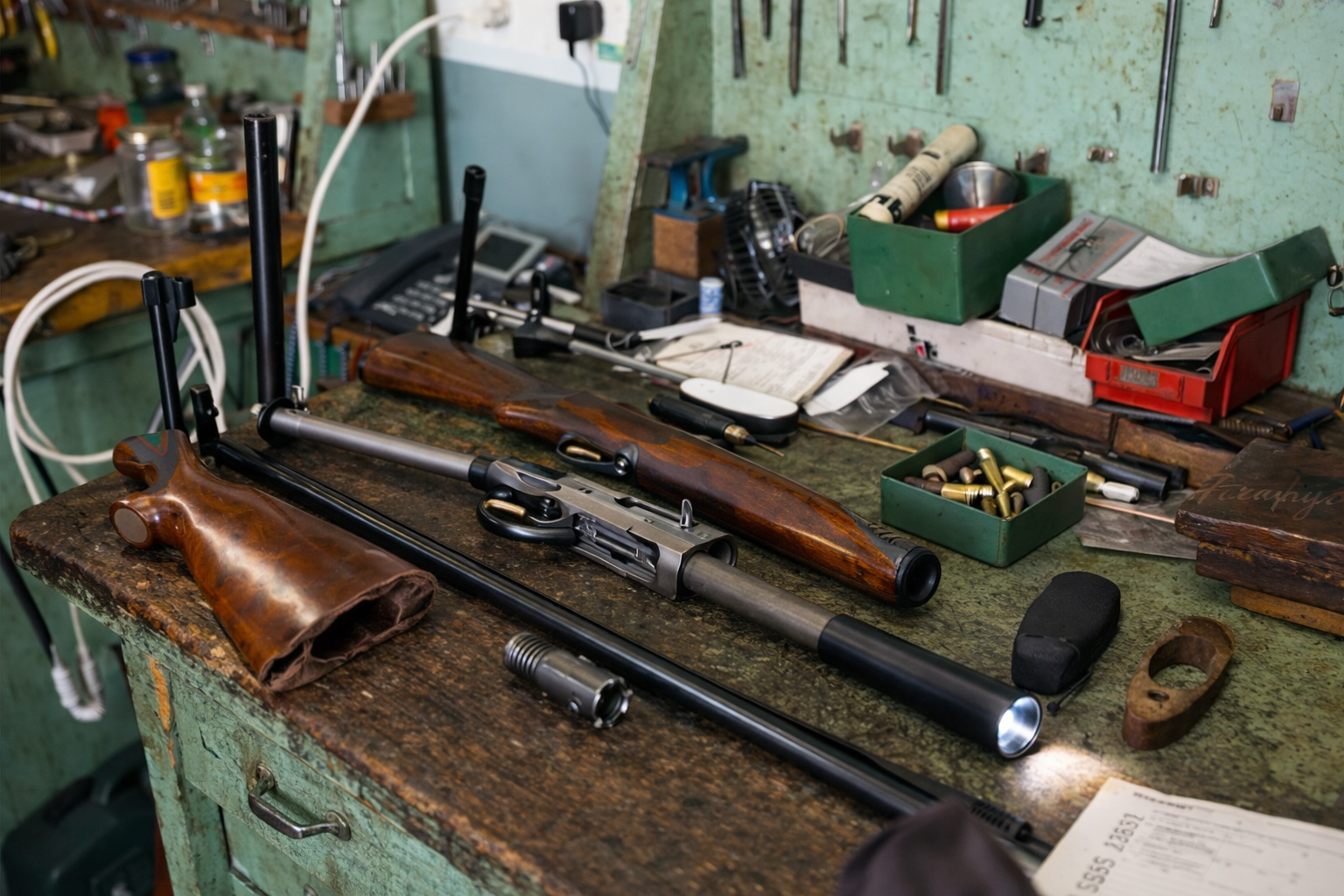
The Guns.com 10-Point Inspection: What Buyers Should Care About
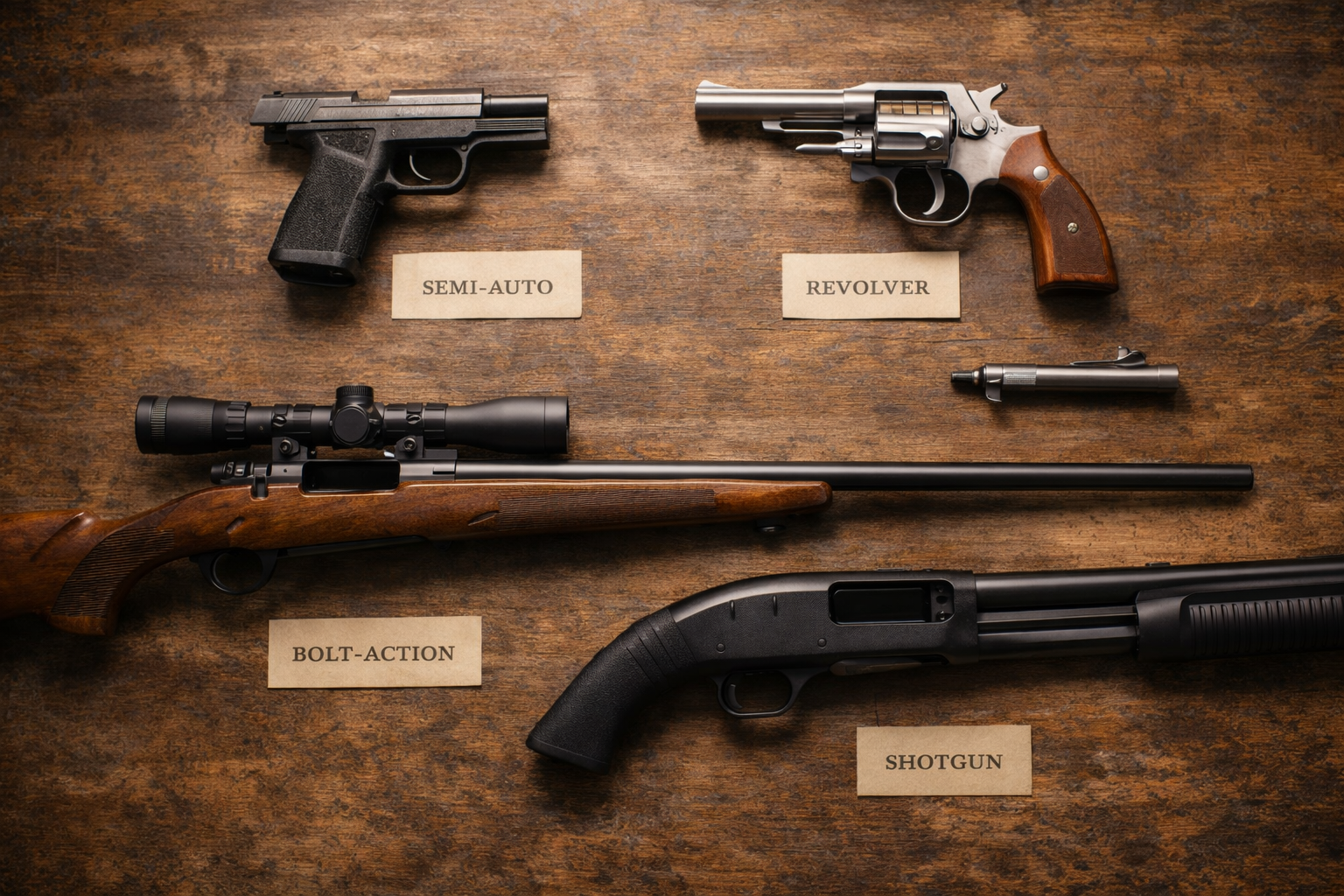
The inspection checklist is where the Certified Used program has real value. Guns.com breaks inspection items down by firearm type, including semi-auto handguns, revolvers, rifles, and shotguns. The details vary, but the common theme is mechanical function and visible condition.
For semi-auto handguns, Guns.com lists checks such as smooth slide operation, extraction and ejection with dummy rounds, functional controls, bore condition, crown condition, extractor tension, ejector condition, feed ramp condition, sight security, and magazine function.
For revolvers, the checklist includes cylinder rotation, hammer function, timing, lockup-related checks, extractor/ejector operation, frame and forcing cone inspection, grip condition, sight function, screw snugness, bore condition, and crown condition.
For rifles, Guns.com lists checks related to action function, ejection with dummy rounds, cracks or chips, secure parts, functional safeties/triggers/sights, firing pin presence, bore condition, crown condition, extractor/ejector condition, feed ramp condition, magazine function, and other action-specific items.
For shotguns, the checklist includes action cycling, extraction and ejection, stock and fore-end fit, barrel selector/action release/safety/trigger/firing pin function, bore condition, choke tube seating where applicable, extractor/ejector condition, chamber condition, barrel and fore-end fit, rib condition, magazine function, and other relevant parts.
That is the stuff buyers should care about. A used gun with a small scratch might still be a great buy. A used gun with a damaged crown, weak extractor, bad timing, loose stock, or rough chamber is a different story. Scratches are cosmetic. Mechanical issues are where the wallet starts making sad trombone noises.
Guns.com Certified Used Inspection Checklist by Firearm Type
| Firearm Type | Inspection Areas That Matter | Why It Matters to the Buyer |
|---|---|---|
| Semi-Auto Handguns | Slide function, extraction, ejection, controls, bore, crown, feed ramp, sights, magazine function. | These areas affect reliability, feeding, accuracy potential, and whether the pistol feels ready for range or carry use. |
| Revolvers | Cylinder rotation, timing, hammer function, extractor/ejector function, forcing cone, bore, crown, sights, screws. | Revolver timing and lockup matter. A pretty wheelgun with timing problems can turn into an expensive lesson. |
| Rifles | Action cycling, extraction, ejection, safeties, trigger, sights, bore, crown, firing pin, feed system, magazine. | Rifle buyers should care about feeding, bore health, crown condition, and safe control function before accepting transfer. |
| Shotguns | Action function, extraction, ejection, stock fit, fore-end fit, bore, chamber, choke tube, rib, safety, trigger. | Shotguns live hard lives. Checking stock fit, chamber condition, choke seating, and action function helps avoid surprises. |
Certified Used vs Regular Used Guns
The biggest question is simple: why buy a Certified Used gun instead of a regular used gun?
The answer comes down to inspection, rating, and return policy. Regular used guns can still be great. In fact, some of the best firearm deals out there are plain old used guns from reputable shops, estate collections, police trade-ins, and private collections. But regular used guns often require more buyer confidence and more personal inspection skill.
Certified Used firearms are meant to reduce that uncertainty. Guns.com says these guns go through a 10-point inspection and are rated very good to excellent. That gives buyers a more defined starting point.
| Category | Guns.com Certified Used | Regular Used Guns |
|---|---|---|
| Inspection | Guns.com says Certified Used guns go through a detailed 10-point inspection by in-house experts. | Inspection level depends on the seller, dealer, listing quality, and how much information is provided. |
| Condition Rating | Certified Used inventory is described as very good to excellent condition. | Condition can range from excellent to rough, and descriptions may vary widely. |
| Return Window | Guns.com lists a 3-calendar-day no-questions-asked return period after transfer, plus 7 calendar days for mechanical defects. | Return policies vary by seller. Some used firearm sales may be final. |
| Buyer Confidence | Higher confidence for buyers who want an inspected pre-owned firearm online. | Can be excellent, but requires more buyer research and inspection skill. |
| Best For | Buyers who want used-gun value with more structure and less mystery. | Experienced buyers, bargain hunters, collectors, and people comfortable evaluating used firearms. |
Pros and Cons of Guns.com Certified Used Guns
Pros
- More confidence than buying a random used gun online.
- Inspected by Guns.com in-house experts.
- Condition is limited to very good or excellent according to Guns.com.
- Detailed inspection checklist varies by firearm type.
- 3-calendar-day no-questions-asked return window after physical transfer.
- 7-calendar-day mechanical-defect return window.
- Large online inventory makes comparison shopping easier.
- Good option for discontinued models, older configurations, and used-gun savings.
Cons
- You still cannot personally inspect the gun before it ships.
- Used condition can still include normal wear.
- Return policy includes timing rules, fees, and conditions buyers must understand.
- FFL transfer fees and shipping can affect the final value.
- Inventory changes quickly, so the best finds may disappear fast.
- State compliance still falls on the buyer.
- Certified does not mean custom-tuned, refinished, or factory-new.
- Photos and listing details still deserve careful inspection.
The Return Policy: Read This Before You Click Buy
The return policy is one of the biggest reasons to consider Guns.com Certified Used guns, but buyers need to understand it before getting excited.
Guns.com says Certified Used guns have a 3-calendar-day no-questions-asked return policy after physical transfer. The return policy also states that returns during that period are for a full refund minus applicable fees, including items such as return shipping, original shipping charges, and a restocking fee as outlined in the policy.
For mechanical defects, Guns.com states that Certified Used firearms may be returned within 7 calendar days of physical transfer for a full refund, and Guns.com covers shipping fees in the case of a mechanical defect. After 7 calendar days, the policy says all sales are final.
Important: Do not treat the return policy like fine print nobody reads. This is firearms buying, not ordering socks. Inspect the firearm at your FFL before accepting transfer, understand the clock starts after physical transfer, and read the full Guns.com return policy before buying.
What “Physical Transfer” Means for the Buyer
When you buy a firearm online, it does not ship directly to your front porch like a box of dog treats. Guns.com says buyers choose a local Federal Firearms Licensee during checkout, and the firearm ships to that FFL. You then pick it up locally, provide required identification, and the local FFL performs any necessary background check before transfer.
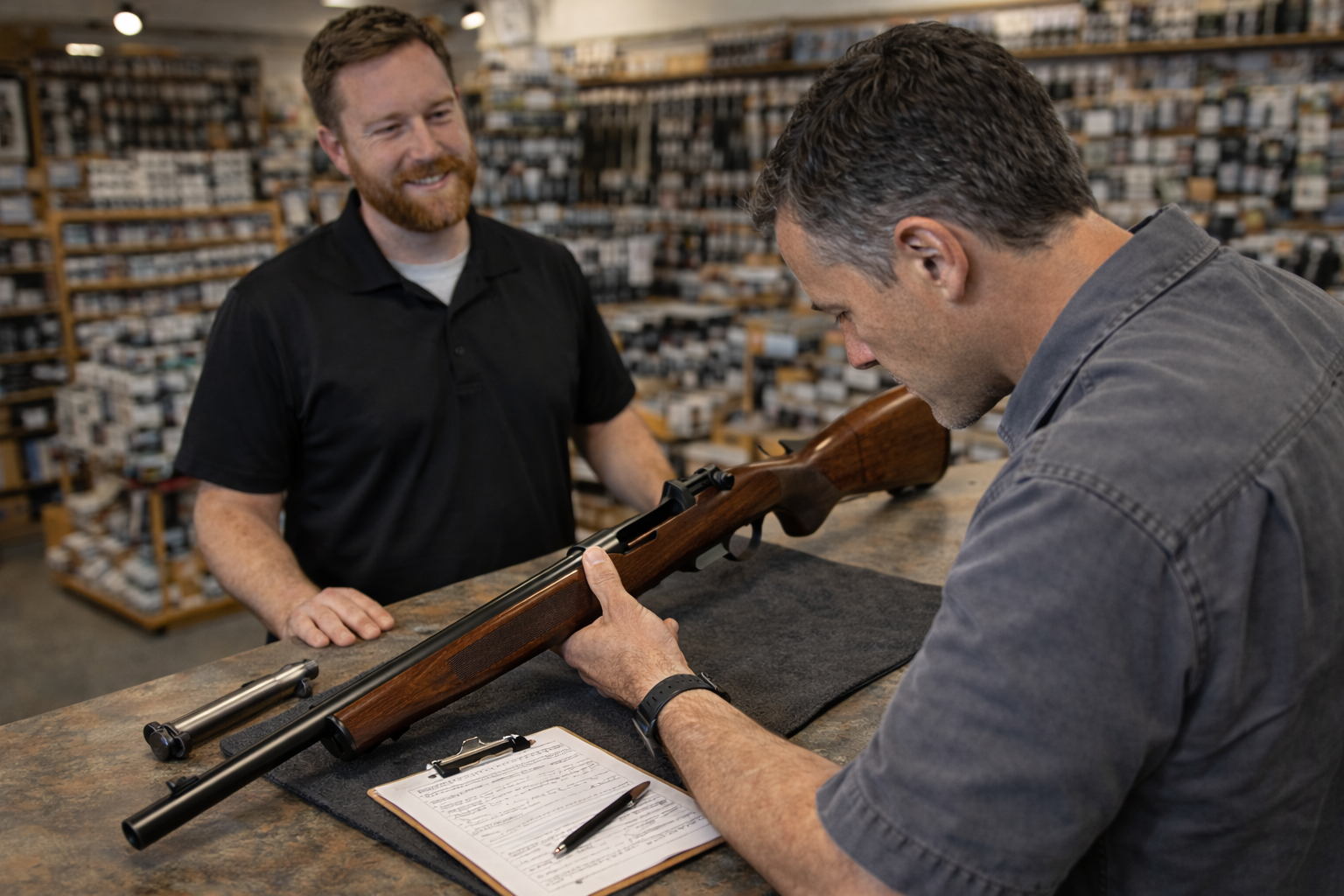
That transfer moment matters because it affects your return window. Once you accept the firearm from the FFL, you are now inside the return-policy clock. That means the smart move is to inspect the gun carefully before completing the transfer. Do not rush because the guy behind you is sighing like he is late for a bass tournament. Take your time.
What to Check at the FFL Before Accepting Transfer
Even with Certified Used inspection, you should still inspect the firearm when it arrives at your local FFL. This is not about being paranoid. It is about being responsible with your money.
Start with the basics. Confirm the firearm matches the listing. Check the make, model, caliber or chambering, barrel length if relevant, finish, included magazines, included accessories, and visible condition. If the listing showed specific grips, sights, optics plates, choke tubes, or magazines, make sure those items are present unless the listing clearly said otherwise.
Then inspect the condition. Look for cracks, bulges, major rust, damaged screws, missing parts, bent sights, loose stocks, excessive wear, damaged crowns, rough chambers, or anything that does not match the listing photos. You are not trying to perform a full gunsmith inspection at the counter, but you are trying to catch obvious problems before accepting transfer.
Quick FFL Inspection Checklist
- Confirm the firearm matches the listing.
- Confirm the serial number matches the transfer paperwork.
- Check the overall finish and compare it to the photos.
- Inspect the bore if the FFL allows safe inspection.
- Look at the muzzle crown for visible damage.
- Cycle the action safely if allowed by the FFL.
- Check safety, slide release, cylinder latch, bolt, trigger reset, or other controls where appropriate.
- Confirm included magazines or accessories are present.
- Look for cracks in stocks, grips, frames, or fore-ends.
- Ask questions before accepting transfer if anything looks wrong.
Who Should Consider Guns.com Certified Used Guns?
Guns.com Certified Used guns are a strong fit for several types of buyers.
First, they make sense for buyers who want used-gun value but do not have years of experience inspecting firearms. If you are newer to firearms, a Certified Used listing can feel less intimidating than a regular used listing because the gun has been inspected and rated before sale.
Second, they are useful for buyers hunting discontinued models. Firearm companies change product lines constantly. Sometimes the exact model, barrel length, finish, stock, grip, or sight setup you want is no longer sitting new on a shelf. Used inventory may be the only realistic way to find it.
Third, Certified Used can be attractive for practical shooters who do not need pristine safe-queen perfection. If you want a carry pistol, truck gun, hunting rifle, training shotgun, or range revolver, a little honest wear may not matter. In fact, the first scratch is already handled. Congratulations, your anxiety can go take a nap.
Fourth, they are worth checking for buyers who want a better gun than their new-gun budget normally allows. Used pricing can sometimes move you into a higher-quality model, better trim level, or more desirable configuration.
Who Might Want to Skip Certified Used?
Certified Used is not perfect for everyone.
If you are a collector who wants exact originality, matching parts, pristine finish, and deep historical detail, you may need more information than a standard online listing provides. Certified Used can still be useful, but collectors should ask questions and examine photos carefully.
If you want a brand-new firearm with a factory warranty and untouched condition, buying used may not scratch that itch. Certified Used is still used. It may have wear. It may have been carried, hunted with, shot, or stored for years. That is not automatically bad, but it is not the same as new.
If you are chasing the absolute lowest possible price, Certified Used may not always be the cheapest route. Inspection, convenience, and a better return structure have value. Sometimes that value shows up in the price.
Best Types of Firearms to Buy Certified Used
Some firearm categories are especially interesting in the Certified Used lane.
Used Handguns
Certified Used handguns can be appealing because many pistols get carried more than they get shot. You may find a pistol with holster wear but limited round count. That can be a good tradeoff if the internals are healthy and the price is right.
Pay attention to magazine count, sight condition, optic-cut status, grip wear, trigger feel, and whether the model still has factory support. If you are buying a defensive pistol, reliability matters more than cosmetics. A scuffed slide is not a crisis. A weak extractor is.
Used Revolvers
Used revolvers can be wonderful, especially older Smith & Wesson, Ruger, Colt, Taurus, or other wheelguns in desirable configurations. They can also hide issues that newer buyers may not notice, especially timing and lockup concerns.
This is where the Certified Used checklist has value because revolvers require different inspection points than semi-autos. Cylinder rotation, timing, hammer function, bore condition, crown condition, and forcing cone condition all matter.
Used Hunting Rifles
Used hunting rifles may be one of the best Certified Used categories. Plenty of hunting rifles spend most of their lives in a safe, then come out for a few days each season. A good used hunting rifle can offer excellent value if the bore is strong, the crown is clean, the action is smooth, and the stock is solid.
Check chambering, barrel length, stock material, included bases or rings, magazine type, and overall weight. A rifle that looks great online but weighs more than your hopes and dreams may not be the best mountain rifle.
Used Shotguns
Shotguns live interesting lives. Some get babied. Others ride in duck boats, turkey vests, truck racks, and muddy blinds. Used shotguns can be excellent buys, but buyers should pay attention to action function, chamber condition, choke tube condition, rib condition, stock cracks, and fore-end fit.
A Certified Used shotgun can make sense for hunters who want a practical tool without new-gun pricing. Just remember that field wear is normal. A shotgun with a little honest wear may still have decades of birds, clays, and bad jokes left in it.
How to Shop Guns.com Certified Used Guns Without Overpaying
The Certified Used label adds confidence, but it does not cancel the need for price research. Before buying, compare the listing price against new pricing, regular used pricing, local gun shop inventory, and recent sale prices when possible.
Pay close attention to total cost. The listing price is not the whole story. You may also have shipping, tax, FFL transfer fees, and possible payment-related costs depending on the checkout process. A used gun that looks $75 cheaper online may not be cheaper after everything is added up.
That does not mean online used guns are a bad deal. It means you need to do the math like a grown adult, which is annoying but cheaper than learning the hard way.
Used Gun Value Formula
Total Real Cost = Gun Price + Shipping + Tax + FFL Transfer Fee + Any Accessories Needed
If that number still looks good compared to buying new or buying locally, then the deal may be worth pursuing.
Red Flags to Watch for in Any Used Gun Listing
Even with a Certified Used program, buyers should know what red flags look like. A listing does not need to be scary to deserve scrutiny. Sometimes the problem is not what the listing says. It is what the listing does not show.
- Photos that do not clearly show both sides of the firearm.
- No clear view of the muzzle or crown.
- No clear view of wear areas.
- Unclear magazine or accessory count.
- Visible rust, pitting, cracks, or missing screws.
- Aftermarket modifications that are not explained.
- Optic cuts, sights, grips, or stocks that may affect compatibility.
- Price that is too close to new-gun pricing without a clear reason.
Certified Used should reduce risk, but it does not mean you should turn off your brain. That little voice in your head saying “zoom in on that weird spot” is not paranoia. That is your wallet trying to survive.
Certified Used Guns and State Compliance
State compliance matters. Guns.com has a state compliance section on its site, but the buyer still needs to understand their own local rules before ordering. Firearm laws vary by state and can involve magazine restrictions, roster requirements, waiting periods, permits, firearm feature restrictions, age restrictions, ammunition rules, and transfer requirements.
For Bark & Brass readers in restrictive states, this is especially important. Do not assume a listing is legal for you just because it appears online. Confirm compliance before buying, choose the correct FFL, and ask questions before money changes hands.
That is not legal advice. That is basic adult survival in the firearms world. Laws can be confusing, and sometimes they make about as much sense as putting ketchup on a steak. Still, you are responsible for following them.
How the Online Gun Buying Process Works
Guns.com describes the online buying process as browsing inventory, buying or winning the firearm, selecting a local FFL during checkout, and then picking it up locally once the firearm arrives. The local FFL handles the transfer process and performs any necessary background checks before the firearm is transferred to the buyer.
That means the online purchase is only part of the process. The legal transfer happens through the FFL. You will need valid identification and any required documents for your state or locality. Your local FFL may also charge a transfer fee, so check that ahead of time.
Basic Online Firearm Purchase Flow
- Find the Guns.com Certified Used gun you want.
- Read the listing and inspect every photo.
- Confirm the gun is legal in your state and locality.
- Compare total cost against other options.
- Select a local FFL during checkout.
- Wait for shipping and arrival notification.
- Inspect the firearm at the FFL before accepting transfer.
- Complete the required paperwork and background check process.
- Accept transfer only if the firearm matches the listing and condition expectations.
What Makes Guns.com Certified Used Different From an Auction Site?
Auction sites can be great, but they are a different animal. On a typical auction marketplace, the buyer is often evaluating the seller, photos, description, feedback, shipping terms, payment rules, and return terms all at once. Some sellers are excellent. Some are not. Some descriptions are detailed. Some look like they were written during a power outage.
Guns.com Certified Used is more curated. You are not simply browsing an open marketplace where every used gun is treated the same. The Certified Used label indicates the firearm has gone through Guns.com’s inspection and rating process.
That does not automatically mean Certified Used beats every auction deal. Experienced collectors may still find rare gems through auctions. But for the average buyer who wants a practical used firearm with less uncertainty, Certified Used is easier to understand.
Is Certified Used Better Than Buying Local?
Not always. Local gun shops still matter. A good local shop lets you hold the firearm, inspect it, ask questions, compare options, and build a relationship with people who may help you later. That is worth something.
But local inventory is limited by what is physically in the shop. Guns.com gives you access to a much larger online inventory. If you are looking for a specific model, discontinued configuration, older hunting rifle, police trade-in style pistol, or hard-to-find shotgun, online inventory may give you more options.
The best answer is not “online always wins” or “local always wins.” The smart answer is to compare both. Check local shops. Check Guns.com Certified Used. Compare total cost. Then buy the better value.
Best Uses for Guns.com Certified Used Guns
Here are the use cases where Certified Used makes the most sense.
Budget-Friendly Range Guns
A used range pistol or rifle does not need to be perfect. It needs to be reliable, safe, and enjoyable to shoot. Certified Used can be a smart way to save money on a range gun while still getting a firearm that has been inspected.
Hunting Rifles That Will Actually Hunt
If a rifle is going to ride in a truck, sit in a blind, lean against a tree, and get carried through brush, buying used can make sense. A few cosmetic marks may matter less than accuracy, reliability, and fit.
Defensive Pistols With Known Models
If you already know you want a specific Glock, SIG Sauer, Smith & Wesson, Springfield Armory, Ruger, Walther, or similar defensive pistol, Certified Used inventory may help you find one at a better price. Just inspect it carefully and test it thoroughly before trusting it for defense.
Shotguns for Turkey, Deer, Upland, or Home Defense
Used shotguns can be workhorses. A good pump or semi-auto shotgun with honest wear may still have a very long service life. Certified Used gives buyers a more structured way to shop that category.
Discontinued or Hard-to-Find Models
This may be the sleeper advantage. Used inventory often includes models that are no longer produced or configurations that are hard to find new. If you have been hunting for a specific barrel length, finish, stock, caliber, or older design, Certified Used is worth checking.
Browse Certified Used Deals Before They Disappear
Used inventory changes fast. If you see the exact model, chambering, barrel length, or configuration you want, compare the price and move smart.
What Bark & Brass Would Look for First
If we were shopping Guns.com Certified Used guns today, we would start with practical models where used condition makes sense and parts support is strong.
For handguns, we would look at common defensive pistols with good magazine availability and aftermarket support. Think practical carry and range guns, not weird unicorn pistols that require a treasure map to find magazines.
For rifles, we would look at proven hunting rifles in common chamberings. A used .308 Winchester, .270 Winchester, .30-06 Springfield, 6.5 Creedmoor, 7mm Remington Magnum, or similar hunting rifle can be a very practical buy if the bore and crown are healthy.
For shotguns, we would look at proven pumps and semi-autos from major brands, especially if the listing includes choke tubes, a clean chamber, and clear photos of the stock and receiver.
For revolvers, we would be pickier. Revolvers can be excellent used buys, but timing and lockup matter. Certified inspection helps, but we would still inspect carefully at transfer.
Questions to Ask Before Buying a Certified Used Gun
Before buying, slow down and ask a few basic questions. These can save you from buyer’s remorse, return hassle, or ending up with a gun that technically works but does not actually fit your needs.
- Is this firearm legal in my state and locality?
- Does the listing clearly show the condition?
- Is the price meaningfully lower than buying new?
- What is the total cost after shipping, tax, and FFL transfer?
- Are magazines, choke tubes, optic plates, or accessories included?
- Can I still get parts, magazines, holsters, mounts, or support?
- Does the firearm fit the role I actually need?
- Have I read the return policy and timing rules?
That last one is not optional. Return windows are short. If something is wrong, you do not want to discover the policy after the clock has already run out.
Certified Used Guns for New Gun Owners
New gun owners can absolutely buy used firearms, but they should be careful. The advantage of buying new is simplicity. You get a factory-new firearm, usually with manufacturer support, and condition is not a mystery.
The advantage of Certified Used is value. You may be able to afford a better model, better configuration, or more proven firearm than your new-gun budget allows. But new buyers should stick with common models, common calibers, available magazines, and proven platforms.
A new shooter probably does not need to start with a discontinued oddball pistol in a cartridge last seen in a VHS-era police locker. That may be cool later. Start practical. Learn the platform. Build confidence. Then chase weird stuff like the rest of us degenerates with gun safes and poor impulse control.
Certified Used Guns for Experienced Buyers
Experienced buyers may appreciate Certified Used for a different reason: speed. If you already know what you are looking for, Guns.com lets you scan a large inventory quickly. You can filter by brand, type, caliber, condition, price, and other factors.
For experienced buyers, the Certified Used stamp may not be necessary, but it can still be useful. It adds a layer of inspection and a defined return policy, which can make an online used purchase feel less risky.
That said, experienced buyers should still shop aggressively. Compare prices. Look at local listings. Watch for condition details. Do not pay near-new pricing for a used gun unless it has a rare configuration, included extras, or some other reason that justifies the number.
How to Compare Certified Used Prices
Used-gun pricing can be slippery. A fair price depends on condition, age, demand, included accessories, current new-gun availability, and whether the model is discontinued or collectible.
Here is a simple way to compare:
- Find the current new price for the same or closest model.
- Check other used listings for similar condition.
- Add shipping, tax, and FFL transfer fees.
- Subtract value if magazines or accessories are missing.
- Add value if desirable accessories are included.
- Consider whether the Certified Used inspection and return policy are worth paying slightly more.
Do not compare the used price only to MSRP. MSRP can be fantasy land. Compare to real street prices. MSRP is what companies print. Street price is where wallets bleed.
What About Accessories, Magazines, and Optics?
Used firearm listings can vary widely when it comes to included accessories. Some include the original box, extra magazines, choke tubes, optic plates, manual, lock, backstraps, scope bases, or other extras. Others include the firearm and not much else.
This matters because accessories can be expensive. A pistol that looks cheaper but comes with one magazine may not be cheaper than another listing with three magazines and the original case. A shotgun missing choke tubes may cost you more later. A rifle with quality rings or bases may save you money, but only if they actually fit your optic plans.
Read the listing carefully. Look at every photo. If something is not shown or listed, do not assume it is included.
Should You Buy a Used Defensive Gun?
You can buy a used defensive gun, but you should be honest about what that means. A defensive firearm needs to be reliable. Certified Used inspection helps, but you still need to test the gun yourself with your chosen magazines, ammunition, holster, and carry setup before trusting it.
For a defensive pistol, run enough rounds to confirm function. Test every magazine. Confirm point of impact. Check sights. If the gun is optic-ready, confirm plate fit and screw length. If the gun came with night sights, check whether they are still bright enough for your needs.
A used defensive gun can be perfectly fine. Just do not buy it, load it, and immediately call it good. That is not confidence. That is gambling with extra steps.
Should You Buy a Used Hunting Gun?
Used hunting guns often make a lot of sense. A hunting rifle or shotgun does not need to be cosmetically perfect. It needs to fit, function, pattern or group well, and handle the environment where you hunt.
For rifles, check bore condition, crown condition, stock fit, scope mounting setup, trigger function, and overall weight. For shotguns, check choke compatibility, chamber length, action function, stock fit, and whether the gun fits your hunting style.
If you are buying a used hunting rifle online, plan on confirming zero and testing ammunition before the season. If you are buying a used shotgun, pattern it. Do not assume. Paper does not lie, even when your buddy does.
Common Mistakes Buyers Make With Used Guns
The first mistake is falling in love with the price before understanding the total cost. A used gun can look cheap until shipping, tax, transfer fees, and missing accessories enter the chat.
The second mistake is ignoring condition photos. If the listing has multiple photos, use them. Zoom in. Look at wear areas. Compare both sides. Check the muzzle. Check screws. Check grip panels. Check the stock. If you would inspect it in person, inspect it online as best you can.
The third mistake is assuming “Certified Used” means “new.” It does not. Certified Used still means used. That is not bad. It just means the gun may show wear.
The fourth mistake is waiting too long after transfer to inspect or test. Return windows are short. If you buy a Certified Used gun, inspect it immediately and test it as soon as reasonably possible within policy limits and safe/legal range access.
Where Guns.com Certified Used Really Shines
The program shines for buyers who want convenience without completely surrendering caution. It is not the cheapest possible way to buy a used firearm. It is not the same as personally inspecting a gun before purchase. But it is a strong middle ground.
The inspection checklist gives the program substance. The condition rating narrows the inventory. The return policy gives buyers a defined process if something is wrong. The online inventory makes it easier to find specific models.
For practical buyers, that combination is useful. It turns used-gun shopping from “I hope this works out” into “I have more information, more structure, and a better idea of what I am buying.” That is a win.
Where Guns.com Certified Used Still Requires Caution
The biggest caution is that online buying is still online buying. You cannot feel the trigger, shoulder the rifle, check shotgun fit, or personally inspect the bore until the firearm arrives at your FFL.
The second caution is return timing. Three calendar days and seven calendar days are not long. If you are busy, traveling, or unable to inspect and test quickly, that matters.
The third caution is price creep. Sometimes used guns are priced close enough to new that buying new makes more sense. Always compare.
The fourth caution is state compliance. Never assume. Especially if you live somewhere with magazine limits, firearm rosters, feature restrictions, waiting periods, permits, or other special rules.
Final Verdict: Should You Buy Guns.com Certified Used Guns?
Yes, Guns.com Certified Used guns are worth considering if you want a pre-owned firearm with more confidence than a typical used-gun listing. The inspection process, condition standards, and return policy make the program stand out, especially for buyers who like the value of used guns but hate the uncertainty.
They are not perfect. You still need to compare prices. You still need to inspect the firearm at your FFL. You still need to understand the return policy. You still need to follow your state and local laws. And you still need to test the firearm before trusting it for defense, hunting, competition, or serious use.
But as a practical used-gun buying option, Guns.com Certified Used makes a lot of sense. It gives regular buyers access to a large online inventory without feeling like they are walking into the used-gun wilderness armed only with hope and a coupon code.
If you want used-gun savings with a more structured buying experience, Guns.com Certified Used deserves a spot on your shopping list.
Ready to Check the Current Inventory?
Look for the Certified Used stamp, compare total cost, read the listing carefully, and inspect before accepting transfer.
Frequently Asked Questions About Guns.com Certified Used Guns
What does Guns.com Certified Used mean?
Guns.com Certified Used means the firearm is part of Guns.com’s inspected pre-owned inventory. Guns.com says these firearms go through a detailed 10-point inspection process and are rated very good to excellent condition before receiving the Certified Used stamp.
Are Guns.com Certified Used guns new?
No. Certified Used guns are pre-owned firearms. They may show normal wear depending on condition, age, and prior use. The advantage is that they are inspected and rated under the Guns.com Certified Used program.
Can you return a Guns.com Certified Used gun?
Guns.com lists a 3-calendar-day no-questions-asked return window after physical transfer for Certified Used guns, minus applicable fees as outlined in its return policy. Guns.com also lists a 7-calendar-day return window for mechanical defects. Always read the current return policy before buying.
Do Guns.com Certified Used guns ship to your house?
No. Firearms purchased online through Guns.com ship to a selected local FFL. The buyer picks up the firearm at that FFL and completes the required transfer process, including any necessary background check.
Are Certified Used guns better than regular used guns?
They can be a better choice for buyers who want more structure, inspection, and return-policy clarity. Regular used guns can still be excellent, but the buyer may need to do more homework and accept more uncertainty.
Should beginners buy Certified Used guns?
Beginners can consider Certified Used guns, especially common models with strong support, available magazines, and practical chamberings. New buyers should avoid obscure or heavily modified firearms unless they have help from someone knowledgeable.
What should I inspect before accepting the transfer?
Confirm the firearm matches the listing, check visible condition, inspect included accessories, verify magazine count, look for cracks or rust, examine the bore and crown if allowed, and ask questions before accepting transfer if anything seems wrong.
Are Guns.com Certified Used guns good for concealed carry?
They can be, but any used carry gun should be tested thoroughly before defensive use. Confirm reliability with your magazines and chosen ammunition, inspect sights and controls, and make sure the firearm fits your carry setup.
Are Guns.com Certified Used guns good for hunting?
Yes, used hunting rifles and shotguns can be excellent values when condition is good. Check bore condition, action function, stock fit, chambering, choke compatibility, and overall handling before relying on the firearm in the field.
Is the Certified Used stamp worth paying extra for?
Sometimes, yes. The value depends on the firearm, price, condition, included accessories, and your comfort level buying used guns online. The inspection process and return policy can justify paying a little more than the cheapest random used listing.
Related Bark & Brass Reads
- EOTECH HHS Green Review
- SIG P211 GT4 vs GT5 vs GTO
- Rangefinder vs Binoculars: Which One Should You Buy First?
Sources Used
- Guns.com Certified Used Guns
- Guns.com Certified Used Inspection Checklist
- Guns.com Return Policy
- Guns.com How to Buy a Gun Online