KastKing Fishing Gear Guide: Reels, Rods, Line, Tackle Bags, Tools, and Real-World Setups
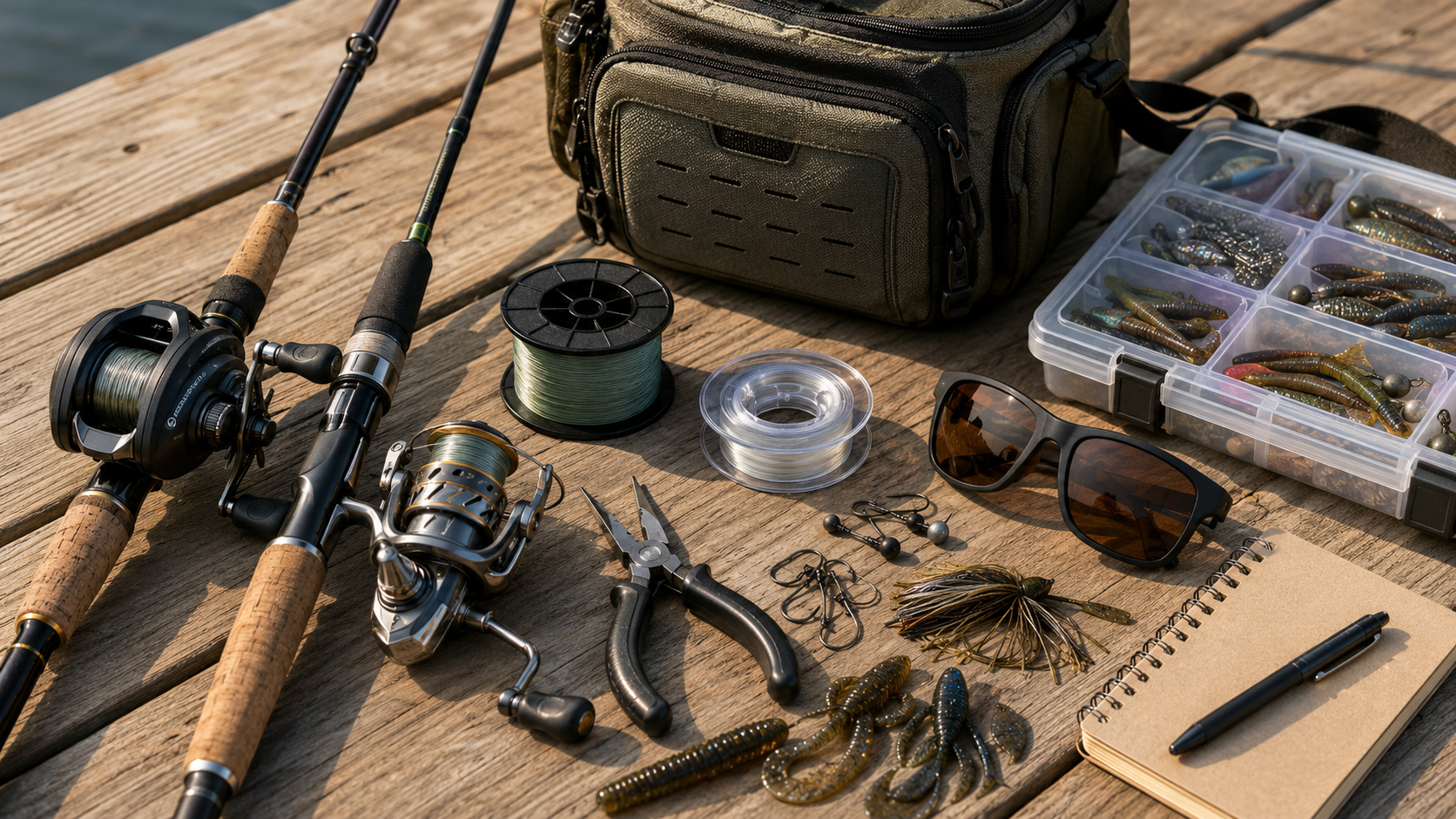
KastKing fishing gear has become one of those names you start seeing everywhere once you pay attention. Reels, rods, braided line, fluorocarbon, monofilament, tackle bags, fishing tools, sunglasses, and enough accessories to make your garage look like a small-town bait shop with a questionable coffee machine.
That is exactly why KastKing fishing gear deserves a full Bark & Brass guide instead of a tiny little mention tucked away like a forgotten jig in the bottom of a tackle tray.
What This KastKing Fishing Gear Guide Covers
This guide is the big-picture breakdown. We are covering what KastKing offers, how the major categories fit together, who the brand makes sense for, and how to build practical fishing setups without buying random gear just because it looked shiny at midnight. Because, yes, that is how tackle boxes become overpopulated.
KastKing covers a wide spread of fishing gear: spinning reels, baitcasting reels, casting rods, spinning rods, rod-and-reel combos, braided fishing line, fluorocarbon line, monofilament line, tackle bags, line storage, fishing pliers, fish grips, scales, sunglasses, and other fishing accessories. As a result, many anglers can build a complete setup without bouncing between twelve different brands.
Why a Complete Setup Matters
Most everyday anglers are not trying to outfit a tournament boat with five mortgage payments worth of rods on the deck. Many of us want gear that casts well, feels good in the hand, holds up to normal use, and does not make the checkout screen look like a medical bill. In that value-focused lane, KastKing fishing gear is worth a serious look.
Now, let’s be clear. Not every product from any brand is automatically the best thing on planet Earth. That kind of fake-hype nonsense belongs in the same trash pile as gas station sushi and “one-size-fits-all” holsters. However, KastKing does offer a wide enough product lineup that bass anglers, bank fishermen, kayak anglers, beginners, and weekend pond hoppers can build smart setups without spending premium money on every single piece.
So let’s break it down the Bark & Brass way: plain English, real-world use, useful comparisons, a little humor, and no velvet-rope fishing snob act.
KastKing Fishing Gear Quick Answer
Yes, KastKing fishing gear is worth looking at if you want practical rods, reels, fishing line, tackle storage, sunglasses, and tools at prices that usually sit below many premium fishing brands. KastKing is especially interesting for anglers who want to build full setups for bass fishing, bank fishing, kayak fishing, pond fishing, panfish, travel kits, and general freshwater use without overpaying for every item.
The biggest reason to look at KastKing is simple: they do not just make one thing. Instead, they offer a full fishing ecosystem. You can pair a KastKing spinning reel with a KastKing rod, spool it with KastKing braid or mono, carry your tackle in a KastKing bag, cut line with KastKing pliers, and wear KastKing polarized sunglasses while trying to decide whether that dark shape near the dock is a bass, a stump, or your buddy’s poor life choices.
Start With How You Fish
However, the biggest reason to slow down before buying is also simple: KastKing has a lot of products. That is good, but it can also be overwhelming. A beginner can easily buy the wrong reel size, the wrong rod power, the wrong line type, or a tackle bag bigger than their actual fishing problem.
Because of that, the smartest move is to start with the fishing style you actually do most often. Then build around that style.
- For pond and bank bass fishing: look at medium-power spinning or casting setups, braid or mono depending on your style, and a manageable tackle bag.
- For kayak fishing: prioritize compact storage, easy-access tools, corrosion resistance, and gear that does not turn your kayak into a floating junk drawer.
- For beginners: a rod-and-reel combo can make more sense than piecing together a custom setup immediately.
- For line upgrades: braid, fluorocarbon, and mono all have a place, but they are not interchangeable magic string.
- For serious bass anglers: KastKing baitcasters, technique rods, fluorocarbon leaders, and tackle management systems are where the rabbit hole begins.
KastKing Fishing Gear Quick View: What They Sell
KastKing is not just a reel company. That is the first thing to understand. They sell enough categories to build complete fishing loadouts, which makes this guide useful because we can organize the brand by real fishing needs instead of treating each product like it lives alone in the woods wearing a tiny fishing vest.
In other words, KastKing fishing gear works best when you think in systems: rod, reel, line, storage, tools, and the style of fishing you actually do.
KastKing Fishing Gear Quick View: What They Sell
KastKing is not just a reel company. That is the first thing to understand. The brand sells enough categories to build complete fishing loadouts, which makes this guide useful because we can organize the gear by real fishing needs instead of treating every product like it lives alone in the woods wearing a tiny fishing vest.
In other words, KastKing fishing gear works best when you think in systems: rod, reel, line, storage, tools, and the style of fishing you actually do.
KastKing Gear Categories at a Glance
| KastKing Category | What It Covers | Best For | Why It Matters |
|---|---|---|---|
| Fishing Reels | Spinning reels and baitcasting reels | Bass, bank, kayak, and finesse fishing | Controls casting, retrieve, drag, and line handling. |
| Fishing Rods | Casting rods, spinning rods, and technique rods | Matching power and action to the bait | Affects casting, sensitivity, hooksets, and fish control. |
| Rod & Reel Combos | Pre-matched fishing setups | Beginners, family fishing, and truck kits | Reduces guesswork when building a setup. |
| Fishing Line | Braid, fluorocarbon, mono, and leaders | Clear water, heavy cover, finesse, and topwater | Changes casting, visibility, stretch, and sensitivity. |
| Tackle Management | Tackle bags, storage boxes, and line storage | Bank anglers, kayak anglers, and shore fishing | Keeps gear organized and easy to reach. |
| Tools & Accessories | Pliers, cutters, grips, scales, and hook removers | Everyday fishing, kayak fishing, and lure changes | Makes fishing safer, faster, and less annoying. |
| Sunglasses | Polarized sport and bifocal-style sunglasses | Sight fishing, glare reduction, and eye protection | Helps you see into the water and protect your eyes. |
Why KastKing Fishing Gear Fits Bark & Brass Readers
A good fishing setup is not just a pile of products. It is a system. That is why KastKing fishing gear fits the Bark & Brass world so well. The brand covers enough categories to help anglers build complete setups instead of buying one random reel and then guessing their way through rod, line, storage, and tools.
That matters because the average angler does not shop like a pro-staff catalog robot. Most of us shop around a problem. Maybe we need a better bank fishing bag. Maybe we need a spinning setup for finesse worms. Maybe we need a baitcaster that does not make us cry. Or maybe we need sunglasses because squinting at water for six hours makes a person look like a confused raccoon.
A Full Setup Matters More Than One Shiny Part
It is easy to obsess over one piece of gear. However, fishing gear only works right when the pieces match. A great reel on the wrong rod is frustrating. A strong rod with the wrong line can cost fish. A good tackle bag packed like a junk drawer becomes dead weight. Meanwhile, cheap pliers can make a simple hook removal feel like a minor medical event.
Because KastKing covers reels, rods, line, storage, and tools, it gives buyers a simple way to build complete setups. That does not mean you need to buy everything from one brand. Instead, it means the categories are there if you want them.
Value Still Matters
Fishing can get expensive fast. One minute you are buying a pack of soft plastics. Before long, your cart has two reels, three rods, braid, fluorocarbon, hooks, weights, sunglasses, pliers, and a tackle bag large enough to qualify as checked luggage.
So, value matters. KastKing often appeals to anglers who want useful gear without jumping straight to premium pricing in every category. That is especially helpful for beginners, family anglers, bank fishermen, and weekend bass anglers who need dependable gear but also enjoy keeping electricity on at home. Funny how that works.
KastKing Fishing Gear for Different Anglers
KastKing fishing gear makes the most sense when you match it to the person using it. A beginner does not need the same setup as a heavy-cover bass angler. Likewise, a kayak fisherman does not need the same tackle bag as someone fishing from a bass boat. A dad taking kids bluegill fishing does not need a baitcaster that requires a small pilot license to operate.
Therefore, let’s break this down by real users instead of pretending every angler needs the same thing.
Beginner Anglers Building Their First Real Setup
If you are new to fishing, walking into the rod-and-reel world can feel like opening the hood on a spaceship. Spinning reels, baitcasters, medium-heavy rods, fast action, braid, mono, fluorocarbon, gear ratios, drag ratings, spool sizes, guides, blanks — good grief. You came here to catch fish, not pass a mechanical engineering exam behind the bait shop.
KastKing’s broad product lineup helps beginners because you can build a full setup in one place. For example, a beginner can start with a spinning rod and reel, add monofilament or braid, grab a small tackle bag, pick up pliers, and be ready to fish without piecing together twelve different brands.
For most beginners, that convenience matters. The goal is not to build the perfect setup on day one. Instead, the goal is to build a setup that works, teaches you what you like, and gets you on the water.
Budget-Conscious Bass Anglers
Bass fishing gets expensive fast. First you buy a pack of worms. Then you need hooks. After that, weights join the cart. Before you know it, you are explaining why a frog rod is different from the other rod that also catches bass.
KastKing gives bass anglers a way to build multiple setups without going straight into premium-brand pricing on every rod and reel. That can matter if you want one setup for Texas rigs, one for crankbaits, one for frogs, one for finesse, and one for whatever dumb idea sounded good after watching fishing videos at midnight.
For bass anglers, the key is matching KastKing fishing gear to technique. The right gear should make your fishing more efficient, not just make your garage more crowded.
Bank Fishermen and Pond Hoppers
Bank fishing is its own animal. You are not spreading gear across a boat deck. Instead, you are carrying what you need on your back, over your shoulder, or in one hand while walking around mud, weeds, rocks, brush, goose poop, and that one guy who somehow brought a Bluetooth speaker to a fishing spot.
KastKing tackle bags, spinning gear, baitcasters, line, sunglasses, and tools all fit the bank-fishing world well. The real trick, however, is not buying too much. A bank angler needs a practical bag, a couple of dependable setups, confidence baits, pliers, line cutters, and sunglasses. The rest is optional unless you enjoy turning a half-mile walk into punishment.
Kayak Anglers
Kayak fishing rewards compact, organized gear. Everything needs to have a place, and anything loose will eventually end up under your seat, in your lap, or at the bottom of the lake. That is not pessimism. That is kayak law.
KastKing tackle management, rod storage, pliers, fish grips, line, and compact setups make sense for kayak anglers who want useful gear without overloading the boat. Also, rod length, handle length, tackle bag size, corrosion resistance, and easy-access tools matter more in a kayak than they do from a big boat.
For kayak anglers, KastKing fishing gear can work well as a compact system: rod, reel, braid, leader line, tackle bag, pliers, sunglasses, and fish grip.
Family and Casual Anglers
Not every fishing trip is a tournament. Sometimes it is a pond, a kid with a spinning rod, a container of nightcrawlers, and a bluegill population about to experience poor decision-making.
KastKing rod-and-reel combos, spinning reels, mono line, and basic tackle bags can fit family fishing well because the gear is approachable. In addition, you do not need to hand a beginner a high-end baitcaster and watch them backlash it into something that looks like a bird built a nest in the spool.
For family fishing, simple wins. Spinning gear, easy-casting line, basic tools, and manageable storage are usually the right direction.
Anglers Who Want Spare Setups
Even experienced anglers need backup gear. A spare reel, a truck rod, a loaner combo, a backup tackle bag, and a set of pliers you can actually find all have a place. KastKing can be useful here because you can add functional backup gear without spending premium money every time.
That matters when your buddy says, “I’ll bring my own rod,” and then shows up with something that looks like it survived a house fire and a divorce.
Who Might Want to Skip KastKing Fishing Gear
KastKing fishing gear is not automatically the best choice for everyone. That is not a knock. It is just honesty.
Premium-Gear Loyalists May Want More Specialized Options
You might want to look elsewhere if you are chasing top-tier tournament gear, ultra-premium rod blanks, boutique reel machining, or brand prestige. Some anglers are very particular about reel refinement, guide trains, blank recovery, handle materials, drag smoothness, and long-term abuse under heavy tournament schedules. If that is you, you already know you are picky. Own it. We support your expensive little habit.
Broad Product Lines Require Smarter Buying
KastKing also may not be the best fit if you only want a brand that specializes narrowly in one category. Some companies are known mostly for reels. Others are known mostly for rods. KastKing is broader. That is a strength for building complete setups, but it also means buyers should still evaluate each product by category and use case.
In short, the smart move is not “buy KastKing everything blindly.” The smart move is “use KastKing where the value makes sense.” That is the whole point of this guide.
KastKing Fishing Gear: Reels Explained
KastKing reels are probably the first category many anglers notice. Reels are the flashy part of the setup. They click, spin, cast, crank, and give you just enough mechanical satisfaction to make you want another one even when you already own five.
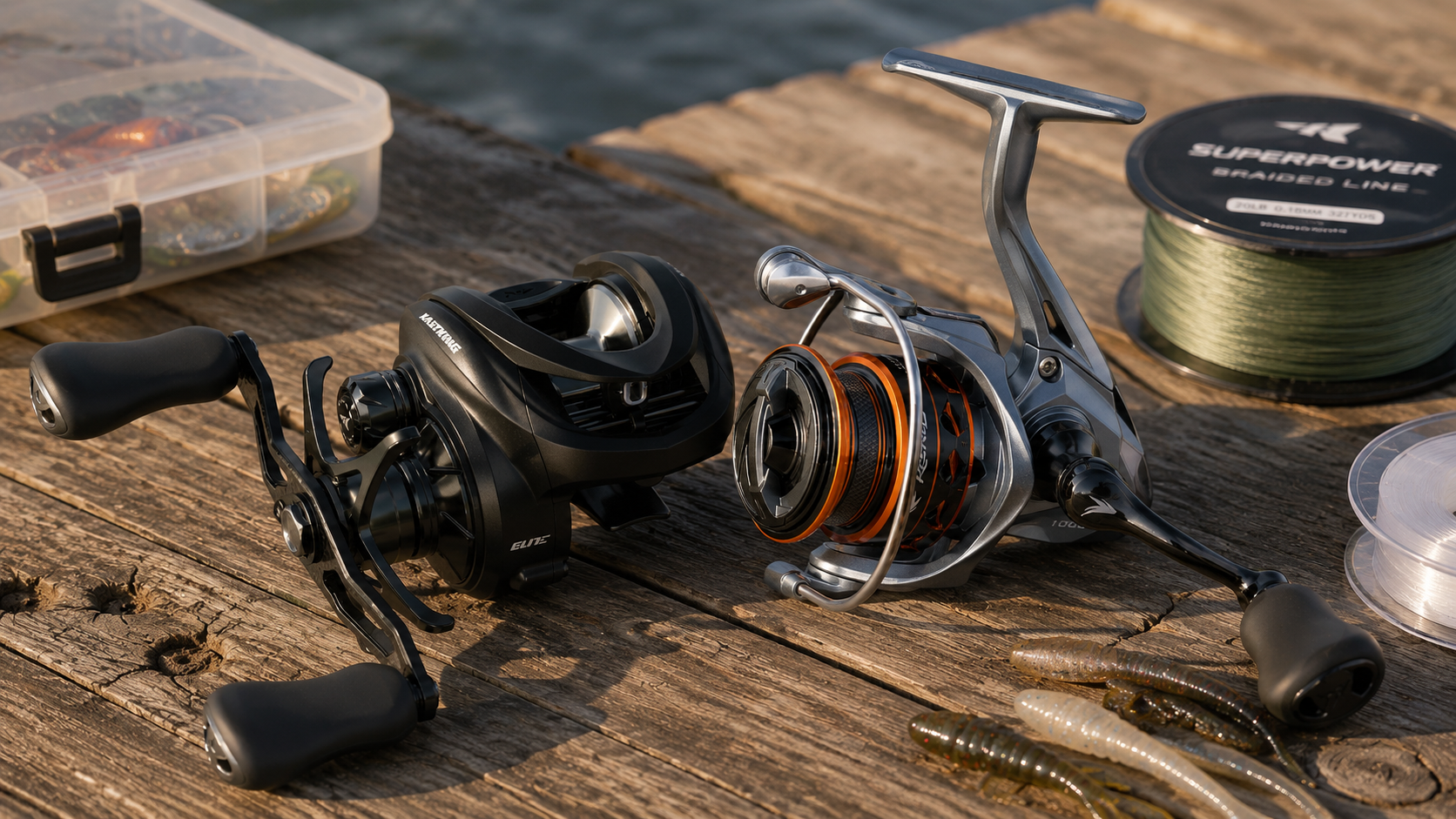
KastKing offers both spinning reels and baitcasting reels, and each style has a different job. Because of that, choosing the right reel starts with the fishing technique, not the prettiest product photo.
KastKing Spinning Reels
Spinning reels are the friendly starting point for most anglers. They are easier to cast, more forgiving with lighter lures, and a better fit for beginners than baitcasters. They also work well for finesse bass fishing, panfish, walleye, trout, smallmouth, pond fishing, and general bank fishing.
A spinning reel is the setup you hand to someone who wants to fish without first learning how to clear a backlash. However, spinning reels are not just beginner gear. Experienced anglers use spinning gear for drop shots, Ned rigs, small swimbaits, light Texas rigs, wacky rigs, shaky heads, tubes, hair jigs, and all sorts of finesse techniques.
What to Check on a KastKing Spinning Reel
When looking at a KastKing spinning reel, pay attention to:
- Reel size: Smaller sizes are better for panfish, trout, and finesse bass. Larger sizes make more sense for heavier line, bigger fish, or saltwater use.
- Drag smoothness: A smooth drag matters when fish surge close to the bank, boat, or kayak.
- Weight: A lighter reel feels better during long days of casting.
- Line capacity: Match capacity to your line type and fishing style.
- Handle feel: A comfortable knob matters more than people admit.
For most freshwater bass anglers, a 2500 or 3000-size spinning reel is usually the practical middle ground. Go smaller for panfish and ultralight work. Go bigger if you need more line capacity or heavier duty.
KastKing Baitcasting Reels
Baitcasting reels are where bass fishing starts to feel more specialized. They are excellent for heavier lures, accurate casting, pitching, flipping, Texas rigs, jigs, spinnerbaits, chatterbaits, frogs, and power fishing.
They are also excellent at humbling people.
A baitcaster gives you more control, but it also demands more attention. Brake settings, spool tension, thumb control, lure weight, wind direction, and line type all matter. Get it right and you can place a bait under a dock like you were born with a fishing rod in your hand. Get it wrong and the reel turns into a tiny angry yarn factory.
What to Check on a KastKing Baitcaster
When looking at a KastKing baitcaster, pay attention to:
- Gear ratio: Faster ratios pick up line quickly; slower ratios can be better for certain moving baits.
- Braking system: Good brakes help control overruns and make casting easier.
- Frame feel: The reel should palm comfortably in your hand.
- Spool control: This affects casting distance and backlash control.
- Line choice: Braid, mono, and fluorocarbon behave differently on baitcasters.
For a first baitcaster, do not start with the lightest lure you own and a windy day. That is how bad words are born. Start with a medium-heavy rod, a reasonable lure weight, and line that behaves well. Learn the reel before trying to skip a weightless worm under a dock in a crosswind.
KastKing Reel Uses by Fishing Style
| Fishing Style | Best Reel Type | Why It Works |
|---|---|---|
| Beginner pond fishing | Spinning reel | Easy casting, simple line management, forgiving setup |
| Finesse bass fishing | Spinning reel | Works well with light line, small baits, and subtle presentations |
| Texas rigs and jigs | Baitcasting reel | Better control, stronger hooksets, accurate casting around cover |
| Frogs and heavy cover | Baitcasting reel | Handles heavier braid and power fishing better |
| Kayak fishing | Both | Spinning for finesse; baitcasting for power techniques |
| Family fishing | Spinning reel | Less frustration, fewer bird nests, more actual fishing |
KastKing Fishing Gear: Rods Explained
A reel gets attention, but the rod does the talking. The rod loads, casts, detects bites, drives hooks, protects line, and helps control the fish. Buy the wrong rod and even a good reel feels off. Buy the right rod and an average setup can feel surprisingly dialed.
KastKing offers different fishing rods for different needs, including casting rods and spinning rods. Some are aimed at bass techniques. Others are built heavier, lighter, more sensitive, or more general-purpose. Therefore, rod choice should always start with the bait, cover, line, and fish you plan to target.
Rod Power: Backbone Matters
Rod power describes how much force it takes to bend the rod. Light rods bend easier. Heavy rods take more force. For bass fishing, the common powers are medium-light, medium, medium-heavy, and heavy.
- Medium-light: Finesse presentations, small baits, light line.
- Medium: General-purpose spinning setups, small crankbaits, wacky rigs, lighter Texas rigs.
- Medium-heavy: Texas rigs, jigs, spinnerbaits, chatterbaits, heavier soft plastics.
- Heavy: Frogs, punching, heavy cover, bigger hooks, stronger line.
If you only buy one bass rod, medium-heavy is often the workhorse for baitcasting, while medium is often the more forgiving all-around spinning choice. That is not a law carved into stone tablets. It is just a practical starting point.
Rod Action: Where the Rod Bends
Rod action describes where the rod bends. A fast-action rod bends more near the tip. A moderate-action rod bends deeper into the blank. This matters because action changes how the rod casts, loads, detects bites, and keeps fish pinned.
- Fast action: Better for worm fishing, jigs, bottom contact, sensitivity, and strong hooksets.
- Moderate action: Often better for treble-hook baits like crankbaits because it helps keep fish pinned.
- Extra-fast action: Good for certain finesse and bottom-contact techniques where bite detection matters.
If you are buying KastKing fishing gear for soft plastics, Texas rigs, jigs, or worms, fast action usually makes sense. However, if you are buying for crankbaits or reaction baits with treble hooks, a more moderate rod may be better.
Casting Rods vs Spinning Rods
KastKing casting rods are built for baitcasting reels. KastKing spinning rods are built for spinning reels. Do not mix them unless you enjoy making equipment angry.
Spinning rods are better for lighter line, finesse baits, beginners, panfish, trout, and casual fishing. Casting rods are better for heavier bass techniques, power fishing, and more precise lure control once you know how to use a baitcaster.
For a practical three-rod KastKing-style bass lineup, think like this:
- Spinning setup: Medium or medium-light spinning rod for finesse baits.
- All-around casting setup: Medium-heavy fast casting rod for Texas rigs, jigs, spinnerbaits, and general bass fishing.
- Heavy-cover setup: Heavy casting rod for frogs, thick grass, pads, and nasty cover.
That three-rod system covers a lot without turning your garage into a rod forest.
KastKing Fishing Gear: Rod and Reel Combos
Rod-and-reel combos are the practical shortcut. Instead of buying a rod, buying a reel, matching them together, worrying about balance, and second-guessing yourself at 11:47 p.m., you buy a pre-matched setup and go fishing.
That can be a very good thing, especially for beginners and casual anglers.
When a KastKing Combo Makes Sense
A KastKing combo makes sense if:
- You are new to fishing and do not know how to match rods and reels yet.
- You want a spare setup for the truck, cabin, camper, or boat.
- You need a family-friendly setup without overthinking every component.
- You want a travel or backup rod-and-reel system.
- You are buying gear for someone else and do not want to build a custom setup from scratch.
Combos are not always the best choice for advanced anglers who already know exactly what rod length, reel size, gear ratio, line capacity, and handle style they want. However, for a lot of real people, combos solve the problem cleanly.
How to Match a Combo to the Job
The main thing is to match the combo to the fishing style. A panfish combo is not the same as a bass combo. A kayak combo is not always the same as a bank-fishing combo. Therefore, think about where and how the setup will be used before buying.
| Buyer | Combo Direction | Best Use |
|---|---|---|
| New angler | Spinning combo | Ponds, bluegill, bass, simple casting |
| Bass beginner | Medium spinning or medium-heavy casting combo | Worms, spinnerbaits, small jigs, bank fishing |
| Truck kit buyer | Durable spinning combo | Quick stops, ponds, creeks, family trips |
| Kayak angler | Compact, manageable rod length | Limited space, seated casting, easy handling |
KastKing Fishing Gear: Braid, Fluorocarbon, Mono, and Leaders
Fishing line might be the most underappreciated part of the setup. Everybody wants to talk rods and reels. Then they spool on the wrong line, lose fish, blame the lure, blame the weather, blame the moon, blame the dog, blame the government, and never once look at the spool.
KastKing sells several fishing line options, including braided line, fluorocarbon line, monofilament line, and leader-style line. Because line gets replaced more often than rods or reels, this is one of the most practical KastKing fishing gear categories for everyday anglers.
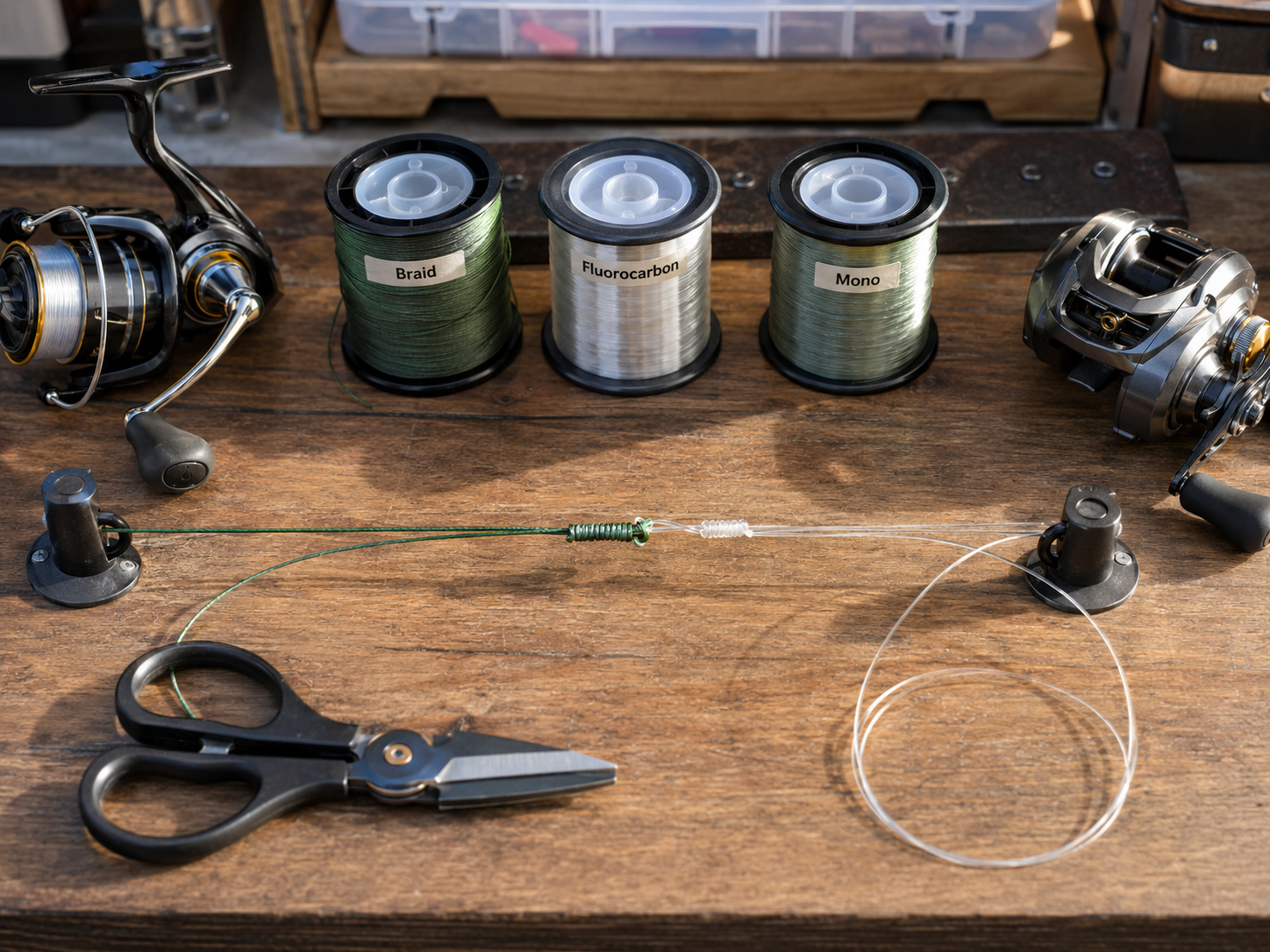
KastKing Braided Line
Braided line is strong, thin for its strength, sensitive, and low-stretch. It is excellent for heavy cover, frogs, vegetation, long casts, spinning reel main line, and situations where you want to feel subtle bites.
However, braid is also visible in clear water, can dig into itself if badly managed, and may require a leader depending on your technique. It is not magic. It is a tool.
Use braid when:
- You fish grass, pads, weeds, or heavy cover.
- You want better sensitivity.
- You need strong line with smaller diameter.
- You are using a spinning reel with a fluorocarbon leader.
- You fish frogs, topwater in cover, or heavy vegetation.
For bass fishing, braid-to-fluorocarbon leader setups are extremely useful. The braid gives casting distance and sensitivity. Meanwhile, the fluorocarbon leader gives lower visibility near the bait and a little abrasion resistance. It is a very practical setup for spinning gear.
KastKing Fluorocarbon
Fluorocarbon is popular because it is less visible underwater than braid, sinks, and works well for many bottom-contact techniques. It is commonly used for leaders, Texas rigs, jigs, worms, finesse presentations, and clear-water situations.
Fluorocarbon is not always the easiest line to manage, especially on spinning reels if you go too heavy. It can be stiffer than mono and may need more attention when spooling. Used correctly, though, it is very effective.
Use fluorocarbon when:
- You fish clear water.
- You want a leader with braid.
- You throw Texas rigs, jigs, worms, or finesse baits.
- You want line that sinks better than mono.
- You need abrasion resistance around rocks, docks, and wood.
KastKing Monofilament
Monofilament is the old faithful. It is affordable, forgiving, stretchy, and easy to handle. It floats better than fluorocarbon and is easier for beginners than many other line types.
Mono is great for family fishing, panfish, topwater, beginner spinning reels, and situations where a little stretch helps keep fish pinned. It is not as sensitive as braid or fluoro, and it can have more memory. Even so, mono still deserves a place in the box.
Use mono when:
- You are teaching beginners.
- You want an easy-handling spinning reel setup.
- You fish topwater.
- You want affordable line for general use.
- You need some stretch to keep fish hooked.
Simple KastKing Line Choice Chart
| Line Type | Strengths | Weaknesses | Best Uses |
|---|---|---|---|
| Braid | Strong, sensitive, thin diameter, long casts | Visible, may need leader, can dig into spool | Frogs, grass, spinning main line, heavy cover |
| Fluorocarbon | Low visibility, sinks, abrasion resistance | Can be stiff, less beginner-friendly in heavier sizes | Leaders, worms, jigs, clear water, finesse |
| Mono | Affordable, forgiving, easy handling, stretch | Less sensitive, more diameter, line memory | Beginners, panfish, topwater, general fishing |
If you are fishing soft plastics, line choice matters a lot. For more technique-specific help, pair this section with our year-round plastic worm guide and best hooks for plastic worms guide.
KastKing Fishing Gear: Tackle Bags, Storage, and Organization
Tackle management is one of those things nobody thinks about until the boat deck, backpack, truck floor, or kayak crate turns into a plastic-bait crime scene. Then suddenly storage matters.
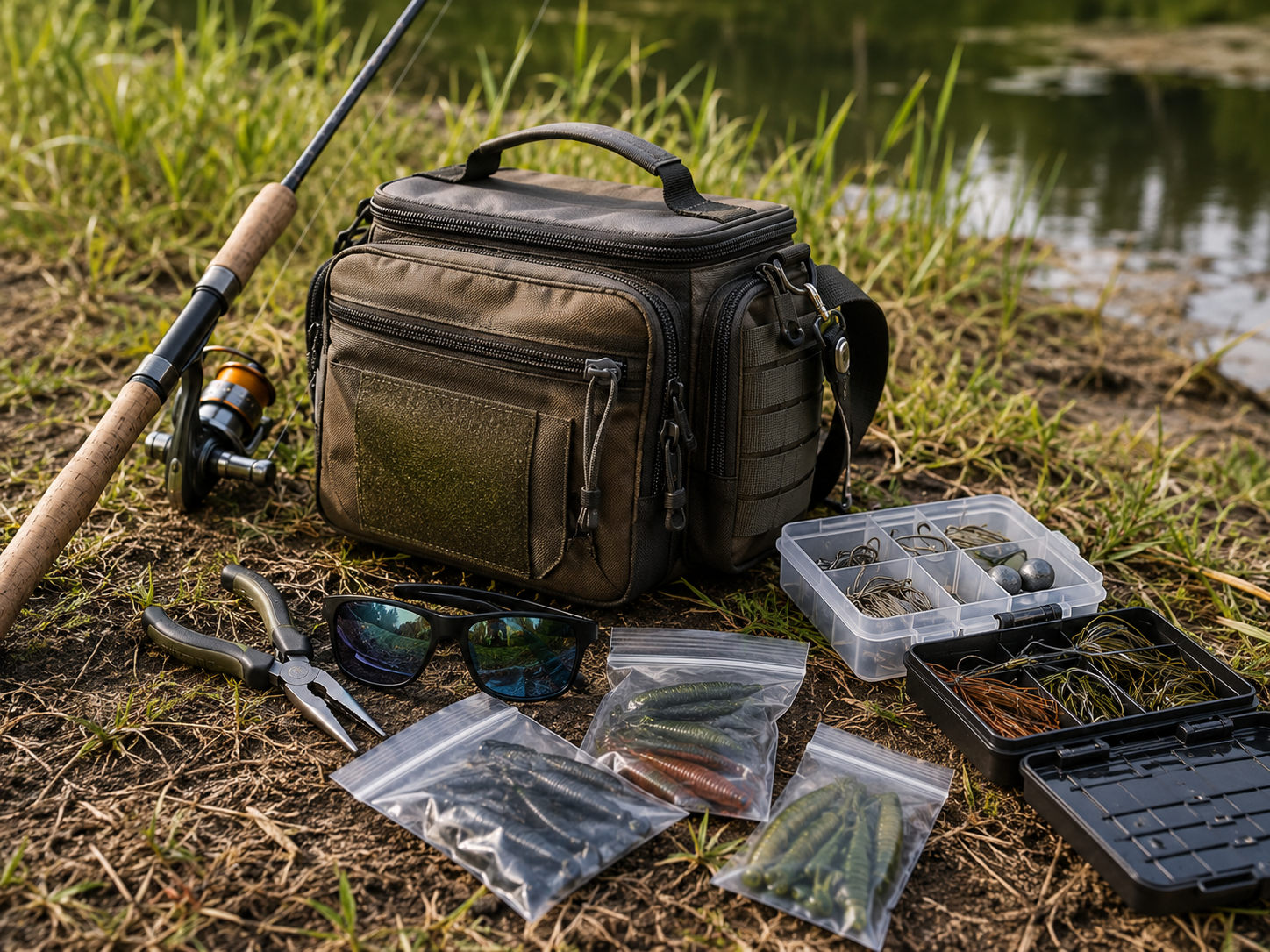
KastKing’s tackle management category includes bags and storage solutions for organizing lures, line, tools, and fishing accessories. This is an important KastKing fishing gear category for bank anglers and kayak anglers because organization affects how much you actually enjoy fishing.
What a Good Tackle Bag Should Do
A good tackle bag does three things:
- It carries what you need.
- It keeps gear organized enough to find quickly.
- It does not make you hate walking.
That third one gets overlooked. A giant tackle bag looks awesome until you carry it around a pond in July and start questioning your life decisions near the second dock.
Bank Fishing Tackle Bags
For bank fishing, smaller and smarter usually beats bigger and heavier. You want a bag that carries your confidence baits, pliers, extra line or leaders, terminal tackle, sunglasses case, scale, snacks, and maybe a rain shell. You do not need every lure you own. You need what you will actually throw.
A good bank-fishing KastKing setup might include:
- One compact tackle bag or sling-style system.
- Two or three utility boxes.
- Soft plastics in original bags or small organizers.
- Hooks, weights, and jig heads in one terminal box.
- Fishing pliers clipped where you can reach them.
- A small spool of leader line.
- Polarized sunglasses.
That setup keeps you mobile. And bank fishing is about mobility. The angler who can keep moving often finds more fish than the person who brought enough tackle to start a roadside store.
Kayak Fishing Tackle Storage
Kayak fishing storage has to be compact, accessible, and secure. If it is not tied down, clipped, zipped, or tucked away, it is only temporarily yours.
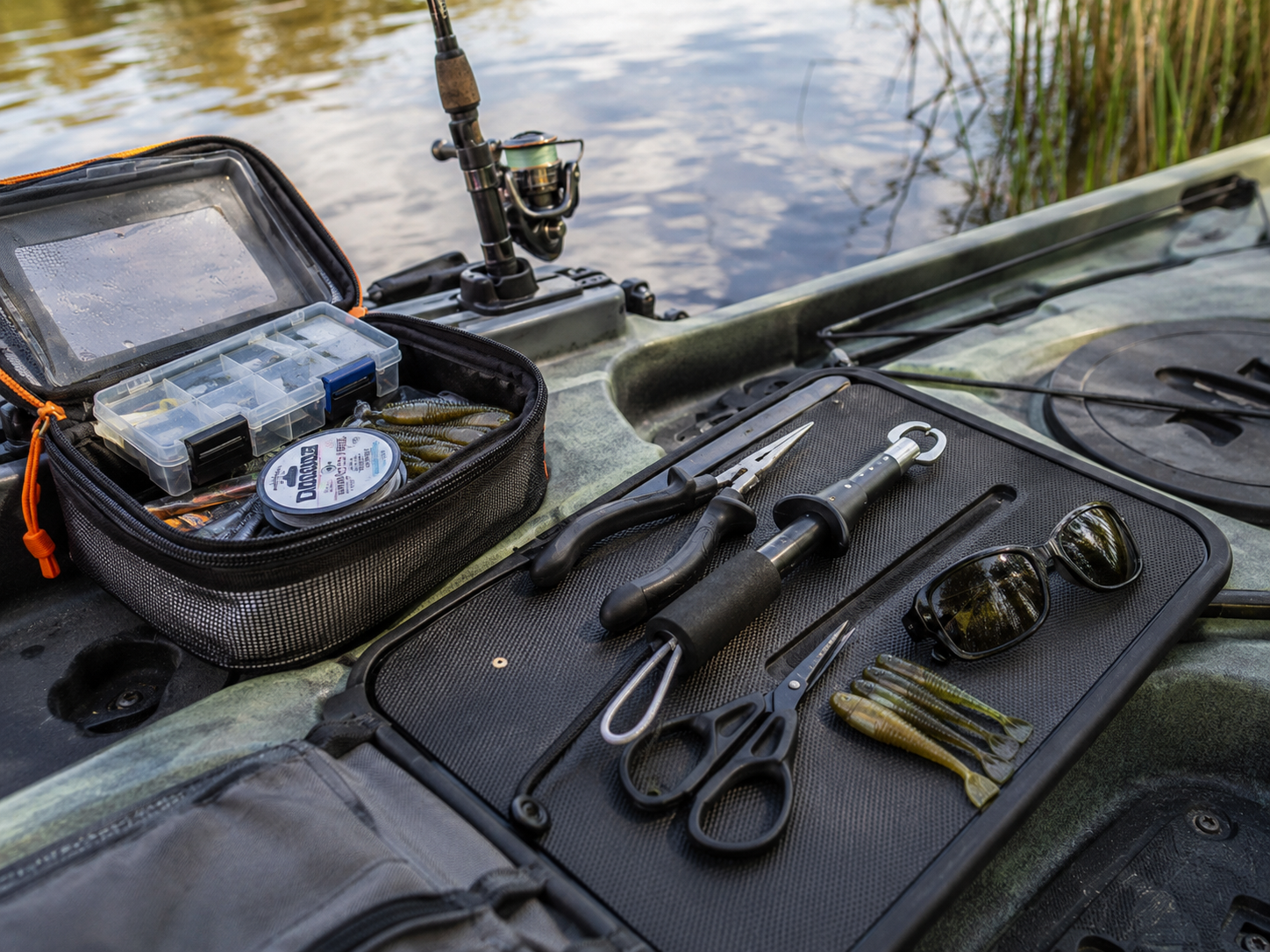
For kayak fishing, look for tackle bags or boxes that fit your crate system, under-seat area, hatch, or rear storage well. Tools should be tethered. Pliers should be reachable with one hand. Line cutters should not require opening three compartments while a fish is hooked. A fish grip can also be useful, especially when landing toothy fish or controlling a bigger bass beside the kayak.
The kayak rule is simple: if you cannot reach it safely, it might as well be in the truck.
Line Management
Line storage is underrated. Extra braid, mono, and fluorocarbon spools get messy fast if they are tossed into a bag loose. A dedicated line management pouch or compact storage area can make sense if you carry leader material, spare spools, or multiple line types.
This is especially useful for anglers who fish braid-to-leader systems. If you carry braid on the reel and keep fluorocarbon leader material in the bag, you need that leader spool protected and easy to access. Otherwise, you end up digging through melted soft plastics and loose hooks like a raccoon in a tackle aisle.
KastKing Fishing Gear: Tools and Accessories
Fishing tools are not glamorous until you need them. Then they become the most important thing in the world.
Try removing a deeply hooked treble with cheap pliers. Try cutting braid with dull scissors. Try weighing a fish with a scale that died sometime during the previous presidential administration. After that, try grabbing a fish beside a kayak while your pliers are buried under three bags of worms and a granola bar wrapper.
Tools matter. More importantly, the right tools make the entire setup safer and smoother.
Fishing Pliers
Good fishing pliers should remove hooks, cut line, crimp weights when needed, open split rings depending on the nose style, and survive wet conditions. For bass fishing, pliers are useful every trip. For toothy fish, saltwater, or treble-hook baits, they move from useful to mandatory.
Look for:
- Comfortable grip
- Line cutters that handle braid
- Corrosion-resistant materials or coating
- Split-ring nose if you change hooks often
- Lanyard or sheath so they do not vanish
Fishing pliers are one of the first accessories new anglers should buy. Do not wait until you need them. That is like buying a fire extinguisher after the grill is already doing its best dragon impression.
Fish Grips
A fish grip can help control fish safely, especially near boats, kayaks, docks, or steep banks. It can also help reduce hand injury when dealing with rough mouths, hooks, teeth, or awkward landing angles.
However, fish grips are not a license to treat fish like luggage. Use them correctly. Support bigger fish with your other hand when needed. Handle fish quickly if you plan to release them.
Fishing Scales
A fishing scale is useful if you care about actual weight instead of the classic fishing measurement system known as “it was totally a five-pounder, bro.” A digital scale helps track personal bests, compare catches honestly, and document fish for photos.
For catch-and-release fishing, have the scale ready before you need it. Fumbling through a bag while the fish is out of water is bad form.
Line Scissors and Cutters
Braid laughs at cheap clippers. If you use braid, get scissors or cutters that actually handle it cleanly. Frayed tag ends are ugly, weak, and annoying. Good cutters make knots cleaner and rigging faster.
Fillet Tools
If you keep fish for the table, a decent fillet knife matters. Sharp, flexible, corrosion-resistant blades make cleaning fish safer and easier. Dull knives are where bad words and bandages meet.
KastKing Fishing Gear: Sunglasses and Eye Protection
Fishing sunglasses are not just a style accessory. Polarized sunglasses help reduce glare, protect your eyes, and make it easier to see into the water. That matters when you are looking for beds, grass edges, rocks, stumps, follows, baitfish, or your lure tracking back to the bank.
KastKing offers fishing sunglasses, including polarized sport options and bifocal-style options. That gives sunglasses a real place in the overall KastKing fishing gear setup, especially for bank anglers, kayak anglers, and boat anglers who spend long hours around reflective water.
Why Polarized Sunglasses Matter
Good fishing sunglasses should do a few things well:
- Reduce glare off the water.
- Protect your eyes from UV exposure.
- Fit securely enough for wind, sweat, and movement.
- Offer lens colors that match your fishing conditions.
- Stay comfortable for long days.
Lens color matters. Amber and copper-style lenses are often useful for contrast in freshwater fishing. Gray-style lenses can be comfortable in bright sun. Yellow or low-light lenses may help in dim conditions. The right lens depends on light, water clarity, and personal preference.
Sunglasses Also Protect You From Hooks
Sunglasses also protect your eyes from hooks. That alone is reason enough. A bad cast, a popped lure, or your buddy’s backcast can turn a peaceful day into urgent care with fishing line attached. Wear the glasses.
Best KastKing Fishing Gear Setups by Fishing Style
The easiest way to shop KastKing fishing gear is to start with how you fish. Not how Instagram says you fish. Not how tournament guys fish. Not how you imagine yourself fishing after watching six hours of YouTube. How you actually fish.
Once you know that, the gear choices get much easier.
Setup Comparison Chart
| Fishing Scenario | Rod/Reel Direction | Line Direction | Storage/Tools | Why It Makes Sense |
|---|---|---|---|---|
| Pond bass fishing | Medium spinning or medium-heavy casting setup | Mono, braid-to-fluoro, or straight fluoro | Small tackle bag, pliers, sunglasses | Covers worms, spinnerbaits, small jigs, and bank-friendly baits |
| Bank fishing | One spinning setup plus one casting setup if experienced | Braid main line with leader or simple mono | Compact bag or sling, line cutters, fish grip | Keeps you mobile without carrying the garage |
| Kayak fishing | Shorter manageable rods, spinning and casting mix | Braid for control; leaders as needed | Tethered tools, compact tackle storage, fish grip | Keeps everything reachable and secure |
| Family fishing | Simple spinning combos | Monofilament | Small box, pliers, bobbers, hooks, basic bag | Easy, forgiving, low frustration |
| Finesse bass fishing | Medium-light or medium spinning setup | Light braid to fluorocarbon leader | Leader spool, finesse hooks, small storage | Better sensitivity and casting with lighter baits |
| Heavy cover bass fishing | Heavy casting rod and baitcaster | Heavy braid | Pliers, cutters, frog box, strong hooks | Power setup for grass, pads, and nasty cover |
| Truck fishing kit | Durable spinning combo | Mono or braid-to-leader | Compact tackle bag and basic tools | Always ready for quick stops |
How to Choose KastKing Fishing Gear Without Overbuying
KastKing has enough options that it is easy to overbuy. That is not KastKing’s fault. That is angler brain. Angler brain sees gear and immediately starts justifying it.
“I need this reel for frogs.”
“I need this rod for jigs.”
“I need this line because the fish were weird last Thursday.”
“I need this tackle bag because my current one is full of things I also needed.”
We have all been there. Fortunately, there is a smarter way to shop.
Step 1: Pick Your Main Fishing Style
Do not start with products. Start with fishing style.
- Mostly ponds and banks?
- Mostly bass fishing?
- Mostly kayak fishing?
- Mostly family fishing?
- Mostly finesse?
- Mostly heavy cover?
Your fishing style decides your rod, reel, line, storage, and tools.
Step 2: Choose Rod and Reel Type
For beginners and casual anglers, spinning gear is usually the easiest first step. For bass anglers who already understand casting gear, a baitcaster gives more control for many techniques.
One spinning setup and one baitcasting setup can cover a lot of bass fishing. You do not need seven rigs on day one unless you enjoy both fishing and financial tension.
Step 3: Choose Line Based on Baits and Water
Line should match the technique.
- Use mono for simple beginner fishing and topwater.
- Use braid for heavy cover, frogs, and spinning main line.
- Use fluorocarbon for leaders, clear water, worms, jigs, and finesse.
Do not just buy whatever line was on sale and hope the fish appreciate your thriftiness.
Step 4: Buy the Right Tackle Storage
Storage should fit how you move. Bank anglers need portable gear. Kayak anglers need compact and secure gear. Boat anglers can carry more. Family anglers need simple organization.
The right tackle bag is the one you actually use, not the one that looks like it could support a three-week expedition through the bass jungle.
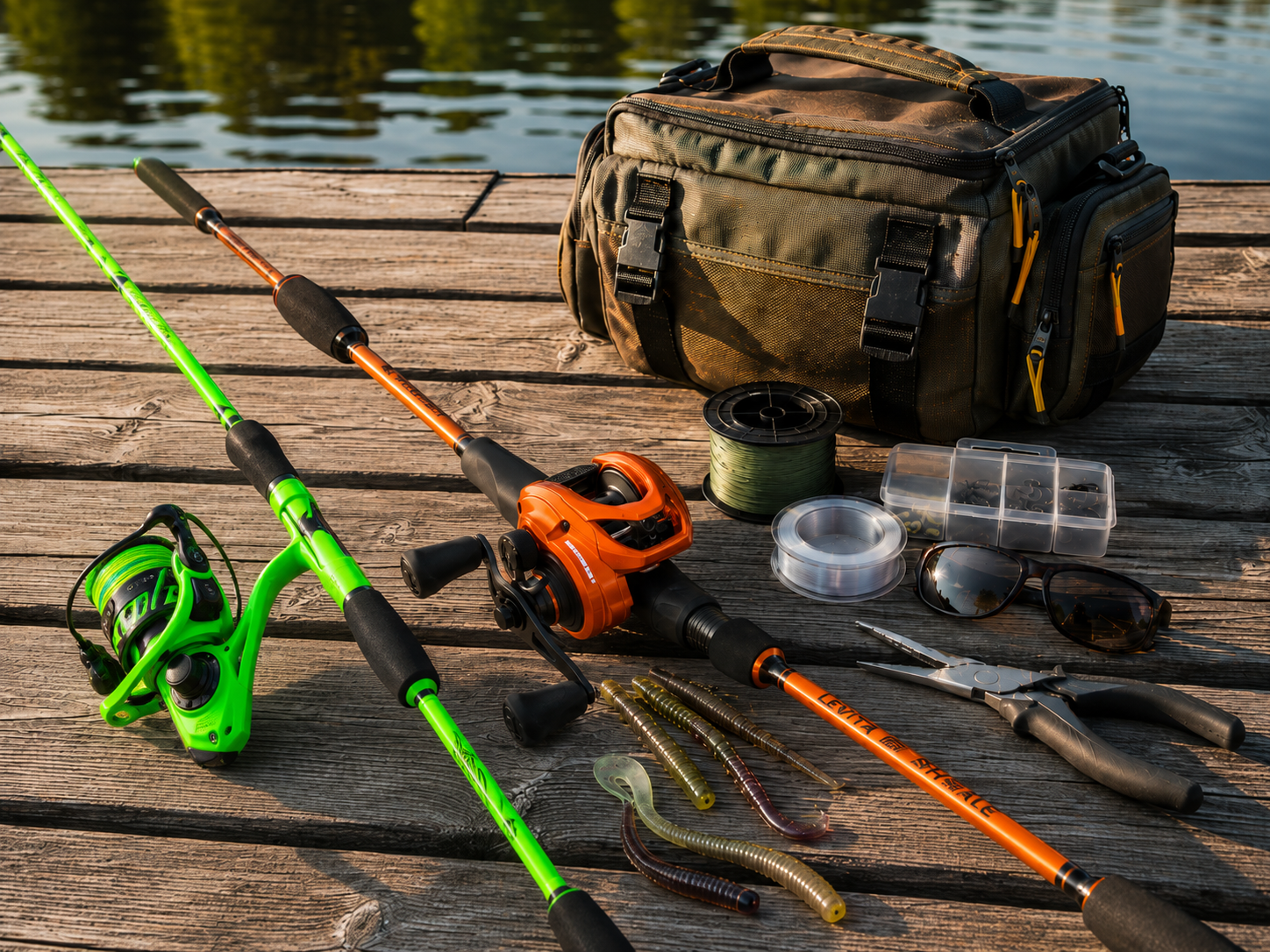
Step 5: Add Tools Before Extra Lures
Most anglers buy more lures before buying better tools. That is backwards.
Before adding another seven packs of plastics, make sure you have:
- Pliers
- Line cutters
- Fish grip if needed
- Scale if you track fish
- Sunglasses
- Leader line
Tools make every trip smoother. Another lure may or may not catch fish. Good pliers will always be useful.
Best First KastKing Fishing Gear Setup for a Beginner
If someone is brand new and wants a simple KastKing setup, do not overcomplicate it.
A beginner-friendly setup should be easy to cast, easy to maintain, and forgiving. That usually means a spinning combo or a spinning reel paired with a medium-power spinning rod. Add monofilament or braid with a fluorocarbon leader, depending on the angler’s comfort level.
Simple Beginner Setup List
For most beginners, the simple path looks like this:
- Medium spinning rod
- 2500 or 3000-size spinning reel
- 8 to 10 lb monofilament for simplicity, or light braid with fluorocarbon leader for better performance
- Small tackle bag
- Basic pliers or tool kit
- Polarized sunglasses
- Hooks, weights, plastic worms, small swimbaits, and a few moving baits
That setup can catch bass, bluegill, crappie, small catfish, and whatever else wants to make poor decisions near the bank.
Keep the First Setup Simple
Beginners should avoid starting with too much gear. Too many lures and too many choices slow learning down. Confidence matters. Pick a few baits, learn them, and then expand.
Best KastKing Fishing Gear Direction for Bass Fishing
Bass anglers can get more specialized. If bass fishing is the main goal, the best KastKing direction is usually a two-setup or three-setup system.
Two-Setup Bass System
- Setup 1: Medium spinning rod and reel for finesse baits, wacky rigs, Ned rigs, small swimbaits, tubes, and drop shots.
- Setup 2: Medium-heavy casting rod and baitcaster for Texas rigs, jigs, spinnerbaits, chatterbaits, and general power fishing.
This covers a lot of water. It gives you a finesse option and a power option without needing a rod locker full of carbon fiber.
Three-Setup Bass System
- Finesse spinning setup: Light braid to fluorocarbon leader.
- All-around casting setup: Fluorocarbon or braid-to-leader depending on technique.
- Heavy-cover casting setup: Heavy braid for frogs, grass, pads, and thick vegetation.
The three-setup system is where many serious weekend bass anglers should land. It gives enough specialization to fish different techniques properly but does not require towing a second boat just for rods.
For more soft-plastic technique help, connect this setup with our bass fishing plastic worms year-round guide.
Best KastKing Fishing Gear Direction for Bank Fishing
Bank fishing is about movement, casting angles, and smart packing. The best KastKing bank fishing setup should be simple and mobile.
Bank Fishing Loadout
Think like this:
- One medium spinning setup for finesse and general use.
- One medium-heavy casting setup if you are comfortable with baitcasters.
- One compact tackle bag or sling.
- One terminal tackle box.
- One soft plastic organizer.
- One small box for hard baits.
- Pliers, line cutters, sunglasses, and leader line.
The goal is to keep moving. Bank anglers often catch more fish by covering water and adjusting angles than by standing in one place with every lure they own.
A KastKing tackle bag can be a great fit here if it carries enough without turning into a hiking punishment device.
Best KastKing Fishing Gear Direction for Kayak Fishing
Kayak fishing adds one major rule: everything has to be controlled. If it can fall, it will. If it can roll, it will. If it can slide under your seat and hide like a raccoon, it absolutely will.
Kayak Fishing Loadout
A good KastKing kayak setup should focus on:
- Manageable rod lengths
- Compact tackle storage
- Tethered pliers and tools
- Braid or leader systems that are easy to manage
- Polarized sunglasses
- Fish grip for boat-side control
- Storage that fits your crate, tankwell, or seat area
For kayak bass fishing, a spinning setup and a baitcasting setup can cover most needs. Keep tackle lean. A kayak is not a garage with a paddle.
Best KastKing Fishing Gear Direction for Kids and New Anglers
When fishing with kids or new anglers, the goal is not technical perfection. The goal is fun, simple success, and avoiding gear frustration.
That means spinning gear, monofilament, simple hooks, bobbers, small lures, and basic storage. Do not hand a child a baitcaster unless you are also teaching patience, vocabulary restraint, and advanced knot removal.
Family Fishing Loadout
A simple KastKing family setup might include:
- Light or medium spinning combo
- Monofilament line
- Small tackle box
- Needle-nose pliers or fishing pliers
- Bobbers, hooks, split shot, and small soft plastics
- Polarized sunglasses
Keep it easy. Let the fish be the complicated part.
Common KastKing Fishing Gear Buying Mistakes
The gear is only as good as the match. Here are the common mistakes to avoid when shopping KastKing fishing gear.
Buying a Baitcaster Too Early
Baitcasters are excellent, but they have a learning curve. If you are brand new, a spinning reel will usually get you fishing faster. Learn baitcasters when you are ready, not because some guy online said “real bass anglers use casting gear.” Real bass anglers use what catches bass.
Choosing the Wrong Rod Power
A rod that is too light will struggle with heavy hooks and cover. A rod that is too heavy will overpower small baits and make fishing less enjoyable. Match rod power to lure weight, line size, hook style, and cover.
Using the Wrong Line
Do not use heavy fluorocarbon on a small spinning reel and then blame the reel when line jumps off like a spring-loaded Slinky. Also, do not use light mono for frogs in pads and act surprised when a bass buries you in salad. Line matters.
Buying Too Much Tackle Storage
Bigger is not always better. A giant bag encourages overpacking. For bank and kayak fishing, mobility matters. Buy enough storage for your actual fishing, not the fantasy version where you need every lure ever made.
Skipping Tools
Good pliers, cutters, and sunglasses should not be afterthoughts. They make fishing safer, faster, and less annoying. Buy tools before buying your thirty-fourth soft plastic color.
Pros and Cons of KastKing Fishing Gear
✅ Pros
- Broad product lineup makes it easy to build complete setups.
- Strong fit for budget-conscious anglers.
- Good category coverage: reels, rods, line, storage, tools, and sunglasses.
- Useful for beginners, bank anglers, kayak anglers, and bass fishermen.
- Line category is practical because anglers replace line often.
- Tackle bags and tools fit real-world fishing needs.
- Good entry point for people upgrading from bargain-bin gear.
- Works well for building bank, kayak, pond, and beginner setups.
❌ Cons
- Large product lineup can overwhelm beginners.
- Not every product will be the best fit for every angler.
- Premium-brand loyalists may still prefer higher-end specialty gear.
- Buyers still need to understand reel size, rod power, action, and line type.
- Advanced anglers may want more specialized gear for certain techniques.
- Easy to overbuy if you do not start with your real fishing style.
- Some products should be judged by category instead of assuming the whole brand is equal across the board.
Bark & Brass Field Notes on KastKing Fishing Gear
KastKing makes sense for Bark & Brass because it fits the way a lot of our readers actually buy fishing gear. Not everyone wants to spend top-shelf money on every rod, reel, spool of line, and tackle bag. Most people want gear that solves the problem in front of them.
That is where KastKing fishing gear is interesting.
If you are a weekend bass angler, a pond hopper, a bank fisherman, a kayak angler, or someone building a fishing setup from scratch, KastKing gives you a lot of options without acting like fishing should require a trust fund and a sponsored jersey.
Build a System, Not a Random Pile
The smartest way to buy KastKing is not to grab random gear because the price looks good. The smarter move is to build a system.
Start with your main fishing style. Then choose the rod and reel that match that style. After that, spool it with the right line, add tackle storage that fits how you move, and add tools that make every trip easier.
That is how you avoid the classic fishing problem: owning a mountain of gear and still somehow not having the one thing you needed.
Final Verdict: Is KastKing Fishing Gear Worth It?
KastKing fishing gear is a strong fit for Bark & Brass readers because it covers the kind of fishing gear most real anglers actually use: reels, rods, line, tackle bags, tools, sunglasses, and accessories. The brand is especially useful for anglers who want practical setups without paying premium prices on every component.
Where KastKing Makes the Most Sense
The biggest strength is category coverage. You can build full fishing systems around KastKing gear. That makes the brand useful for beginners, bank fishermen, kayak anglers, pond hoppers, family anglers, and bass fishermen who want to build practical setups without draining the wallet.
The biggest caution is choice overload. KastKing has a lot of gear, and not every product is the right fit for every angler. Therefore, the key is to buy based on fishing style, not impulse.
Bottom Line
If you fish ponds, banks, kayaks, creeks, local lakes, or casual weekend bass trips, KastKing deserves a look. If you are building a budget-friendly bass setup, a beginner kit, a family fishing setup, or a compact bank-fishing loadout, KastKing has several categories worth exploring.
Just remember the Bark & Brass rule: gear should solve a real problem. If it does not make fishing easier, better, safer, or more fun, it is just another thing to untangle in the garage.
Frequently Asked Questions About KastKing Fishing Gear
Is KastKing fishing gear good for beginners?
Yes, KastKing fishing gear can be a good fit for beginners because the brand offers rods, reels, combos, fishing line, tackle storage, tools, and accessories in one place. Beginners should usually start with a simple spinning setup, manageable line, basic tackle storage, and good pliers before jumping into more specialized gear.
Does KastKing make baitcasting reels?
Yes, KastKing offers baitcasting reels. Baitcasters are useful for bass fishing techniques like Texas rigs, jigs, spinnerbaits, chatterbaits, frogs, and heavier cover fishing. They do have a learning curve, so new anglers may want to start with spinning gear first.
Does KastKing make spinning reels?
Yes, KastKing offers spinning reels. Spinning reels are a strong choice for beginners, finesse bass fishing, panfish, trout, pond fishing, bank fishing, and light-line techniques.
What is the best KastKing fishing gear setup for bass fishing?
A practical KastKing bass setup starts with a medium spinning rod and reel for finesse techniques and a medium-heavy baitcasting setup for Texas rigs, jigs, spinnerbaits, and general power fishing. Add braid, fluorocarbon, or mono depending on the baits and water conditions.
Is KastKing braided line good for bass fishing?
KastKing braided line can be useful for bass fishing, especially for heavy cover, frogs, vegetation, long casts, and braid-to-fluorocarbon leader setups. The right pound test depends on the reel, rod, cover, and technique.
Should I use braid, fluorocarbon, or mono with KastKing reels?
Use braid when you want strength, sensitivity, and small diameter. Use fluorocarbon for clear water, leaders, worms, jigs, and bottom-contact baits. Use mono for beginners, topwater, panfish, and general easy-handling setups.
Are KastKing rod-and-reel combos worth it?
KastKing rod-and-reel combos can be worth it for beginners, casual anglers, family fishing, truck kits, and anyone who wants a pre-matched setup without overthinking rod and reel pairing. More advanced anglers may prefer building custom setups.
Does KastKing make tackle bags?
Yes, KastKing offers tackle management products including tackle bags and storage options. These are useful for bank anglers, kayak anglers, and anyone who wants to keep lures, tools, line, and terminal tackle organized.
Are KastKing sunglasses useful for fishing?
Yes, polarized fishing sunglasses are useful because they reduce glare, protect your eyes, and help you see into the water. KastKing offers fishing sunglasses, including sport and bifocal-style options.
What KastKing fishing gear should I buy first?
The best first purchase depends on how you fish. Beginners should usually start with a spinning combo or medium spinning setup, monofilament or light braid, a small tackle bag, pliers, and polarized sunglasses. Bass anglers may want to add a medium-heavy casting setup and braid or fluorocarbon once they know what techniques they fish most.
Final Words on KastKing Fishing Gear
KastKing fishing gear is not about pretending every product is magic. It is about practical fishing gear that covers a lot of real-world needs: rods, reels, line, tackle bags, tools, sunglasses, and setup-building pieces for anglers who actually want to fish.
That makes it a strong brand to consider for Bark & Brass readers.
Useful Gear Beats Random Gear
The best way to approach KastKing is simple. Start with how you fish. Then choose the rod, reel, line, storage, and tools that match that job. A good setup does not need to be the most expensive setup. It needs to work when your bait hits the water, your line gets tight, and the fish decides it wants no part of your plan.
And that is the whole point. Useful gear. Honest expectations. Smarter buying. More time fishing. Less time staring at product pages like they are ancient treasure maps.